Mack O'reilly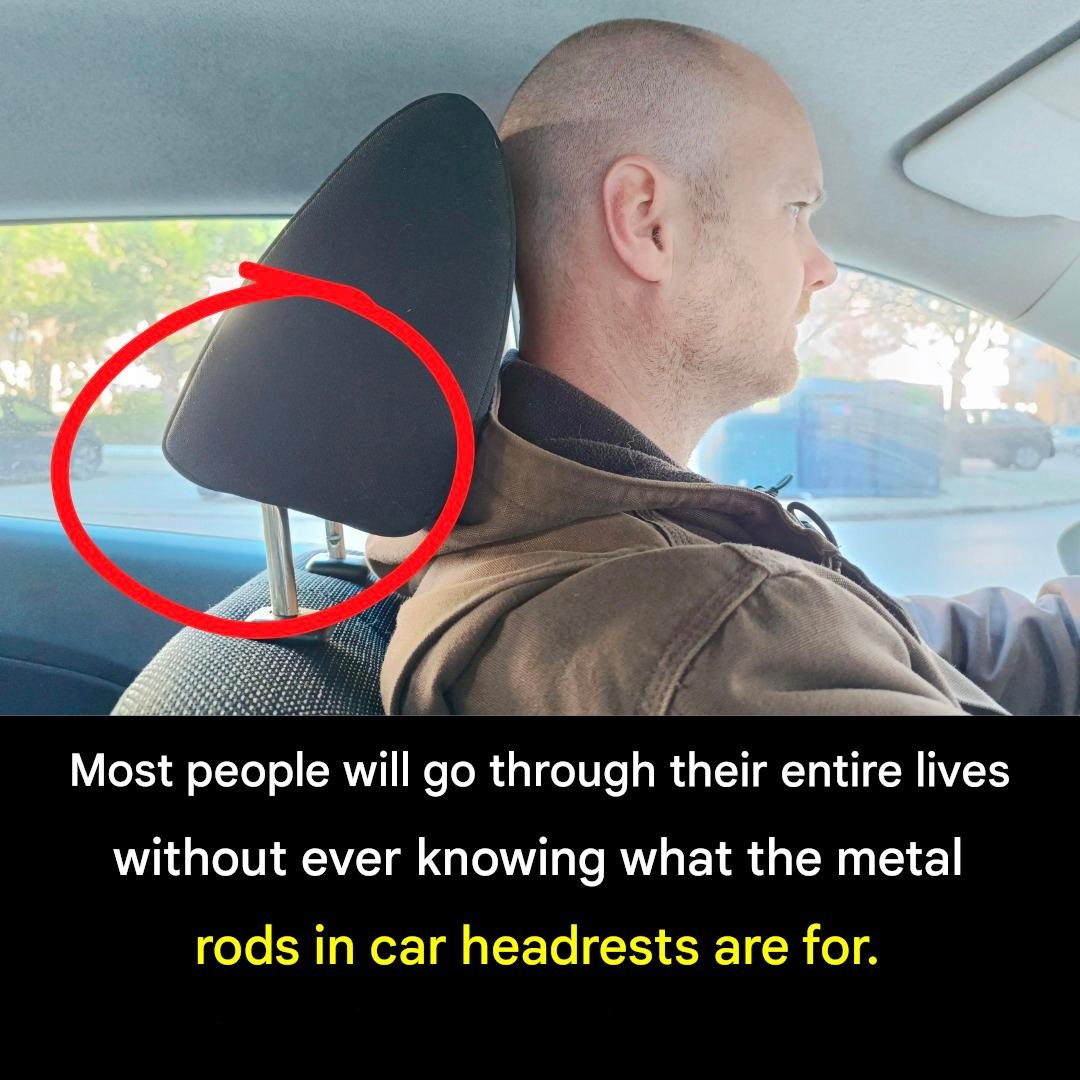
Most drivers rarely think about their car’s headrests.
They sit at the top of every seat, quietly doing their job without drawing much attention. For many people, they simply seem like a padded extension of the seat designed for comfort.
But look closely and you’ll notice something interesting: two metal rods that connect the headrest to the seat.
These metal supports might appear to be a simple structural feature, but they actually play a much larger role in vehicle safety than most drivers realize.
Understanding why they exist reveals how carefully modern cars are designed to protect passengers.
The Real Purpose of Headrests
Despite their name, headrests are not primarily meant for resting your head.
Their main function is to prevent neck injuries during collisions, particularly a type of injury known as whiplash.
Whiplash often occurs during rear-end crashes. When a vehicle is struck from behind, the body is pushed forward while the head briefly lags behind, creating a rapid snapping motion in the neck.
This sudden movement can strain muscles, ligaments, and vertebrae.
Properly positioned headrests help reduce this motion by supporting the head and limiting how far it can move backward during impact.
Why the Metal Rods Matter
The metal rods connecting the headrest to the seat are far more than decorative components.
They serve several important functions:
Structural Stability
The rods anchor the headrest firmly to the seat frame, allowing it to absorb and distribute forces during a collision.
Without strong supports, the headrest would not be able to effectively protect the neck.
Adjustability
Most vehicles allow drivers and passengers to raise or lower the headrest. The rods enable this adjustment so the headrest can align properly with different heights.
Proper positioning is crucial — ideally the top of the headrest should be level with the top of the occupant’s head.
Locking Mechanism
Inside the seat, the rods interact with a locking system that keeps the headrest from moving unexpectedly.
This ensures that once the headrest is set at the correct height, it stays in place during normal driving or sudden movements.
An Unexpected Emergency Use
Some drivers are surprised to learn that the metal rods in headrests can also serve an emergency purpose.
In many vehicles, removing the headrest exposes the two rods, which can be used as a tool to break a car window if passengers become trapped inside.
The pointed metal ends can concentrate force on a small area of glass, making it easier to shatter side windows in emergencies such as submerged vehicles or locked doors.
While this feature isn’t widely advertised, it has been demonstrated in safety tests and can provide an extra layer of preparedness.
How to Position Your Headrest Properly
Because headrests are often overlooked, many drivers unknowingly use them incorrectly.
Safety experts recommend two key adjustments:
Height:
The top of the headrest should be approximately level with the top of your head.
Distance:
The back of your head should sit only a few centimeters from the headrest.
If the headrest is too low or too far away, it may not effectively limit neck movement during a crash.
Taking a few seconds to adjust it properly can significantly improve protection.
The Evolution of Headrest Safety
Headrests became more widely required in vehicles during the late 20th century as research revealed the high number of neck injuries caused by rear-end collisions.
Automotive engineers began designing head restraints that worked alongside seatbelts and airbags to reduce injury risks.
Today, many vehicles feature active headrest systems, which move forward automatically during certain types of collisions to better support the head and neck.
This innovation demonstrates how even small components continue to evolve with safety technology.
Why Drivers Rarely Notice This Feature
One reason the metal rods and headrest design go unnoticed is simple: they work quietly in the background.
Unlike airbags or braking systems, headrests rarely demand attention during everyday driving.
Yet in the moment they are needed most — during a sudden impact — they play an important role in protecting passengers.
Small Details That Save Lives
Modern vehicles contain thousands of carefully engineered components designed to improve safety.
Some of these features are obvious, like airbags and seatbelts.
Others, like the metal rods inside a headrest, are easy to overlook.
But each element reflects decades of research into how accidents occur and how injuries can be prevented.
The next time you get into a car, take a moment to look at the headrest above your seat.
Those simple metal supports are part of a system quietly working to keep you safe every time you drive.