Mack O'reilly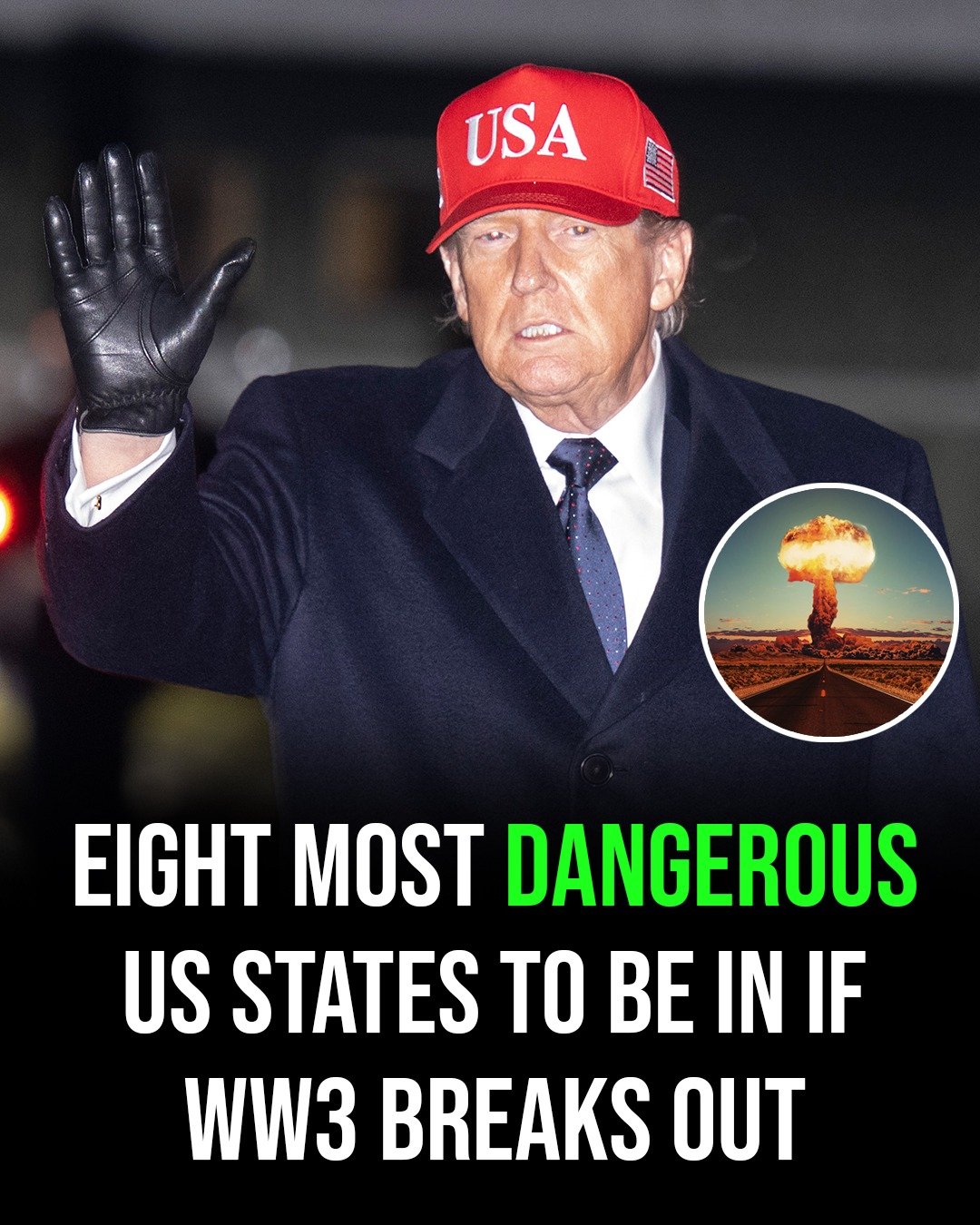
Stories about global conflict tend to follow a familiar pattern.
At first, they sound theoretical—maps, military assets, strategic targets, infrastructure. Then they become personal. People start asking where risk would be highest, which places might matter most, and whether some areas of the United States would face more pressure than others in a major international crisis.
A recent article framed that exact question by highlighting eight U.S. locations often mentioned in discussions about large-scale conflict risk and why those places are viewed as more strategically exposed than others.
What makes this kind of article spread so quickly is not only the subject itself, but the mixture of geography, military logic, public fear, and speculation that comes with it.
Why Some Places Get Mentioned More Than Others
When people discuss which parts of the country could be most affected in a major conflict, they are usually not talking about population alone.
They are thinking in strategic terms:
- military installations
- transportation hubs
- defense manufacturing
- command centers
- energy infrastructure
- symbolic or political importance
That is why certain states or regions repeatedly appear in conversations, whether those conversations are serious policy debates or more speculative online lists. The article’s core idea is that some locations are discussed more often because they combine military value with national infrastructure significance.
The Difference Between “Possible” and “Likely”
This is where the topic becomes tricky.
Articles like this can sound definitive, but in reality, no public list can predict exactly what would happen in a future global conflict. Strategic targeting would depend on the type of war, the countries involved, the technology used, and the political decisions made in real time.
So when an article says a location is “most impacted,” it usually means something narrower:
- often discussed by analysts or commentators
- considered strategically important
- viewed as vulnerable because of key facilities or infrastructure
That is very different from certainty.
And that distinction matters, because the subject is already emotionally charged enough without overstating what anyone can actually know.
Why These Lists Keep Going Viral
There is a reason stories like this travel fast online.
They combine three powerful triggers:
1. Geography
People want to know whether the place they live is included.
2. Fear of uncertainty
Global conflict is abstract until it is mapped onto real states and familiar places.
3. Strategic curiosity
Military and infrastructure topics naturally attract interest because they make readers feel they are looking behind the curtain of how power works.
Once a list format is added—“8 locations often mentioned”—the article becomes even more clickable. Lists turn uncertainty into something that feels structured and digestible.
What These Articles Usually Focus On
Even when the exact states differ, the logic is usually consistent.
Places are often included because they contain one or more of the following:
- major naval or air-force facilities
- nuclear-related infrastructure
- large ports or transport corridors
- political decision-making centers
- concentrated defense industry operations
That doesn’t automatically make those places doomed or uniquely unsafe. It simply means they are often brought up when people imagine how military and strategic risk might be distributed across the country.
Why Infrastructure Matters as Much as Geography
One of the most useful ways to understand this topic is to shift attention away from maps alone and toward systems.
In a large conflict, the most affected areas are not always the ones closest to a border or coastline. They may be the places that support:
- communication networks
- shipping and logistics
- fuel and electricity distribution
- command and control structures
- manufacturing needed for defense response
That is why articles like this often end up sounding less like travel geography and more like infrastructure analysis.
The Psychological Side of These Stories
There is also a very human reason these articles resonate.
People feel safer when uncertainty is organized into categories. Even an imperfect list can feel oddly comforting because it replaces a vague fear with a concrete framework.
Instead of “something bad could happen anywhere,” the story becomes:
- here are the places often mentioned
- here is why they come up
- here is the logic behind the concern
That structure gives readers something to hold onto, even when the subject itself remains speculative.
Why Caution Matters With This Topic
The risk with articles like this is that they can blur the line between analysis and drama.
A discussion of strategic exposure can easily become sensational if the language implies inevitability. But in reality, conflict planning and national security risk are far more complex than social-media headlines suggest.
No public-facing article can responsibly tell readers exactly what would happen in an extreme global crisis.
What it can do—and what this article appears to be doing—is explain why some states are repeatedly mentioned in those scenarios because of their military, logistical, or symbolic importance.
The Real Value of the Conversation
At their best, these stories are less about fear and more about awareness.
They remind readers that modern conflict is not only about battlefields. It is also about infrastructure, readiness, interdependence, and the critical systems that hold daily life together.
That broader perspective is useful.
It moves the conversation away from fantasy and toward something more grounded: understanding why certain places matter more in national planning and public discussion.
A Topic That Reveals More Than It Predicts
In the end, articles about which U.S. states could be most affected in a major global conflict tell us less about the future than they do about the present.
They reveal:
- which places are seen as strategically important
- how people think about national vulnerability
- how quickly public curiosity turns abstract geopolitics into local concern
That may be the real reason these stories keep circulating.
They don’t just ask where danger might be.
They ask what parts of the country matter most when the stakes become truly global.