Mack O'reilly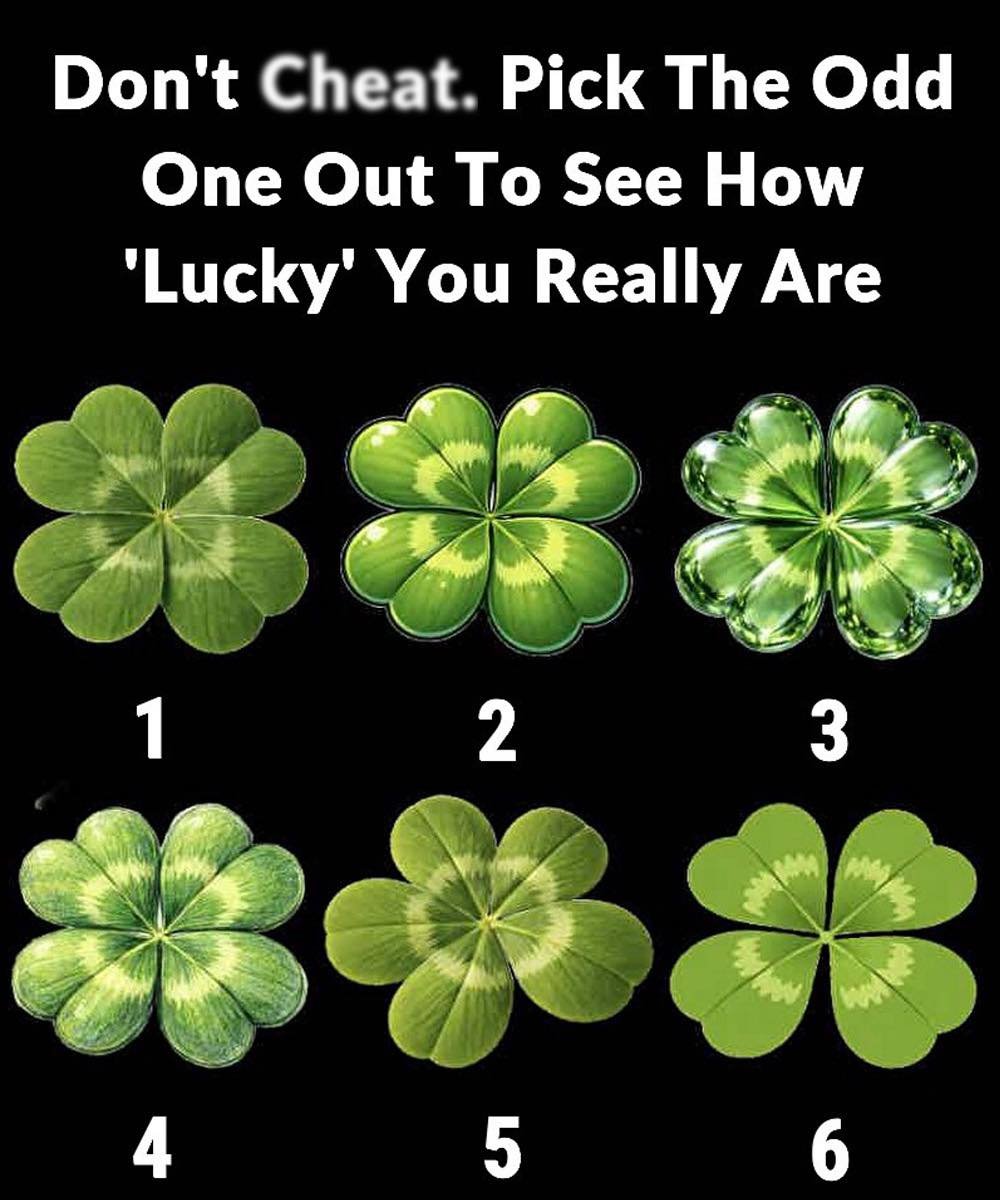
At first glance, they look like harmless little distractions.
Six clovers. One challenge. Find the odd one out. It feels like the kind of visual game people solve in a few seconds and forget just as quickly. But the reason these tests keep spreading is not because the answer matters. It is because people enjoy what the question seems to promise: a glimpse into how their own mind works.
That is exactly the angle of the source article. It says the clover puzzle is less about luck than about perception, intuition, and personality — and that there may not even be one single correct answer. What matters, in the article’s view, is which difference your mind notices first.
The Puzzle Works Because the Brain Hates Ambiguity
The article makes a useful point early on: when people are told to find the “odd one out,” the brain immediately starts scanning for patterns. It compares shape, symmetry, color, texture, and shine almost automatically. Some people focus on visual balance. Others lock onto whatever feels slightly off. The source argues that this is why different people may choose different clovers — not because they are wrong, but because they process visual information differently.
That is what makes the exercise feel personal.
The test creates the illusion of a right answer, but the real experience is interpretive. It turns attention itself into the subject. Instead of measuring knowledge, it measures preference: what catches your eye, what your mind treats as unusual, and what kind of detail feels important enough to count.
Why These Tests Feel More Meaningful Than They Are
Part of the appeal comes from the language around luck.
The article uses the four-leaf clover as a symbol people already associate with fortune, rarity, and something good arriving unexpectedly. Then it quietly twists that symbol. Rather than saying one clover is objectively lucky, it suggests that all of them appear special in different ways — which means the real test is not about finding luck, but about how you define difference in the first place.
That is a clever move.
It takes something familiar and turns it into a personality prompt. Suddenly the puzzle is not just visual anymore. It becomes reflective. People start wondering what their choice says about them, even when the exercise itself is playful.
The Article’s Personality Readings
The source then assigns each clover a personality-style interpretation.
Choosing #1 is described as detail-oriented and grounded.
Choosing #2 suggests balance and analysis.
Choosing #3 points to boldness and appreciation for uniqueness.
Choosing #4 is linked to creativity and a sensitivity to texture and layers.
Choosing #5 is framed as instinctive and intuitive.
Choosing #6 is associated with practicality and decisiveness.
These readings are broad, of course, and that is part of why they work. They are flattering without being too specific, reflective without being difficult to identify with. Most people can see at least a little of themselves in whichever description they receive.
And that is often the real design of personality-style content: it gives just enough language to feel insightful while staying open enough to feel personal.
The Real Point Is Not Luck at All
The strongest part of the article comes in its twist. It says this test is not really measuring luck. It is showing that what people often call luck may actually have more to do with perspective, awareness, and decision-making than pure chance. The article even reframes the central question from “Am I lucky?” to “How do I see the world, and how does that shape my outcomes?”
That is a better message than the headline suggests.
Because underneath the game, the article is really making a simple argument: the way you notice things affects the way you move through life. What stands out to you, what you trust, and how you interpret difference all shape your choices more than random luck ever could.
Why These Posts Keep Working
They work because they ask almost nothing from the reader.
No expertise. No time. No commitment. Just a quick choice and a small emotional reward. But beyond that, they offer something people genuinely like: the chance to feel seen by their own instincts. The article’s closing thought captures that nicely — there may not be one correct clover, and that is the point. Life rarely presents one obvious answer. What matters is how you interpret what is in front of you.
That is why these little tests keep circulating.
Not because they truly measure luck, but because they turn a tiny visual choice into a soft reflection on perception, personality, and the stories people tell themselves about who they are.