Mack O'reilly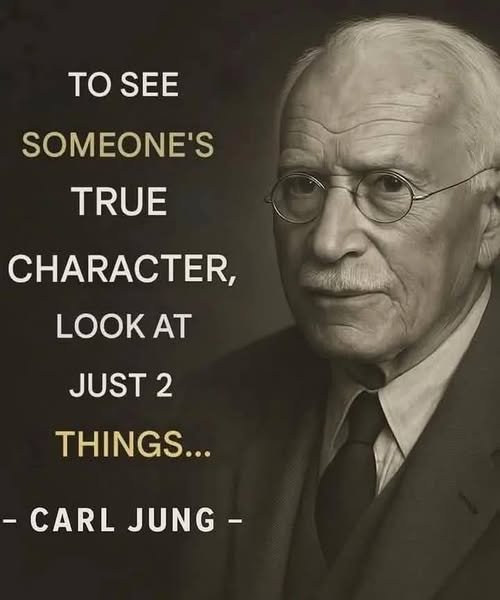
At first, most people seem easy to understand.
They smile politely.
They say the right things.
They know how to make a good first impression.
For a while, that can feel like enough.
But time has a way of revealing what first impressions often hide. Someone who appears kind may turn cold when inconvenienced. Someone who sounds generous may become dismissive the moment there is nothing to gain.
That is why people keep returning to the same question:
How do you recognize true character before life forces you to learn it the hard way?
According to the article behind this discussion, the answer may lie not in grand speeches or dramatic moments, but in two quieter signs—small patterns that reveal far more than most people notice at first.
Why Character Rarely Shows Up in Big Performances
One of the easiest mistakes people make is assuming that character is most visible during important moments.
A person makes a powerful statement.
They do something generous in public.
They present themselves with confidence and emotional intelligence.
But those moments are often curated.
People are usually most aware of themselves when they know they are being watched. They become polished, attentive, and intentional. That is not always fake—but it is not always revealing either.
The article’s central idea is that true character tends to appear when the performance ends, when there is no applause, no social reward, and no obvious reason to pretend.
That is where the smaller signs begin to matter.
The First Sign: How Someone Treats People Who Offer Nothing in Return
The article identifies the clearest clue first: watch how a person treats those who have no power over them and no obvious value to offer.
It is such a simple test that people often overlook it.
Watch how someone speaks to:
- the waiter taking their order
- the cashier at the grocery store
- the janitor cleaning late at night
- the stranger asking for directions
These moments seem unimportant.
But they reveal a great deal.
A person who is respectful only when it is socially useful is showing you something. So is the person who becomes impatient, dismissive, or condescending the moment they believe someone cannot affect their status or comfort.
Kindness shown upward can be strategy.
Kindness shown downward is often character.
That is what makes this sign so powerful.
Respect Is Most Meaningful When It Is Unnecessary
There is a particular kind of goodness that appears when no one is forcing it.
When someone says “thank you” to a cleaner no one else noticed.
When they speak gently to a tired worker at the end of a long day.
When they remain courteous even when frustrated.
These gestures are small enough to pass unnoticed.
But they reveal a larger truth: the person is not measuring human worth by power, money, status, or convenience.
They are responding to other people as people.
And that is a rare enough quality that it deserves close attention.
The Second Sign: How Someone Behaves When Their Guard Is Down
The article frames its second insight around what happens in ordinary, unguarded moments—those times when someone is no longer carefully managing their image.
This may be when plans fall apart.
When they are inconvenienced.
When they are tired.
When they do not get what they want.
When no audience is present.
In those moments, rehearsed personality begins to loosen.
Patience becomes more honest.
Temper becomes more revealing.
Entitlement becomes harder to hide.
Most people can behave well when conditions are easy.
What matters more is what appears when life stops cooperating.
Stress Does Not Create Character — It Reveals It
People often say difficult moments “change” a person.
Sometimes they do.
But often, they simply expose what was already there.
A small inconvenience can reveal startling truths:
- whether someone feels entitled to special treatment
- whether they blame others quickly
- whether they stay honest under pressure
- whether they remain humane when frustrated
This does not mean everyone must be perfect when stressed. Everyone gets tired, overwhelmed, and short-tempered at times.
The point is not perfection.
It is pattern.
A single bad moment may mean little. A repeated way of handling discomfort often means a great deal.
Why These Signs Feel More Reliable Than Charm
Charm can be persuasive.
In fact, that is exactly what it is designed to be.
But charm is often easy to produce for short periods. Respect, patience, and humility are harder to fake consistently over time—especially in ordinary situations.
That is why these smaller signs matter more than charisma.
A charming person may still be careless with others.
A confident person may still be cruel when challenged.
A polished person may still be deeply selfish once comfort disappears.
Real character holds together even when the moment is unimpressive.
The Quiet Places Where Truth Lives
If someone wanted to hide their character, they would do it in the obvious moments.
They would be polished at dinner.
Generous in public.
Warm during introductions.
But life is not made only of obvious moments.
It is made of wait lines, delays, tired conversations, returned messages, shared space, and minor frustrations. Those are the places where people reveal what they believe they owe others—and what they believe the world owes them.
That is why ordinary life is such a good teacher.
It shows people not as they wish to appear, but as they repeatedly choose to be.
Why People Miss These Signs So Often
Part of the reason is that most people want to believe the best early on.
They focus on chemistry, charm, confidence, humor, attraction, or shared interests. None of those are meaningless—but they are not the same as character.
Another reason is speed.
People often form impressions quickly and then defend them. Once they decide someone is “good,” they stop paying attention to the smaller contradictions.
But true character usually does not announce itself dramatically.
It leaks out.
In tone.
In manners.
In patience.
In what someone does when there is nothing to gain.
What This Changes in Real Life
Thinking this way does not mean becoming suspicious of everyone.
It means becoming more observant.
Instead of asking only:
“Do I like this person?”
you also begin asking:
- How do they treat people they don’t need?
- What do they become when life gets inconvenient?
- Are they as kind in private moments as they are in polished ones?
These questions slow things down—and that is often a good thing.
Because character is one of the few things in life that matters more the longer someone stays close to you.
A Simpler Way to See People Clearly
The article’s message is strong because it is so practical. You do not need a psychological profile, a dramatic revelation, or years of waiting to begin understanding someone. Sometimes the truth appears in minutes—if you know where to look.
Not in the speech.
Not in the image.
Not in the performance.
But in the waiter, the cashier, the delay, the inconvenience, the unguarded moment.
That is where character stops performing and starts speaking for itself.