Mack O'reilly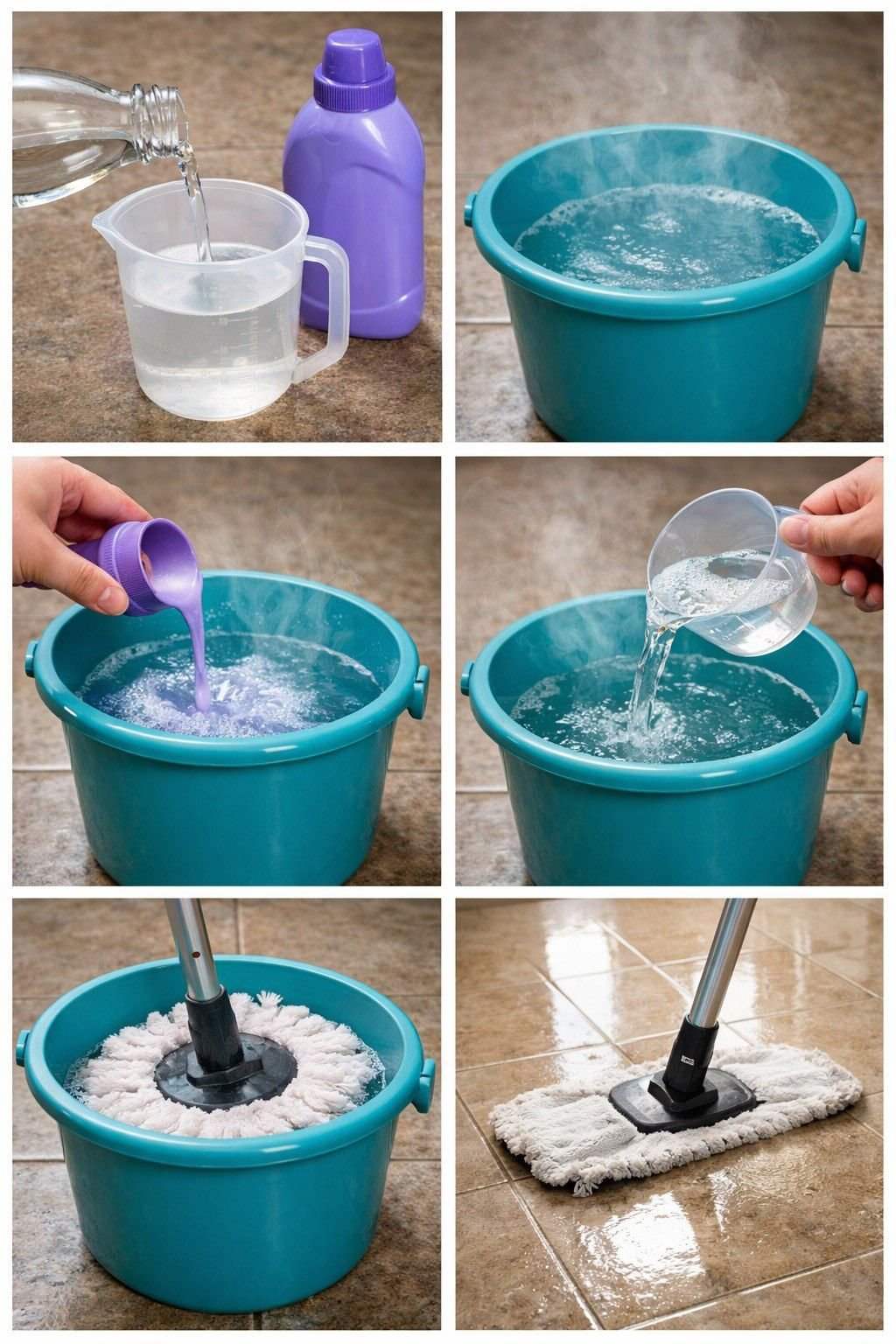
There is a particular kind of disappointment that belongs only to housework.
You mop the floor, wait for it to dry, glance back with a small sense of accomplishment — and the surface still looks tired. Not dirty exactly. Just flat. The shine is gone, the room feels less fresh than it should, and somehow all that effort seems to have landed only halfway. The source article begins with that familiar frustration, pointing out that floors can remain dull even after they are technically clean.
That gap between “clean” and “visibly refreshed” is what keeps so many home-cleaning tricks alive across generations. People are not only trying to remove dirt. They are trying to recover a feeling: brightness, freshness, the visual payoff that tells you a space has been properly reset.
According to the article, the answer may be far simpler than expensive specialty products suggest. Its featured trick is an old-fashioned mixture of hot water, white vinegar, and a small cap of fabric softener, presented as a low-cost way to restore shine to dull floors.
Why Floors Start Looking Tired Even When They’re Washed
One of the most useful points in the source is that dullness is not always the same thing as dirt.
The article explains that over time, floors can lose their visual brightness because of cleaning product residue, limescale from water, footprints, and everyday dust buildup. In other words, the problem is often not neglect. It is accumulation. Even regular maintenance can leave behind a tired-looking surface when invisible layers build gradually and alter the way light reflects.
That is why this kind of advice resonates. It reframes the problem in a way that feels both practical and slightly relieving. If a floor looks lifeless after cleaning, it does not automatically mean the person cleaning it is doing a bad job. It may simply mean the surface needs a different kind of reset — one aimed at film, mineral traces, and texture rather than obvious grime.
That distinction matters because home care is full of mistaken escalation. People see a dull floor and assume they need a harsher cleaner, a more expensive formula, or more frequent scrubbing. Sometimes the opposite is true. Sometimes the floor needs less residue, not more chemistry.
The Grandmother Logic Behind the Mixture
The article leans into the language of inherited household wisdom, describing the remedy as one of those “grandmother’s tricks” built from a few ordinary ingredients rather than a shelf full of branded solutions. Its logic is straightforward: white vinegar is included for its cleaning and descaling effect, while fabric softener is used to add softness and fragrance, with the article claiming that together they help clean, lightly disinfect, and restore shine.
Part of the appeal here is psychological as much as practical.
People trust old cleaning methods because they feel tested by repetition rather than advertising. A homemade solution suggests control. You know what went into the bucket. You are not relying on exaggerated labels or novelty packaging. Whether every old household trick is universally ideal is another question, but the emotional power of simplicity is real.
And in a culture saturated with products that promise transformation, there is something refreshing about a remedy that sounds almost unimpressive.
What the Source Actually Recommends
The recipe itself is notably minimal.
The article says to use:
- a bucket of hot water
- about 120 ml of white vinegar
- one cap of scented fabric softener
The preparation is just as simple: pour hot water into a bucket, add the vinegar, then the fabric softener, stir briefly, and use the mixture for cleaning. The source emphasizes that nothing else needs to be added and that the right dose is enough.
This simplicity is part of the article’s broader promise. The trick is not marketed as a complicated restoration method. It is presented as a practical way to improve how floors look and feel using ingredients many households already have.
That matters because most lasting household habits are built on convenience. A clever cleaning tip survives only if it is easy enough to repeat.
Why This Kind of Advice Keeps Spreading
Cleaning content often performs well because it solves a problem people can see immediately.
Unlike abstract wellness advice or long-term lifestyle improvement, a floor either looks better or it does not. The feedback is visual. Fast. Concrete. That makes home-cleaning tricks especially shareable, because they offer the possibility of visible payoff without much cost. The source clearly taps into that desire by contrasting the simplicity of the mixture with “industrial cleaners” that may promise dramatic results while sometimes leaving behind an invisible layer that contributes to dullness.
There is also a deeper emotional layer.
A shining floor is never just a shining floor. It is a symbol of order restored. It changes how a room feels, which changes how effort feels. A house that looks brighter can subtly make a person feel more competent, less behind, more settled. That is why these tricks are rarely just about surfaces. They are about morale.
And household morale matters more than people like to admit.
What This Article Gets Right About Everyday Maintenance
The best part of the piece is not the specific ingredient list, but the larger insight beneath it: sometimes the thing making a home look worn out is not heavy dirt but the residue of ordinary life.
That is a more useful framework than many people realize. Floors absorb repetition. Shoes, water spots, dust, cleaning agents, small daily traffic patterns — all of it leaves a cumulative visual effect. The article’s remedy is really an attempt to break that cycle gently, not through force but through rebalancing.
That idea can be applied more broadly to home care in general. Many domestic frustrations come from buildup rather than catastrophe. The room feels stale not because it is filthy, but because layers have gone unaddressed. The bathroom feels tired not because it is broken, but because mineral film has dulled the surfaces. The kitchen feels flat because residue has softened the finish of things that once reflected more light.
Seen that way, the floor-shine trick is not just about sparkle. It is about learning to notice the subtle forms of wear that accumulate quietly.
Why “Ingenious” Often Means “Uncomplicated”
There is a funny pattern in domestic advice: the more useful a tip is, the less dramatic it often sounds.
The article calls this mixture ingenious, but what makes it feel clever is not complexity. It is the fact that it addresses a common frustration with very ordinary materials. That is often the real definition of a good home remedy. Not miracle-level transformation, but smart sufficiency.
People do not necessarily need dazzling solutions. They need repeatable ones.
That may be why content like this continues to resonate. It restores a sense that not every household improvement requires a purchase, a system, or a new device. Sometimes one small adjustment in method can make the same amount of work look more successful.
And in the context of cleaning, that is no small thing.
The Quiet Appeal of a Brighter Floor
At its core, this article is about more than vinegar and fabric softener.
It is about the tiny satisfaction of getting a room to reflect more light. About turning maintenance into visible reward. About finding out that a dull surface may need a different approach, not just more effort. The source frames its featured mixture as a time-tested, low-cost way to help tired floors look fresh again, using nothing more elaborate than hot water, white vinegar, and a cap of fabric softener.
That is why these kinds of tips keep circulating. They promise something modest but deeply appealing: that the home can feel a little more alive without making life more complicated.
And for most people, that is exactly the kind of trick worth keeping.