Mack O'reilly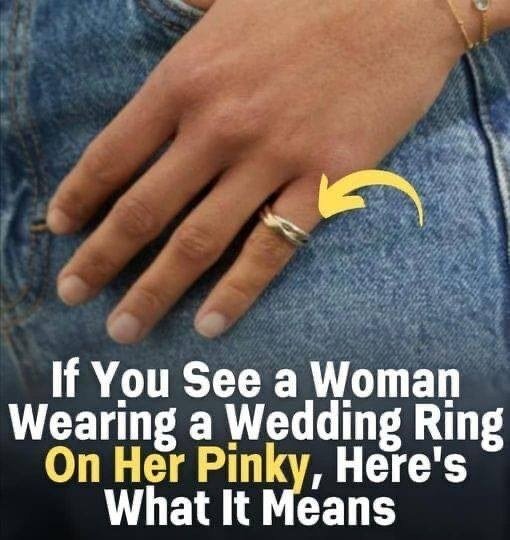
For a long time, rings were read almost automatically.
A band on one finger suggested commitment. A stone on another suggested romance, promise, or partnership. Jewelry carried a social grammar that many people learned without ever being formally taught. You looked at the hand, and the hand seemed to tell a story.
That is what makes the pinky ring interesting now. It interrupts that old script.
The source article argues that more women are choosing pinky rings not as a sign of romance, but as a symbol of self-love, independence, and personal commitment. It frames the shift as a quiet redefinition of what a ring can represent when it is no longer tied to being chosen by someone else.
A Ring That Points Inward Instead of Outward
The article begins by anchoring readers in the familiar history of rings as symbols of love and devotion, especially the tradition of wearing meaningful rings on the fourth finger. From there, it pivots: the pinky ring, in this telling, represents something different. It is not about engagement, marriage, or public relationship status. It is about the relationship a person has with herself.
That idea resonates because it reverses an old expectation.
For generations, women’s symbolism has often been interpreted through external attachment — whose daughter, whose wife, whose partner, whose future bride. The pinky ring, as the article describes it, resists that reflex. It says identity does not have to be explained through romance to feel meaningful.
There is something quietly powerful in that. Not loud rebellion. Not performance. Just a subtle repositioning of value.
Why This Trend Feels Personal Instead of Performative
One reason the pinky-ring idea works is that it is small enough to feel intimate.
The article describes women choosing these rings for many different reasons: reclaiming identity after a painful relationship, marking a personal milestone, honoring recovery, celebrating growth, or simply creating a daily reminder of self-worth and boundaries.
That range matters.
A symbol becomes durable when it can hold different meanings without losing its core. In this case, the core is self-recognition. The ring may represent healing for one person, independence for another, and hard-won confidence for someone else. The object stays the same, but the emotional weight changes with the life behind it.
And maybe that is why the gesture feels more sincere than trendy. It is not asking everyone to mean the same thing. It is just offering a place to put meaning.
The Quiet Ceremony of Buying Something for Yourself
One of the strongest ideas in the source is that buying yourself a pinky ring can feel ceremonial. The article compares it to the seriousness of engagement, except the promise is inward rather than outward: a commitment to honor your needs, your goals, and your own emotional life.
That is a striking reframe.
People are used to ceremonies that validate love when it arrives from outside. Much less attention is given to the moment someone decides to stop waiting for permission to value herself. A pinky ring, in this reading, becomes a physical marker of that shift. Not because metal has magical power, but because humans often need symbols to make internal decisions feel real.
A promise can exist silently in the mind. But once attached to an object worn every day, it becomes harder to forget.
There Is History Behind It, Too
The article also places the trend in a historical frame. It notes that pinky rings have been worn for many reasons over time, including as class signals and style statements, and says that in the Victorian era some women used them to indicate they did not intend to marry. It also points to their association with elegance and sophistication in the 1920s and 1930s.
That history gives the modern interpretation a little more depth.
The pinky ring is not being invented from nothing. It already carried traces of independence, style, and social meaning. What the current trend seems to do is gather those fragments and turn them inward, away from status display and toward private symbolism.
In that sense, the ring is not just fashion. It is an old form receiving a new emotional language.
Why the Placement Matters
If the same ring were worn on a different finger, the message would change.
That is part of what makes jewelry so culturally interesting. Placement creates interpretation. The pinky finger sits just outside the dominant symbolic territory of romantic commitment, which gives it unusual freedom. It does not carry the same immediate assumptions, and that makes it available for reinvention. The source leans on exactly this contrast, arguing that the meaning comes not only from the ring itself but from the deliberate choice to place it somewhere historically less tied to partnership.
That freedom is part of the appeal.
The pinky ring can be visible without being conventional. It signals intention without forcing explanation. People may notice it, but they are less likely to read it through one fixed social script.
And sometimes that is exactly what modern symbols need: ambiguity with purpose.
A Small Rebellion Against External Validation
The article’s broader claim is cultural, not just decorative. It argues that the pinky ring trend challenges the idea that a woman’s value should be measured through romantic status, and instead invites attention toward inner fulfillment, self-respect, and personal growth.
That is why the trend lands emotionally even for people who never wear rings.
It speaks to a familiar exhaustion — the exhaustion of being measured from the outside in. By relationship milestones. By approval. By whether one appears chosen, desired, settled, complete. The pinky ring, as described here, works as a counter-message: perhaps worth does not need external confirmation to become visible.
That is not a radical idea in theory anymore. But in everyday life, it still feels more radical than people admit.
The Meaning Is the Whole Point
The article is careful about one thing: there are no real rules. Some women choose delicate bands, others wear bold stones or custom engravings. The style can vary, because the meaning is what matters most.
That flexibility may be the healthiest part of the whole trend.
Once symbols become overly prescribed, they lose some of their emotional truth. A pinky ring works precisely because it can remain personal. It does not need to be standardized to be real. It only needs to remind the wearer of something she has decided matters.
And perhaps that is the deeper lesson hidden inside something as small as jewelry: symbols are most powerful when they help a person remember who she is becoming.
More Than Fashion, Less Than a Manifesto
What the source ultimately captures is not just a fashion choice, but a mood. Women wearing pinky rings, in this interpretation, are not merely accessorizing. They are participating in a quieter kind of self-definition — one that values self-respect, emotional boundaries, and inward commitment over public labels.
That does not mean every pinky ring carries the same philosophy. But it does explain why the image has power.
A tiny ring on the smallest finger can say something surprisingly large: I choose myself, too.
And in a world that still trains many people to wait for meaning to be handed to them from the outside, that may be exactly why the gesture feels so modern.