Mack O'reilly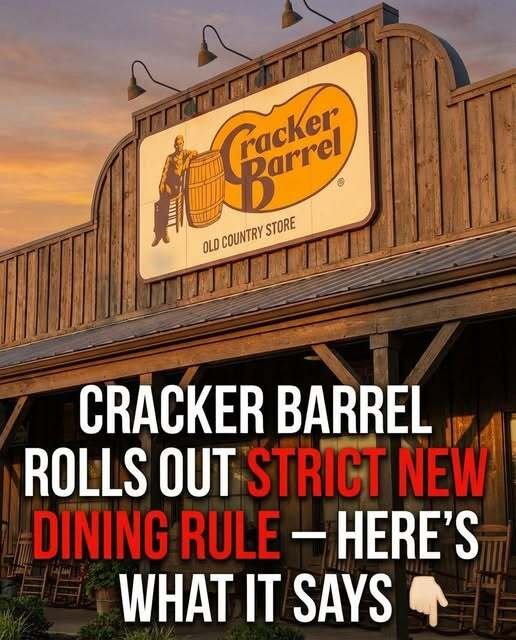
Most restaurant headlines are about menus, prices, or new locations.
This one isn’t.
Instead, the conversation around Cracker Barrel has centered on something much more unusual: what its own employees are expected to do while traveling for work. Recent reports say the company reiterated internal guidance that employees traveling on business should dine at Cracker Barrel locations for all or most meals “whenever practical based on location and schedule.” Cracker Barrel has since clarified that this is not a new rule and does not mean employees are restricted to eating only there at all times.
That distinction matters, because the story has spread online as if the company imposed a sudden hardline requirement. The actual picture is a little more specific—and more revealing about how companies are managing costs, branding, and public perception.
What the Guidance Actually Says
The reporting around this issue comes from an internal memo discussed by several outlets. The memo states that employees are expected to dine at Cracker Barrel stores for all or the majority of meals while traveling, but only when practical based on location and schedule. It also tightened reimbursement rules around alcohol, requiring employees to pay out of pocket unless an exception is approved in advance.
Cracker Barrel later clarified publicly that this was not a brand-new policy. The company said the dining guidance had been in place since June 2024 and that the real update was mainly about further limiting alcohol reimbursement.
So the core of the story is not “employees may only eat at Cracker Barrel.”
It is closer to this:
- employees traveling for work are encouraged to use company restaurants when practical
- they are not absolutely forbidden from eating elsewhere
- alcohol reimbursement rules have become stricter
Why This Became a Viral Story
The reason this story exploded is that it touches something people instantly understand: workplace control over everyday behavior.
Business travel usually carries an assumption of limited freedom—expenses are monitored, lodging is approved, flights are chosen within policy. But food still feels personal. So when people hear that a company wants employees to eat mainly at its own restaurants while traveling, it sounds strangely intimate and unusually strict.
That makes it perfect for social media:
- it feels oddly specific
- it sounds intrusive
- it invites people to imagine themselves under the same rule
And once the story is framed that way, the nuance often disappears.
Why Cracker Barrel May See It as Sensible
From the company’s perspective, the policy has a practical logic.
Cracker Barrel is a restaurant brand. Encouraging employees to eat in its stores while traveling can serve several purposes at once:
- it controls meal expenses
- it keeps spending inside the company ecosystem
- it gives employees direct exposure to the guest experience
- it reinforces internal familiarity with the brand during a period of operational change
That last point matters because Cracker Barrel has been navigating a period of turbulence. The company faced backlash over its 2025 rebranding effort and later reversed course on some of those changes, while also reporting weak sales and slower-than-hoped turnaround progress.
In that context, a policy encouraging staff to stay close to the brand during business travel can look less arbitrary and more strategic.
Why Critics See It Differently
The public reaction has been much less sympathetic.
Critics argue that guidance like this feels overly controlling, especially if it affects employees who are already traveling for work and may want flexibility after long days on the road. Even if the policy allows exceptions, the expectation itself can still feel restrictive.
The emotional reaction is understandable.
Food carries more than cost. It carries comfort, preference, routine, and small moments of choice. When a company appears to direct that choice too closely, people tend to see it as a symbol of broader corporate overreach.
That is why this story did not stay inside business reporting.
It became culture commentary.
The Alcohol Rule Helped Intensify the Story
Another part of the memo that received attention was the change to alcohol reimbursement. Reports say employees now need prior approval for alcohol expense exceptions tied to special occasions.
On its own, that is not unusual. Many companies tightly control alcohol reimbursement during work travel. But paired with the restaurant-meal guidance, it helped create the impression of an employer trying to micromanage personal behavior more aggressively than before.
That combination made the policy feel less like one reimbursement tweak and more like a broader tightening of corporate rules.
Why Timing Matters Here
This story also landed at a sensitive moment for the company.
Cracker Barrel has already been dealing with customer backlash over attempted branding changes and reported sales declines, while management has been trying to reassure both investors and loyal customers that the brand still understands what people value about it.
In that environment, any internal rule that sounds rigid or awkward can quickly turn into a public relations issue. What might otherwise have remained a minor corporate memo instead became another signal—fair or unfair—that the company is under pressure and making unusual choices in response.
The Bigger Meaning of the Story
At a deeper level, this is not really only about Cracker Barrel.
It is about how modern companies manage behavior under the language of efficiency. Many workers accept that employers set reimbursement rules, but they are more resistant when those rules begin to feel like instructions about everyday personal choices.
That is why this story resonates beyond one chain restaurant.
It raises a wider question:
Where does reasonable policy end and unnecessary control begin?
Different people answer that differently. But once a policy touches food, travel, and personal routine all at once, people notice.
What the Clarification Changes
Cracker Barrel’s own clarification matters because it softens the most dramatic version of the story. The company says employees are encouraged to dine at Cracker Barrel while traveling when practical, and that the guideline is not new.
That does not mean people will suddenly like the policy.
But it does change the frame.
The company is not saying, “You may never eat anywhere else.”
It is saying, “When reasonable, use our own restaurants—and don’t expect alcohol reimbursement without approval.”
That is still notable. It is just less dramatic than the viral retellings suggest.
Final Thought
Cracker Barrel’s updated travel and dining guidance has drawn so much attention because it sits at the intersection of branding, cost control, and personal autonomy.
The policy is unusual enough to spark debate, but the public reaction has been amplified by how easily the story can be simplified into something sharper than it actually is.
At its core, this is a story about what happens when internal company rules collide with public expectations about freedom, comfort, and common sense.
And that is why a memo about where employees eat lunch on business trips suddenly became national conversation material.