Mack O'reilly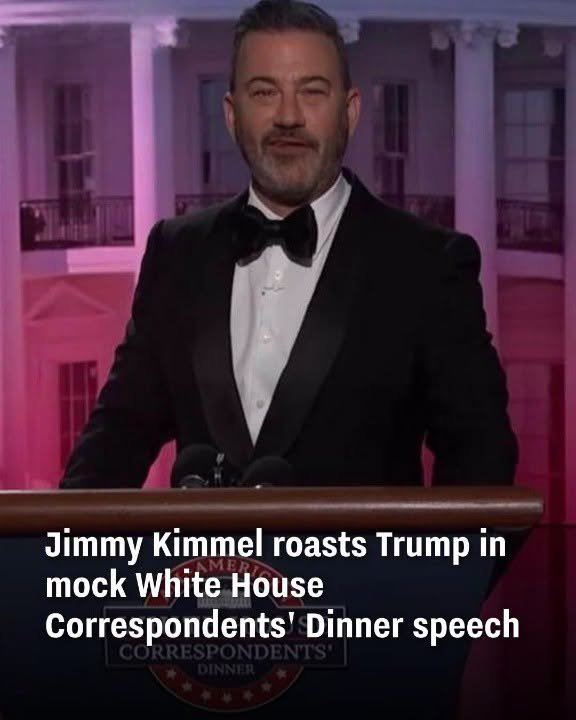
Late-night comedy is supposed to move quickly.
A headline breaks. A monologue is written. The audience laughs. The clip travels online. By the next night, the show has moved on to another story, another scandal, another strange political moment.
But when Jimmy Kimmel talks about Donald Trump, the jokes rarely stay small.
They become headlines of their own.
A single monologue can turn into a political argument. A nickname can spread across social media. A joke about the White House can trigger outrage, applause, fact-checking, counterattacks, and another round of commentary from both sides.
That is the strange role late-night television now plays in American politics.
It is not just comedy anymore. It is part entertainment, part political reaction, part media battlefield.
The Joke Is Usually About More Than the Joke
Kimmel’s criticism of Trump works because it often focuses on contrast.
He takes something presented seriously by Trump or the White House and reframes it as absurd. That might be a public statement, a social media post, a policy claim, a nickname, a staged image, or a ceremonial moment.
Recently, Kimmel mocked a White House post portraying Trump as James Bond, joking that “007” sounded more like an approval rating. The joke came after the White House shared the Bond-themed image while entertainment news was already focused on the future of the James Bond franchise.
That is a classic late-night move.
The joke is not only “Trump as Bond is funny.” It is also, “Why is the White House spending attention on this image at all?”
That second layer is what makes the comedy political.
It turns a visual stunt into a question about priorities.
Why These Clips Travel So Fast
Kimmel’s monologues are built for television, but their real afterlife is online.
A sharp joke can be cut into a short clip, captioned, posted, reposted, argued over, and turned into a reaction video within hours. Supporters see it as someone finally saying what they already think. Critics see it as another example of liberal media bias or celebrity arrogance.
Either way, the clip moves.
That is why late-night political comedy has become so powerful in the social media age. It gives people a short, emotional version of a much larger political argument.
You do not need to read a full policy analysis to understand the point. The joke does the work in ten seconds.
That can be effective.
It can also flatten complicated issues into applause lines.
The White House Responds Because the Audience Is Bigger Than TV
Years ago, a late-night joke might have annoyed a politician but disappeared quickly.
Now, a joke can dominate feeds.
That changes the incentive. Political teams respond not only because they are personally offended, but because ignoring viral criticism can look like surrender to their base. The response becomes part of the performance.
The White House has publicly criticized Kimmel and other entertainers before. In one official White House media-bias page from April 2026, Kimmel was described in hostile terms over past comments involving Melania Trump and political violence.
That kind of response shows how seriously political institutions now treat entertainment commentary.
A comedian’s monologue is no longer just a joke from a studio desk. It becomes another front in the broader fight over narrative, loyalty, outrage, and public image.
Kimmel’s Role Is Satire, Not Investigation
This is where the “exposes White House secrets” framing becomes misleading.
A late-night monologue is not the same as an investigative report.
Kimmel may criticize, mock, summarize, exaggerate, or highlight contradictions, but that does not mean he is uncovering hidden government secrets. He is usually reacting to public statements, public clips, public behavior, and publicly available news.
That distinction matters.
Comedy can reveal absurdity. It can point out hypocrisy. It can make people notice something they might have ignored. But it should not be confused with journalism that verifies documents, interviews sources, and establishes facts through reporting.
When online headlines say a comedian “exposed secrets,” they often inflate the moment to get clicks.
The real story is usually simpler: a comedian delivered a pointed political critique, and people reacted strongly.
Why Trump Is Such a Constant Target
Trump has always been unusually central to late-night comedy.
Part of that is because he speaks and posts in a way that creates material quickly. He uses dramatic phrasing, visual branding, nicknames, insults, and public feuds. For comedians, that is an endless supply of setup lines.
Part of it is also because Trump is not just a politician. He is a media figure.
Before politics, he was already a television personality and celebrity brand. That makes the boundary between politics and entertainment especially blurry. Late-night hosts are not only commenting on his policies; they are also reacting to the spectacle around him.
That spectacle is one reason jokes land so easily.
The performance is already halfway there.
The Risk of Political Comedy
Political comedy can be useful because it makes power less untouchable.
It reminds viewers that presidents, officials, and institutions can be questioned. It can make complicated news feel accessible. It can help people process frustration through humor instead of pure anger.
But it also has limits.
People who already dislike Trump may watch Kimmel and feel validated. People who support Trump may watch the same clip and feel attacked. Very few people change their minds because of one monologue.
Instead, political comedy often strengthens existing beliefs.
It tells one audience, “You are right to laugh,” while telling another, “They are laughing at you.”
That is why the reaction can be so intense.
The joke becomes tribal.
The Bigger Story: Politics as Entertainment
The larger issue is not only Kimmel or Trump.
It is the way American politics has become entertainment-shaped.
Public life now runs on clips, images, reactions, memes, nicknames, and emotional moments. A White House post can look like a movie poster. A comedian’s response can become a news headline. A political controversy can move like a celebrity feud.
The audience watches, reacts, shares, and chooses sides.
That does not mean the issues underneath are fake. Real policy, real institutions, real money, real rights, and real consequences are involved.
But the way people encounter those issues is often theatrical.
Kimmel’s Trump monologues succeed because they understand that theater. They take political spectacle and turn it back on itself.
The Takeaway
Jimmy Kimmel’s criticism of Trump keeps making news because it sits at the intersection of comedy, politics, media, and social media outrage.
The jokes are not just jokes anymore. They are signals. They tell audiences how to interpret a moment, how to laugh at it, and sometimes how to be angry about it.
But the strongest way to understand these viral monologues is not as secret revelations.
They are public satire.
They take visible political behavior and frame it in a way that makes supporters laugh, critics react, and news outlets write another round of coverage.
That is why the cycle keeps repeating.
Trump creates spectacle. Late-night turns it into comedy. Social media turns comedy into conflict. And the conflict becomes content all over again.