Mack O'reilly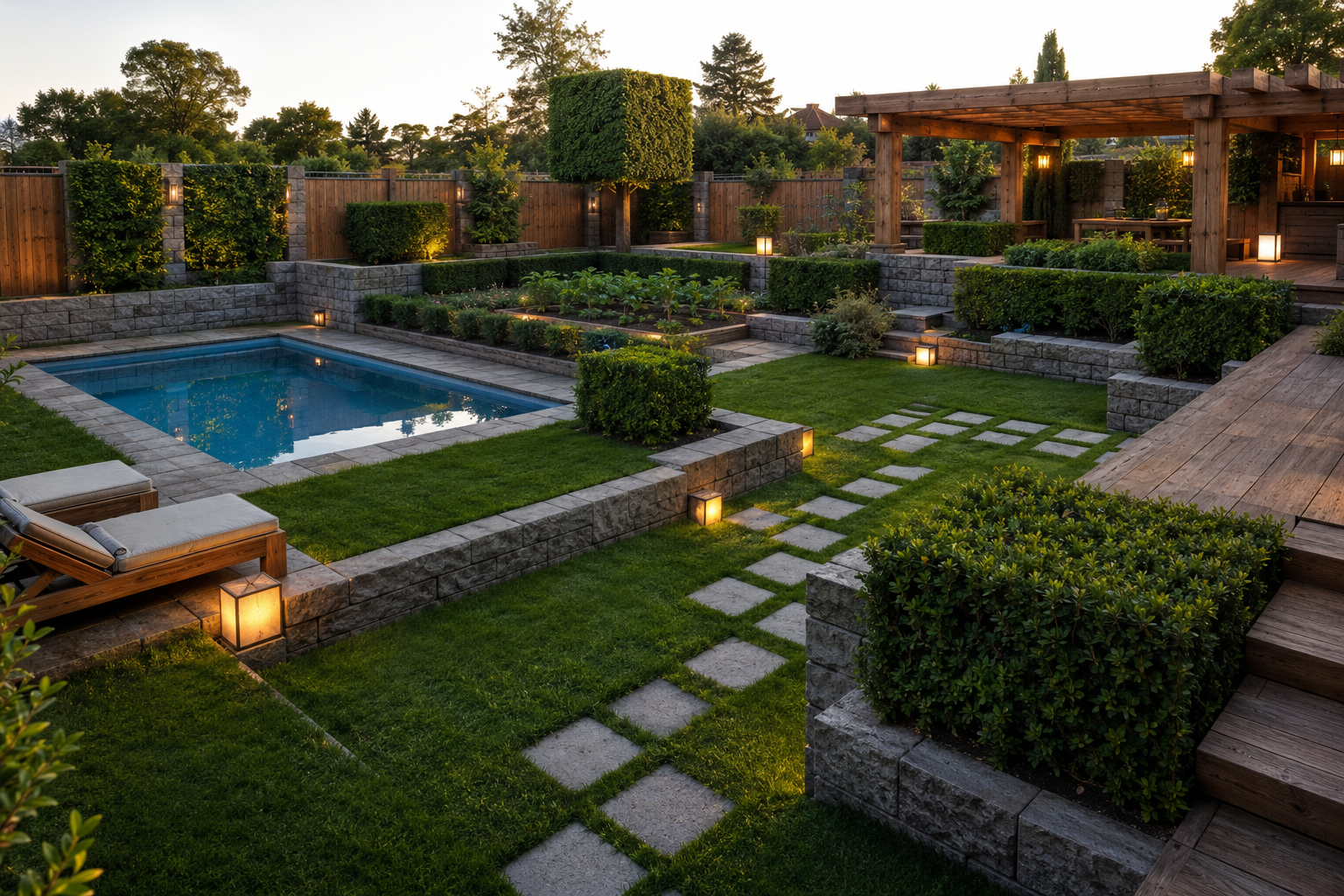
A Minecraft-inspired backyard can turn familiar game elements into a practical outdoor space. Square garden beds, grid-based paths, cube planters, and block-shaped seating can suggest the game’s visual style without making the yard feel like a temporary party display.
However, the theme should support the backyard’s real purpose. Plants still need suitable sunlight, paths must remain comfortable, and every activity area needs enough space. Therefore, begin with a functional layout and introduce Minecraft details through shape, color, and decoration.
A Block-Inspired Garden Layout
The garden in the image already contains several features that suit a Minecraft-inspired design. Its planting areas follow clear geometric sections, while the gravel, mulch, lawn, and stone path resemble different landscape blocks.
In addition, the metal arches create vertical structure. They could represent an entrance between garden zones while supporting real climbing plants. As a result, the themed design remains useful throughout the growing season.
The garden does not copy the game literally. Instead, it translates the block-based appearance into an organized outdoor layout, which makes the idea more adaptable and easier to maintain.
Plan the Yard on a Grid
Minecraft uses a block system, so a grid provides the natural foundation for the design. Begin by drawing the backyard from above and dividing the available space into equal squares or rectangles.
Next, assign each section a purpose. For example, one block can hold a vegetable bed, while another becomes seating, lawn, or a gravel path. This approach keeps the layout organized and makes the theme visible even without decorations.
However, the grid does not need to cover every part of the yard. Existing trees, fences, drains, and doors may require adjustments. Therefore, use the block system as a design guide rather than forcing every feature into perfect squares.
Create Different Landscape Blocks
The game’s environments change through contrasting blocks and biomes. Similarly, a backyard can create visual variety through different ground materials.
A simple material palette could include:
- Grass for green blocks
- Gravel for paths
- Wood mulch for brown ground
- Gray pavers for stone
- Raised beds for soil blocks
- Blue planters for water-inspired areas
Although variety supports the theme, too many surfaces can make the yard look fragmented. Choose three or four main materials and repeat them across the layout.
Clear borders will help each section remain recognizable. For example, timber-style edging can separate mulch from gravel, while square pavers can define the path through the lawn.
Design Square Garden Beds
Square and rectangular garden beds are one of the easiest ways to establish the theme. They can hold flowers, herbs, vegetables, or compact shrubs depending on the yard’s sunlight and climate.
Repeat the same dimensions when possible. Consequently, the separate beds will read as part of one planned system.
Raised beds can create stronger block shapes, while ground-level beds produce a subtler effect. However, any structure should remain stable and use materials suitable for outdoor and planting use.
Leave comfortable paths between the beds. Plants may begin small, but they will spread as they mature. Therefore, check their expected size before deciding the final spacing.
Build a Stepping-Stone Path
Square stepping stones can imitate game blocks while creating a useful route through the yard. Arrange them in a straight line for a strong grid appearance or offset them slightly for a more playful path.
The path should connect real destinations, such as the house, garden beds, seating area, and gate. Otherwise, it may look decorative without improving the space.
Each stone needs a stable, level base. Moreover, its surface should remain comfortable in wet weather. Ask an experienced adult or professional to handle heavy pavers, excavation, or uncertain ground conditions.
Grass or low-growing plants can fill wider gaps. However, keep the stepping surfaces clear so the route remains safe and easy to maintain.
Add Cube-Shaped Planters
Cube planters offer a simple way to bring block shapes above ground level. They can frame a patio, mark the entrance to a garden, or add greenery beside a seating area.
Use planters in natural wood, gray, green, or muted terracotta. Alternatively, paint suitable outdoor containers in colors inspired by grass, stone, sand, or water blocks.
Avoid painting every planter with a detailed game pattern. Instead, use mostly solid colors and reserve pixel designs for one or two statement pieces.
The containers need drainage and enough soil for their selected plants. In addition, they should remain stable during wind or heavy rain.
Create a Minecraft Color Palette
A recognizable palette can establish the theme without logos or character decorations. Green, brown, gray, blue, and sand tones provide the strongest foundation.
Green represents grass and forest areas, while brown connects with wood and soil. Meanwhile, gray pavers suggest stone, and blue accessories introduce a water element.
Use brighter colors sparingly. Red flowers could suggest redstone, while yellow and orange blooms can add torch-like warmth.
Natural materials should remain dominant. As a result, the backyard will still look attractive even when the theme is viewed by someone unfamiliar with Minecraft.
Design Mini Biome Zones
A larger backyard can include several small planting zones inspired by different biomes. Each zone should use real plants suited to the local climate rather than attempting to reproduce unsuitable environments.
Forest Zone
Use layered green plants, bark mulch, and wood details. A small tree or tall shrub can provide the zone’s main structure.
Flower Zone
Group colorful flowers inside a defined square bed. Repeating several varieties will create a stronger effect than planting one of everything.
Desert-Inspired Zone
Use gravel, warm stone, and drought-tolerant plants that suit the local climate. However, avoid sharp plants near play areas and paths.
Water-Inspired Zone
Use blue planters, blue-gray gravel, or a reflective decorative surface. A real pond is not necessary to communicate the idea.
Although each zone can look different, repeat the same edging or path material. Therefore, the backyard will remain visually connected.
Use Climbing Arches as Portals
Garden arches can introduce height and create the feeling of moving between different zones. In a Minecraft-inspired yard, they can loosely suggest portals or gateways without requiring a literal replica.
Position an arch over a real path so it marks a transition. Then add climbing plants suited to the local growing conditions.
A dark metal frame creates a stronger graphic outline, while wood feels more rustic. In either case, the arch must remain stable and securely installed.
Avoid hanging objects where they may strike someone walking underneath. Furthermore, prune plants regularly so they do not block the opening.
Add Pixel-Inspired Decorations
Pixel art provides the most direct reference to Minecraft. However, it has more impact when used selectively.
A small outdoor panel, painted planter, cushion cover, or stepping-stone pattern can become the main themed detail. Meanwhile, the rest of the yard can rely on block shapes and game-inspired colors.
Choose weather-resistant materials and outdoor-appropriate paint. In addition, secure lightweight decorations so wind cannot carry them away.
Rather than filling the yard with many characters, select one simple motif. This keeps the design recognizable without making it visually crowded.
Create Block-Style Seating
Square benches, modular outdoor seats, and cube stools fit naturally within the grid. They also allow the seating area to change when more open space is needed.
Wooden seating connects with the garden’s natural materials. However, outdoor cushions can introduce green, blue, and gray blocks of color.
Arrange the furniture around a square or rectangular table. Then use pavers or an outdoor rug to define the seating zone.
The furniture must remain stable on the ground surface. Therefore, correct uneven soil or loose gravel before placing chairs and tables.
Introduce Safe Outdoor Lighting
Lighting can add atmosphere after sunset while making paths and steps easier to see. Low path lights, warm string lights, and illuminated planters can all support the design.
For a subtle Minecraft reference, place warm lights at regular intervals along the path. Their repeated spacing will resemble a grid of torches without copying them literally.
However, all products must carry an outdoor rating. Keep cables away from walkways and water, and follow the manufacturer’s instructions.
Any permanent electrical work should be completed by a qualified electrician. Similarly, an adult should manage high installations or any task requiring unsafe climbing.
Add a Crafting or Potting Station
A potting bench can act as the backyard’s practical “crafting” area. It provides space for repotting plants, organizing small garden supplies, and preparing seasonal displays.
Choose a simple wooden bench with closed or organized storage below. Then place it near the planting beds without blocking the path.
A grid-style tool board can reinforce the theme while keeping lightweight items visible. However, sharp garden tools should remain stored securely and handled with appropriate adult supervision.
Keep the Design Easy to Maintain
A themed backyard still needs regular care. Therefore, choose plants and materials that match the time available for watering, pruning, and cleaning.
Group plants with similar needs inside the same block. This makes watering easier and prevents one variety from receiving too much or too little moisture.
Gravel and mulch may shift over time, so their borders will need occasional attention. Meanwhile, square beds require pruning to preserve their clear shapes.
Leave some open sections in the original plan. Consequently, the design can expand without overcrowding the yard.
Create the Look on a Smaller Budget
The block-based theme can work without custom construction. Begin by reshaping existing beds into clearer rectangles and defining their edges.
Next, reposition containers into small groups or rows. Then use square stepping stones, repeated plant colors, and one pixel-inspired decoration.
Existing wood furniture can support the theme through simple cushions and accessories. Likewise, a basic garden arch can become a strong gateway once plants begin covering it.
Spend the budget on functional features first. Paths, stable planters, soil, and healthy plants will provide more long-term value than numerous themed decorations.
Common Design Mistakes
One common mistake is making every feature a direct game reference. As a result, the backyard may feel like a temporary display rather than a usable garden.
Another mistake is ignoring plant growth. Although young plants fit neatly inside small squares, mature varieties may cover paths and neighboring beds. Therefore, check their mature dimensions before planting.
Too many surface materials can also break the layout into unrelated sections. Instead, repeat a limited palette of stone, mulch, grass, and wood.
Finally, do not begin deep digging without checking for buried utilities and local requirements. An adult or qualified professional should handle uncertain excavation, heavy construction, and permanent installations.
Final Thoughts
A diy minecraft backyard design works best when the game inspires the structure rather than controlling every detail. Grid-based beds, square paths, cube planters, and natural block colors can establish the theme while preserving a functional garden.
Begin with the yard’s real needs, including movement, seating, planting, and maintenance. Then add one or two pixel-inspired details for personality.
As the plants mature, the backyard will become softer and more natural. However, its clear block layout will continue to provide the recognizable Minecraft influence.