Mack O'reilly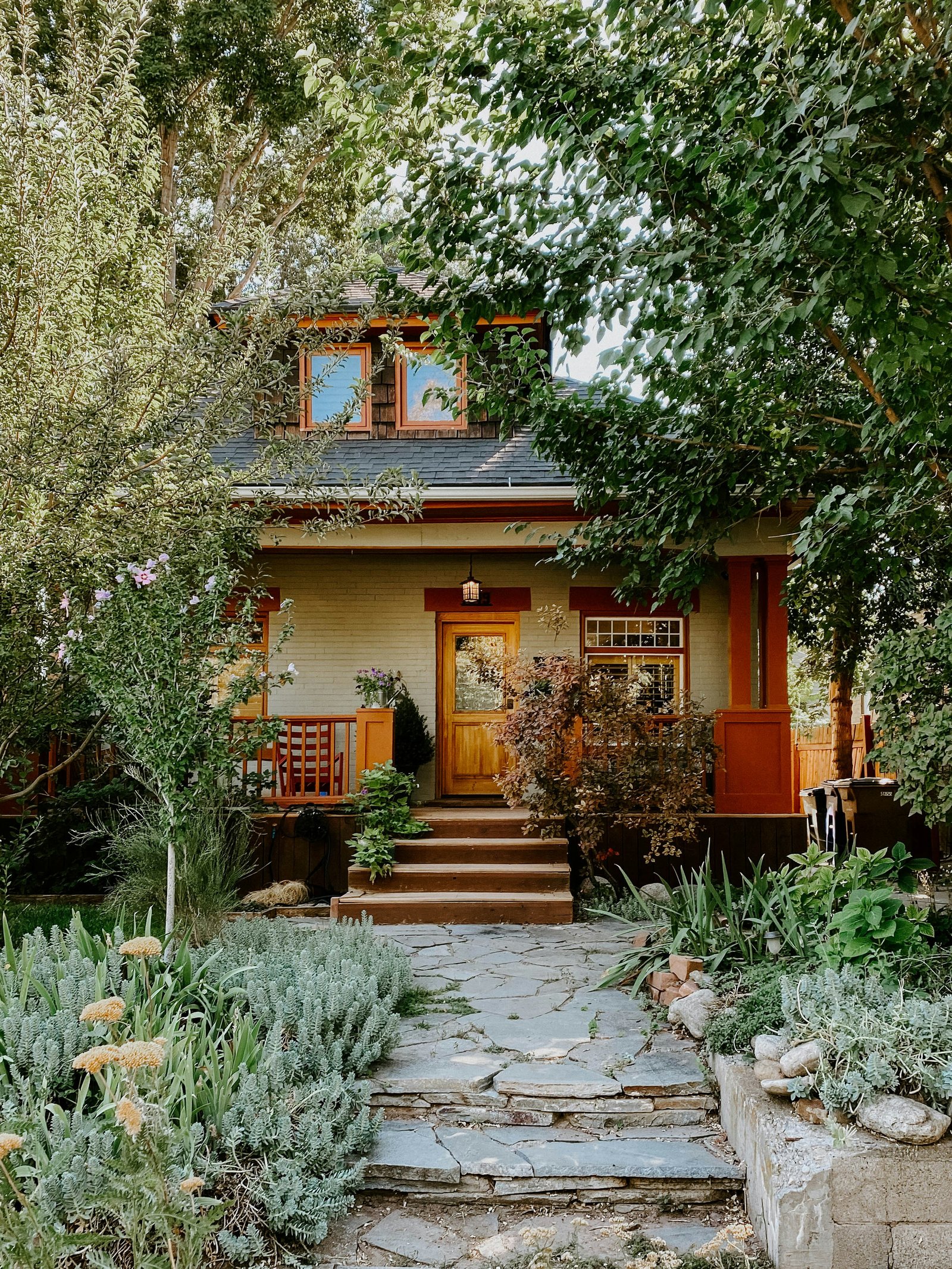
Rustic landscaping feels welcoming because it works with natural materials instead of trying to make every surface look perfect. Stone paths, weathered wood, layered plants, and relaxed garden borders create character without requiring a formal design.
However, a rustic yard should still have structure. Clear pathways, repeated plants, and defined beds keep the landscape organized. Therefore, the best designs combine a natural appearance with a simple plan.
A Natural Rustic Front Yard
This front yard feels established because the plants surround the house instead of sitting in isolated rows. Mature trees create an overhead canopy, while shrubs and perennials form several lower layers.
The irregular stone path strengthens the rustic style. Although the stones vary in shape, they follow a clear route toward the front steps. As a result, the garden looks natural without becoming difficult to understand.
Warm wood on the door, steps, railings, and window trim connects the home to the landscape. Meanwhile, gray stone and soft green foliage prevent the orange-brown details from becoming too strong.
Begin With a Clear Path
A pathway provides the main structure for a rustic front yard. Therefore, plan it before choosing smaller plants or decorations.
Natural stone works especially well because its variations support the informal style. Flagstone, fieldstone, gravel, and reclaimed brick can all create a suitable surface. However, the finished path should remain stable and comfortable to walk on.
A gentle curve can make the garden feel larger by revealing the entrance gradually. Nevertheless, the route should not become unnecessarily indirect. Visitors should understand immediately how to reach the door.
Keep the path wide enough for practical use and maintain clear edges. In addition, avoid placing plants where they will obstruct steps or create a tripping hazard.
Use Natural Stone as a Repeated Material
Repeating one stone type helps connect different parts of the landscape. For example, the path, garden border, and low retaining edge can share similar gray or brown tones.
The stones do not need identical shapes. In fact, moderate variation often creates a more authentic rustic appearance. However, the color and texture should remain related.
Large stones can also provide visual anchors among soft plants. Meanwhile, smaller gravel can fill secondary paths or spaces around planters.
Heavy stone requires careful handling and a stable foundation. Therefore, ask an experienced adult or landscaping professional to manage large materials, excavation, or structural retaining work.
Create Relaxed Rustic Garden Borders
Perfectly straight borders can make a rustic landscape feel too formal. Instead, use gentle curves that respond to the pathway, porch, and existing trees.
The border should still have a recognizable edge. Stone, brick, metal edging, or a clean cut between the lawn and bed can provide that definition.
A curved border can widen near the entrance to make room for larger plants. Then it can narrow alongside the path where walking space matters.
Avoid creating many small disconnected beds. A few larger planting areas usually feel calmer and require less edge maintenance.
Build the Garden in Layers
Layered planting creates depth and makes a simple yard feel established. Begin with the tallest plants near walls, fences, or the back of the bed. Then place medium shrubs and perennials in front.
Finally, use low plants near the pathway. This arrangement preserves visibility and prevents larger foliage from covering smaller varieties.
The layers can include:
- Small ornamental trees
- Evergreen shrubs
- Flowering shrubs
- Perennial flowers
- Ornamental grasses
- Ground-cover plants
However, select plants according to the local climate, soil, mature size, and available sunlight. A plant that looks small at purchase may eventually require much more space.
Repeat Plants for a Calm Design
Rustic does not need to mean random. Therefore, repeat several plants throughout the landscape to create continuity.
For example, one low-growing plant can follow both sides of the path. Meanwhile, the same shrub can appear near the porch and at the outer edge of the garden.
Repeated foliage is often more useful than repeated flower color because leaves remain visible for longer. In addition, similar leaf shapes can connect plants that bloom at different times.
Limit the overall plant selection at first. You can always add variety later once the main structure becomes established.
Combine Evergreen and Seasonal Plants
Evergreen plants provide shape throughout the year, while seasonal flowers introduce change. Consequently, a combination of both prevents the garden from looking empty during colder months.
Place evergreens near the entrance and at important corners. These plants will maintain the landscape’s basic outline even when other varieties become dormant.
Seasonal flowers can then fill selected areas along the path or near the porch. However, avoid spreading small patches everywhere. Larger groups create a clearer visual effect and are easier to maintain.
Choose a Rustic Color Palette
Green should remain the foundation, while flowers and exterior materials provide smaller accents. Soft white, pale yellow, dusty purple, muted pink, and warm red work naturally in rustic landscapes.
The house can guide the palette. For example, warm wood trim pairs well with yellow-green foliage and cream flowers. Meanwhile, a gray exterior can support blue-green plants and soft purple blooms.
Avoid choosing every plant only for its flowers. Leaf color, shape, and texture will influence the garden for much more of the year.
Preserve Existing Trees
Mature trees can give a rustic landscape a sense of history that new decorations cannot reproduce. Therefore, consider their health and root areas before changing the yard.
Do not pile soil or mulch against the trunk. In addition, avoid damaging large roots during excavation or path installation.
A professional arborist should assess unhealthy, damaged, or dangerously positioned trees. Because tree work can be hazardous, it should never become an improvised DIY project.
Once the trees are protected, choose understory plants that can tolerate the available shade and root competition.
Connect the Porch to the Garden
The landscaping should make the porch feel like part of the yard rather than a separate structure. Repeating wood, stone, and plant colors can create that connection.
For instance, a wooden planter can relate to the porch railings, while a stone step can connect with the path. Similarly, plants near the steps can soften the transition between hard surfaces and the garden.
Keep the entrance open and visible. Although climbing plants and large shrubs add character, they should not block handrails, house numbers, windows, or exterior lighting.
Add Rustic Containers
Containers provide flexibility because they can be moved and replanted. Weathered terracotta, galvanized metal, natural wood, and matte ceramic pots suit a rustic setting.
Use one larger planter instead of several tiny containers. A substantial pot can hold a simple combination of upright foliage, seasonal flowers, and a trailing plant.
However, the container must have suitable drainage and remain stable. Place it beside the entrance rather than directly in the walking route.
Repeating the same pot material in two or three locations will create cohesion without making the arrangement feel overly matched.
Use Mulch and Ground Cover Thoughtfully
Mulch helps reduce exposed soil and gives planting beds a finished appearance. Natural brown mulch generally supports a rustic palette better than brightly colored products.
However, mulch should not be piled against tree trunks, plant stems, siding, or wooden structures. Leave appropriate clearances and follow local guidance for the selected material.
Living ground covers offer another option. They can soften path edges and fill gaps between larger plants. Nevertheless, choose varieties that suit the climate and will not spread aggressively.
Include a Simple Seating Area
A small bench or chair can turn the landscape into a place to enjoy rather than simply view. Position it where it overlooks the garden without blocking the main path.
Wooden furniture suits the rustic style, especially as it develops a natural weathered finish. Metal furniture can also work when it has a simple shape and muted color.
The seating area does not need a complete patio. Instead, a small stable surface beside the porch or beneath a tree may provide enough space.
Before placing furniture, make sure the ground is even and the location does not interfere with yard maintenance.
Add Low, Warm Outdoor Lighting
Outdoor lighting should reveal the path and entrance rather than illuminate every plant. Therefore, begin with practical lighting near steps, doors, and changes in level.
Warm-toned fixtures usually complement wood and stone. In addition, subtle path lights can highlight the garden’s shape after dark.
Avoid placing fixtures where plants will quickly cover them. Also, aim lights away from windows and neighboring properties whenever possible.
Use products rated for outdoor conditions. Any permanent wiring should be completed by a qualified electrician.
Create a Low-Maintenance Plan
A simple landscape should match the amount of time available for maintenance. Therefore, consider watering, pruning, leaf cleanup, and mature plant sizes before planting.
Group plants with similar water and sunlight needs. As a result, care becomes more consistent and efficient.
Use slower-growing shrubs for the main structure, then add seasonal color in a few accessible areas. Meanwhile, keep aggressive or high-maintenance plants away from paths and foundations.
Leaving enough space between young plants may look sparse at first. However, proper spacing prevents crowding once they reach maturity.
Improve the Yard Gradually
A rustic landscape often looks best when it develops over time. Consequently, there is no need to complete the entire yard in one season.
Begin with the path, bed shapes, and several structural plants. Then observe how sunlight, water, and movement affect the area.
Afterward, add perennials, ground cover, containers, and decorative details. This gradual process reduces expensive mistakes and allows the garden to respond naturally to the site.
Common Landscaping Mistakes
One common mistake is selecting plants without checking their mature size. As a result, shrubs may eventually cover windows, paths, or other plants.
Another mistake is using too many unrelated materials. Although rustic gardens allow variation, several different stones, border types, and pot finishes can look chaotic. Instead, repeat a limited material palette.
Poorly defined paths can also create problems. Therefore, make sure every route has a clear destination and stable walking surface.
Finally, avoid beginning excavation before checking for buried utilities and local requirements. An adult or qualified professional should handle any uncertain or substantial ground work.
Final Thoughts
Outside simple rustic landscaping works best when the garden feels natural but remains easy to navigate. Stone paths provide structure, while layered plants soften the home and introduce seasonal change.
Begin with the main pathway and a few larger planting beds. Then repeat compatible plants, wood tones, and stone materials throughout the space.
Most importantly, allow the landscape to develop gradually. With thoughtful spacing and a controlled palette, a simple yard can gain the relaxed character of a long-established garden.