Mack O'reilly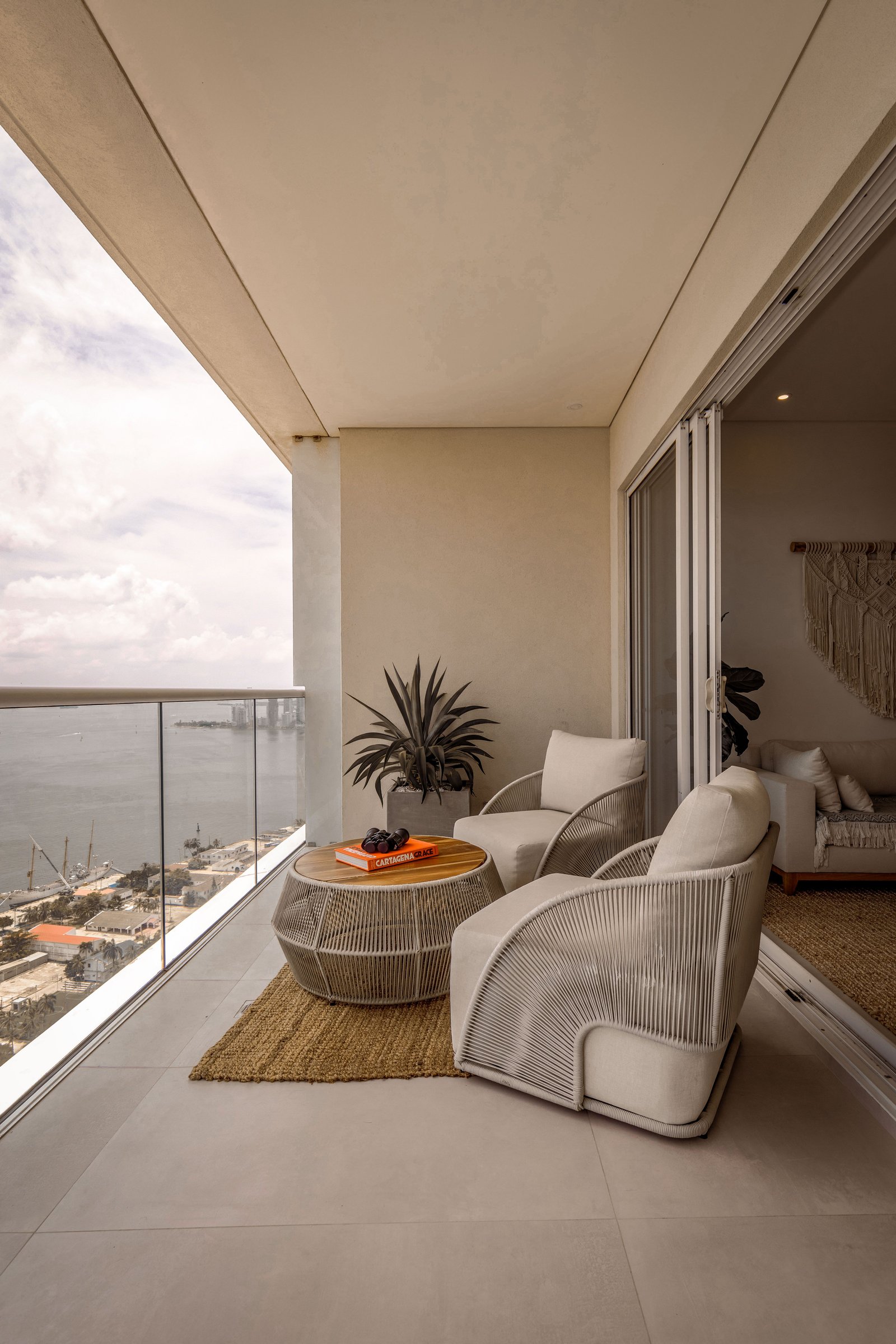
An apartment terrace can become a comfortable extension of the living room, even when the available space is limited. With correctly sized furniture, a few plants, and soft lighting, an empty balcony can support morning coffee, reading, or relaxed evenings outdoors.
However, a successful terrace needs more than attractive decorations. The layout must protect walking space, withstand changing weather, and comply with building rules. Therefore, planning the floor area and exposure should come before purchasing furniture.
The three terraces below demonstrate how the same principles can create minimalist, garden-inspired, and social outdoor spaces.
Minimalist Terrace With a View
This terrace keeps the furniture low and the palette neutral, which allows the view to remain the main feature. Two woven chairs provide comfortable seating, while the round table fits between them without restricting movement.
In addition, the textured rug defines the seating area and softens the tiled floor. The single plant adds an organic shape without interrupting the open sightline. As a result, the terrace feels complete even though it contains only a few objects.
The design also continues the apartment’s interior palette. Cream upholstery, woven textures, and muted colors appear on both sides of the glass doors. Consequently, the transition from indoors to outdoors feels natural.
How to Recreate the Look
Begin with two weather-resistant chairs and one compact table. Then place an outdoor rug beneath the seating to create a clear zone.
Next, add one sculptural plant in a simple container. A small group of accessories may complete the design, but most of the floor should remain open.
Finally, repeat one or two interior colors outside. This connection will make the terrace feel like part of the apartment rather than a separate decorating project.
Green Terrace With a Trellis
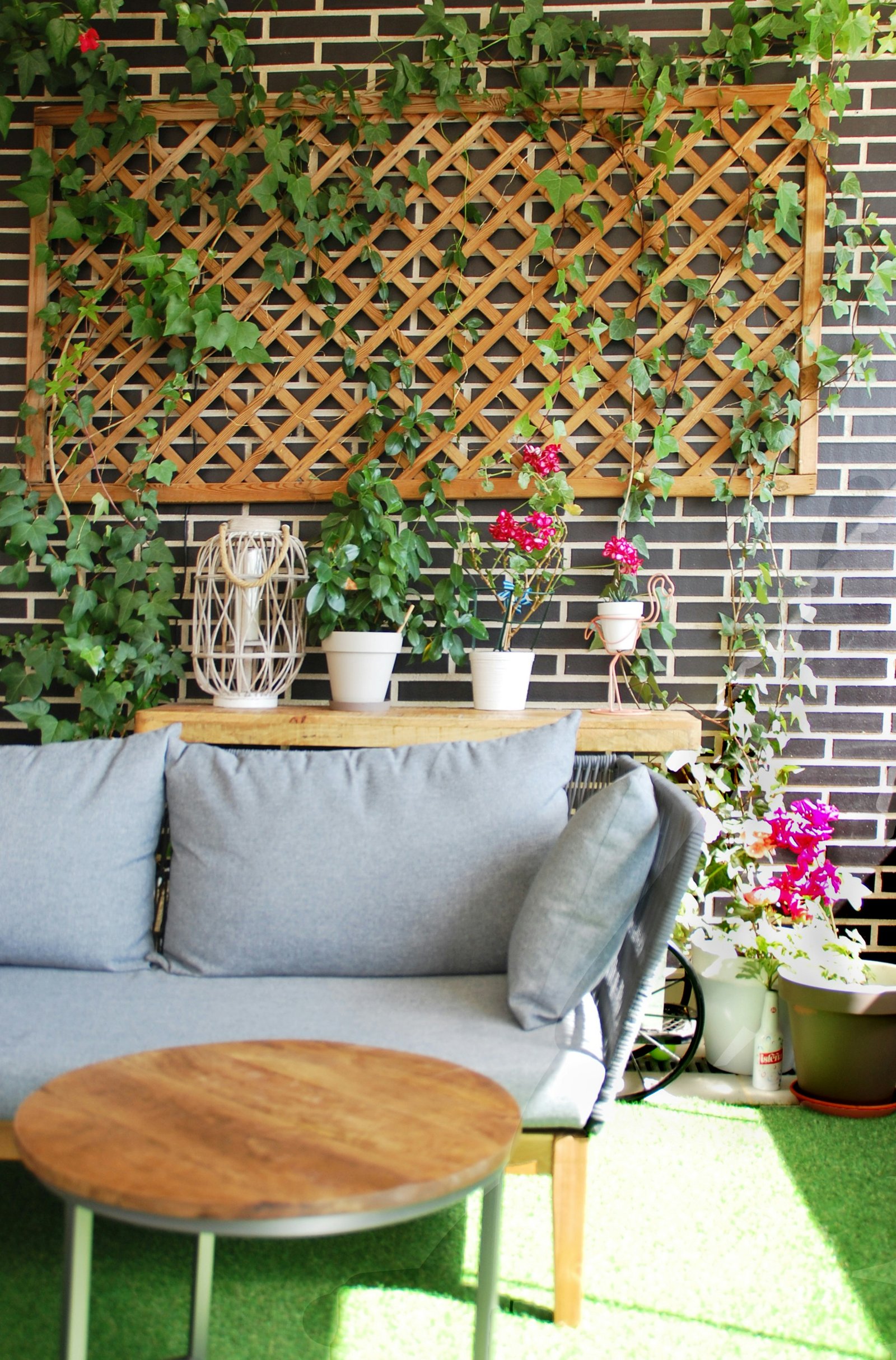
The second terrace uses greenery to soften hard exterior surfaces. A wooden trellis covers part of the brick wall, while climbing plants introduce height and privacy.
The gray loveseat provides comfortable seating without adding another strong color. Meanwhile, the wooden table and trellis create warmth against the dark brick.
Several containers hold different plants, yet the repeated white pots keep the arrangement connected. Therefore, the terrace feels lush without becoming visually disorganized.
How to Recreate the Look
Choose one wall for vertical greenery, provided the building permits the installation. Then place the main seat directly in front of or beside that feature.
Use several plants with different heights. For example, climbing greenery can form the upper layer, while medium containers and seasonal flowers fill the lower area.
However, keep the floor around the seating clear. Too many small pots can reduce usable space and make watering difficult.
Social Terrace With Evening Lighting
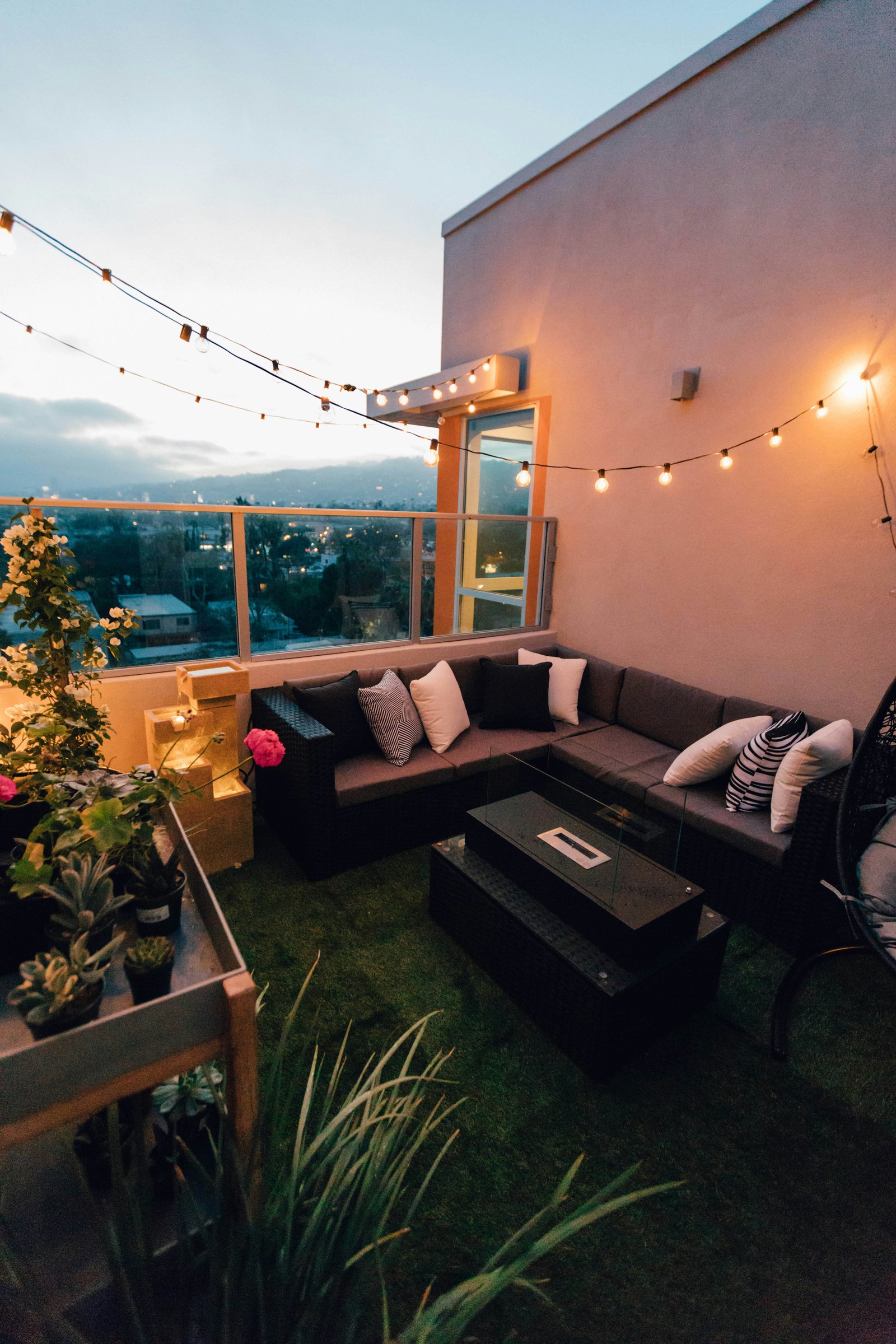
This terrace is designed for conversation and evening use. The sectional follows the corner of the space, which provides several seats while preserving an open central area.
String lights create a warm overhead boundary. In addition, container plants soften the terrace edges and separate the lounge from the surrounding buildings.
The dark upholstery creates contrast against the lighter walls and sunset sky. Meanwhile, pale cushions prevent the seating from appearing too heavy.
The central table gives the arrangement a clear focus. However, any heating or flame feature must comply with building rules and product requirements. A standard coffee table offers a simpler alternative when open flames or heaters are prohibited.
Measure Before Choosing Furniture
Apartment terraces often appear larger when they are empty. Therefore, always measure the complete floor before ordering furniture.
Record the width, depth, door movement, drainage locations, and railing position. Then mark the proposed furniture dimensions with removable tape.
Walk through the planned arrangement while the outlines remain visible. This test will show whether chairs can move comfortably and whether the door can open fully.
Keep a direct route from the apartment entrance to the main seating. Furthermore, do not cover drains or create narrow areas where someone could trip.
Decide How the Terrace Will Be Used
A small terrace cannot always support dining, lounging, gardening, and storage at the same time. Consequently, one activity should guide the layout.
For morning coffee, two chairs and a small table may be enough. However, an outdoor reading area may benefit from one deeper chair, a footstool, and shaded lighting.
If the terrace will host several people, choose a compact sectional or bench. Meanwhile, a narrow dining terrace may work better with folding chairs and a slim table.
Prioritizing one activity prevents the space from becoming crowded with furniture that receives little use.
Choose Furniture With the Right Scale
Low-profile furniture generally makes a terrace feel more open. In contrast, tall backs and bulky arms can block views and make a narrow balcony feel enclosed.
Measure the furniture’s complete depth, not only the seat width. Deep lounge chairs require more room than photographs often suggest.
Round tables work well in tight layouts because they remove projecting corners. Likewise, nesting tables provide extra surface space only when needed.
Folding furniture offers flexibility, but it should still feel stable and comfortable. Therefore, test the opening mechanism and confirm the product suits outdoor use.
Use a Simple Color Palette
A restrained palette can make several small pieces feel like one arrangement. Begin with two main neutrals, then introduce one accent color through plants, cushions, or accessories.
Cream, gray, black, tan, and natural wood work well because they connect easily with exterior materials. Meanwhile, green plants provide color without requiring heavily patterned furniture.
A terrace with strong views may need very little additional color. However, an enclosed balcony can support brighter cushions or a colorful outdoor rug.
Repeat the accent color in two or three places. As a result, the design will feel coordinated without looking overly matched.
Define the Seating With an Outdoor Rug
An outdoor rug visually separates the lounge area from the remaining floor. In addition, it makes tile or concrete feel more comfortable.
Choose a size that extends beneath the front legs of the seating. A very small rug may appear disconnected and can shift easily.
Low-pile designs are usually easier to clean and dry. However, confirm that both the rug and terrace surface can drain properly after rain.
The pattern should support the furniture rather than compete with it. Therefore, use a subtle texture when the seating or view already provides a strong focal point.
Add Plants in Layers
Plants can create privacy, movement, and seasonal color. Nevertheless, they must suit the terrace’s actual light, wind, and climate.
Begin with one taller plant in a corner. Then add medium containers and one or two lower plants near the seating.
Group several pots rather than spreading them evenly around every edge. This creates a fuller appearance while preserving open floor space.
Containers also need drainage and stability. Additionally, their total weight should remain within building limits, especially when filled with wet soil.
Use Vertical Space Carefully
A trellis or wall-mounted planter can add greenery without using much floor space. However, every installation must comply with the lease and building rules.
Freestanding trellises offer a less permanent option. They can support climbing plants while avoiding changes to the exterior wall.
Choose a stable design that can withstand local wind conditions. Moreover, keep vines away from doors, drains, lighting, and neighboring property.
Do not attach items to railings unless the building and product specifically allow it. Falling objects can create serious hazards below.
Create Privacy Without Blocking Light
Privacy screens can make a terrace more comfortable, especially in closely spaced buildings. However, a solid barrier may block sunlight and airflow.
Slatted screens, tall plants, and outdoor curtains provide softer alternatives. Meanwhile, a trellis can create partial coverage as the plants grow.
Check the view from both seated and standing positions. In many cases, privacy is only needed around the chair level.
Any screen or curtain must remain secure in wind. Therefore, building approval and suitable installation matter more than appearance alone.
Add Comfortable Outdoor Textiles
Cushions and throws make terrace furniture feel more inviting. However, indoor textiles may fade, absorb moisture, or develop mildew outdoors.
Choose materials designed for exterior use and store them during severe weather. A weather-resistant storage box may help, provided its size and weight suit the terrace.
Limit the cushion palette to two or three related colors. In addition, mix textures instead of adding many unrelated patterns.
One throw can provide comfort during cooler evenings. Nevertheless, bringing it indoors after use will keep it in better condition.
Plan the Evening Lighting
Soft lighting can make the terrace usable after sunset. String lights, portable lanterns, and rechargeable table lamps offer flexible options.
Use warm-white light around the seating, while keeping practical areas bright enough for safe movement. As a result, the terrace will feel atmospheric without becoming too dark.
All products must suit outdoor conditions. Furthermore, cables should remain away from walking areas, drains, and standing water.
Building rules may limit fixtures attached to ceilings, walls, or railings. Therefore, freestanding rechargeable lights often provide the simplest renter-friendly solution.
Keep the Terrace Easy to Maintain
A beautiful terrace will receive more use when it is easy to clean and reset. Consequently, select furniture with washable surfaces and avoid filling every corner.
Leave access to drains and exterior glass. In addition, group smaller pots on stable trays when appropriate so they can be moved more easily.
Choose plants with similar care requirements. This makes watering simpler and reduces the chance of overwatering some containers.
Finally, create a clear plan for cushions during rain or winter. Otherwise, the terrace may quickly become an inconvenient storage area.
Refresh the Space on a Budget
A complete furniture set is not necessary. Begin with the pieces the terrace actually needs, then improve the atmosphere gradually.
First, clean the floor and remove unused objects. Next, add one comfortable seat, a compact table, and a plant.
An outdoor rug can then define the arrangement, while two cushions introduce color. Finally, a rechargeable lamp can extend the space into the evening.
This order keeps the budget focused on function. Moreover, it prevents decorative purchases from taking up space needed for seating.
Important Terrace Safety
Before adding heavy furniture, large planters, screens, or storage, check building rules and any stated weight limits. Wet soil, stone containers, and large furniture can become surprisingly heavy.
Keep furniture away from railings when it could make climbing or falling easier, especially in homes with children. In addition, never raise the effective floor height near a safety barrier.
Do not hang planters or decorations over the outside of a railing unless the building expressly permits a secure system. Wind can turn unsecured items into hazards.
Finally, follow all restrictions related to grills, heaters, fire features, and electrical equipment. When installation affects the structure or wiring, use a qualified professional.
Common Design Mistakes
One common mistake is buying furniture before measuring. As a result, the terrace may lose its main walkway or door clearance.
Another mistake is using too many small decorations. Although each item may look attractive, the complete arrangement can feel cluttered. Instead, choose fewer pieces with enough scale to make an impact.
Ignoring wind and weather can also cause problems. Therefore, select stable furniture and store lightweight accessories when conditions become severe.
Finally, do not block drainage with rugs, planters, or artificial grass. Water must be able to leave the terrace as intended.
Final Thoughts
A simple apartment terrace design begins with a clear purpose. Two chairs can create a quiet coffee area, while a sectional can transform a larger terrace into a social lounge.
After planning the layout, add an outdoor rug, several well-chosen plants, and soft evening lighting. Meanwhile, keep the color palette connected to the apartment interior.
Most importantly, preserve safe movement, drainage, and railing clearance. When every piece has a purpose, even a small terrace can feel comfortable, polished, and complete.