Mack O'reilly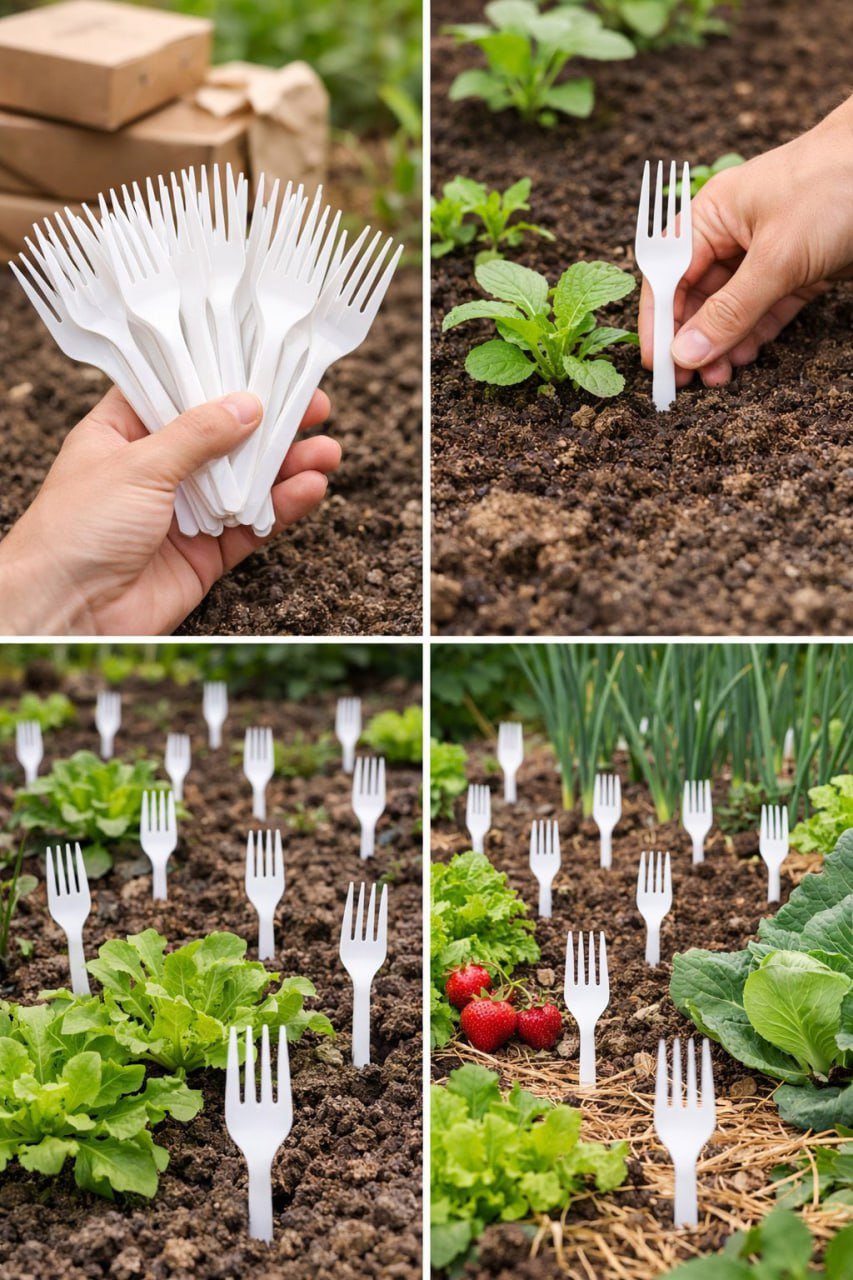
At first glance, it looks a little strange.
You walk past a vegetable garden and notice something unusual sticking up between the plants: plastic forks. Dozens of them, pushed into the soil with their prongs pointing toward the sky.
It might seem like a prank or a temporary marker.
But for many gardeners, this simple trick has become a surprisingly effective solution to a very common problem.
Across gardening forums and social media posts, more and more people are sharing photos of their gardens filled with plastic forks — and explaining why this unusual method works so well.
A Simple Solution to a Familiar Problem
Anyone who grows vegetables or flowers knows that gardens attract more than just admiration.
Animals often find their way into garden beds looking for food, shelter, or simply a place to explore. Cats may dig in freshly turned soil. Small animals like squirrels or rabbits may disturb plants while searching for seeds or insects.
Even birds sometimes scratch through soil in search of food.
For gardeners who spend hours planting and caring for delicate seedlings, this kind of disruption can be frustrating.
That’s where the plastic fork trick comes in.
How the Fork Method Works
The idea is simple.
Gardeners place plastic forks into the soil with the tines facing upward, creating a small barrier around plants. When spaced a few inches apart, the forks form a protective surface that discourages animals from stepping into the area.
From an animal’s perspective, the ground suddenly looks and feels less comfortable.
The prongs aren’t sharp enough to harm animals, but they make it difficult for paws to find a soft place to dig or walk.
As a result, many animals choose an easier path elsewhere.
Why Gardeners Like This Trick
The popularity of this method comes from its simplicity.
Unlike expensive fencing or chemical repellents, plastic forks offer several advantages:
- Low cost: Many people already have spare plastic utensils at home.
- Quick setup: The forks can be inserted into the soil in minutes.
- Non-harmful: The method discourages animals without causing injury.
- Reusable: Once plants grow larger, the forks can be removed and used again.
For small gardens or raised beds, this approach can be surprisingly effective.
A Temporary Protection for Young Plants
Gardeners often use this trick during the early stages of plant growth.
Seedlings and young plants are particularly vulnerable because their roots are shallow and the soil around them remains loose. Animals digging in the area can easily uproot them.
By placing forks around the plants during this stage, gardeners create a temporary protective layer until the plants become stronger.
Once the plants are established, the forks are usually removed.
The Creativity of Home Gardening
One reason this idea spreads so quickly online is that gardeners love sharing creative solutions.
Gardening often involves experimentation. People try different approaches to protect plants, improve soil, and manage pests.
Sometimes the best solutions turn out to be the simplest.
Plastic forks are just one example of how everyday objects can find new purposes outside the kitchen.
Why Small Tricks Can Make a Big Difference
Gardening may look peaceful, but it involves constant small challenges.
Weather changes. Soil conditions shift. Animals wander in unexpectedly.
When gardeners discover an easy trick that helps solve a problem, they tend to share it with others.
Before long, a small idea spreads from backyard to backyard.
A Reminder That Innovation Doesn’t Always Require Complexity
What makes the plastic fork method so interesting is that it reflects a broader truth about practical problem-solving.
Sometimes effective solutions don’t require advanced technology or expensive equipment.
Instead, they come from observing a problem closely and using simple tools creatively.
In this case, a handful of plastic forks can help protect a garden bed that took weeks of careful planting to prepare.
A Garden Full of Unexpected Ideas
The next time you see forks sticking up in someone’s vegetable patch, it might look unusual at first.
But behind that odd sight is a clever trick many gardeners have come to appreciate.
It’s just one more reminder that when it comes to caring for plants, creativity often grows right alongside the vegetables.