Mack O'reilly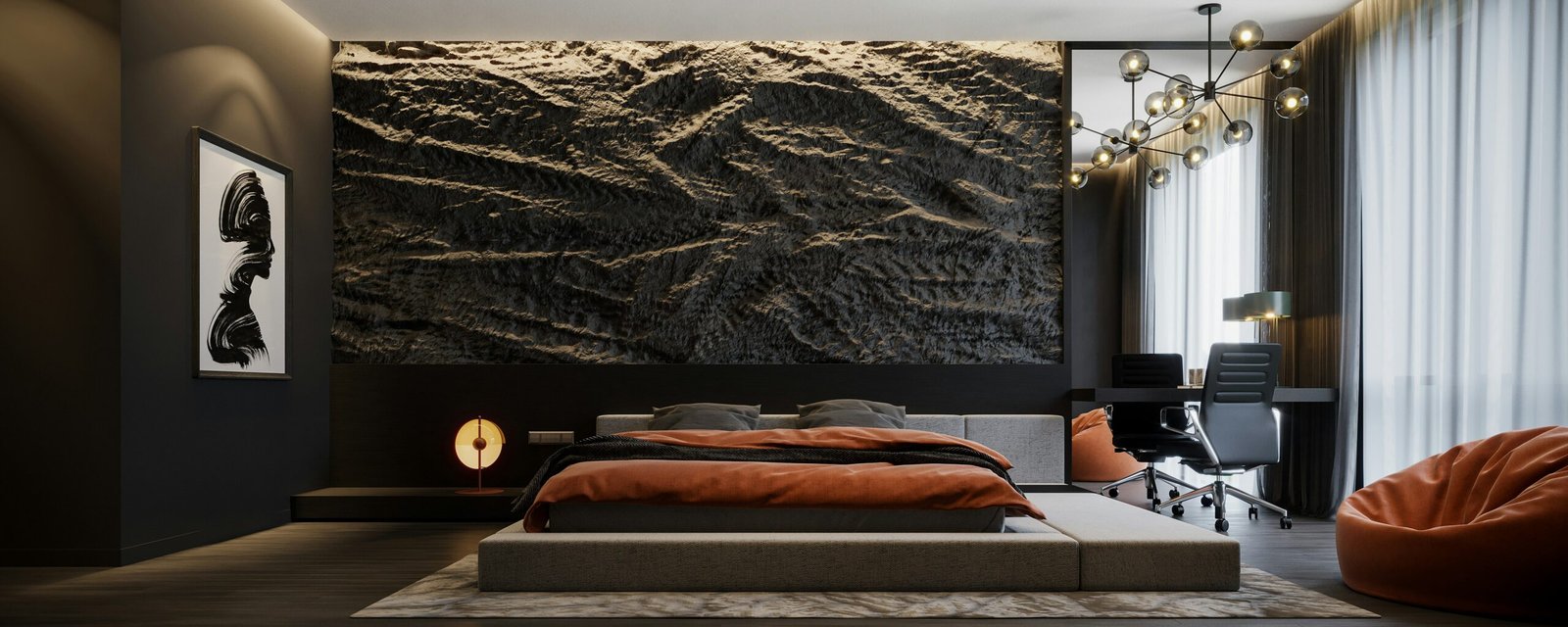
Bedroom walls do much more than surround your furniture. The right wallpaper, artwork, or textured finish can completely change how the room feels—making it warmer, calmer, more dramatic, or more personal.
You do not need to decorate every wall to make a strong impression. In many bedrooms, one carefully designed feature wall behind the bed is enough. In other spaces, an eclectic gallery wall or a pair of oversized prints can become the room’s main attraction.
These bedroom wallpaper and wall art ideas offer inspiration for modern, vintage, luxurious, and renter-friendly spaces.
1. Create a Dramatic Textured Feature Wall
A deeply textured feature wall can give a bedroom the atmosphere of a boutique hotel. Dark charcoal, black, stone gray, and earthy brown finishes work especially well when illuminated by warm lighting.
Position the feature wall behind the bed so it naturally becomes the room’s focal point. Balance its visual weight with simpler bedding, streamlined furniture, and a neutral floor covering.
If installing genuine stone or carved panels is outside the budget, consider:
- Textured wallpaper
- Faux-stone wall panels
- Concrete-effect wallpaper
- Limewash or textured paint
- Large photographic landscape murals
The goal is to create visible depth without making the whole bedroom feel heavy.
2. Use a Landscape Mural Behind the Bed
A large landscape mural can make the bedroom feel more immersive. Mountain ranges, misty forests, desert scenes, and abstract natural textures are particularly suitable for bedrooms because they introduce movement without relying on bright colors.
Choose a mural with a darker lower section if your headboard is low. This helps connect the bed visually to the wall rather than making the mural appear to float above it.
3. Build an Eclectic Gallery Wall
A gallery wall is an excellent way to display photographs, illustrations, prints, and personal artwork together. It works especially well in vintage, bohemian, maximalist, and creative bedrooms.
Instead of making every frame identical, combine several sizes and finishes. Black, white, natural wood, and antique metallic frames can work together when the artwork shares a similar mood.
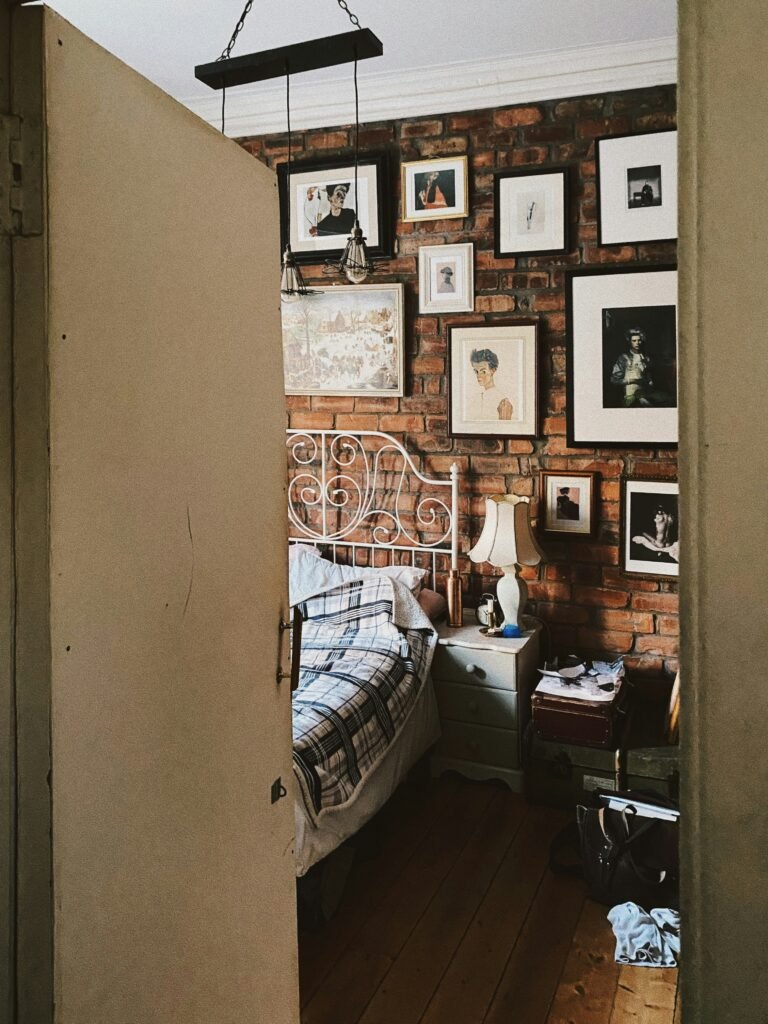
Before hanging anything, arrange the frames on the floor and photograph the final layout. Begin with the largest artwork and place the smaller pieces around it, leaving approximately two to four inches between frames.
4. Combine Exposed Brick With Framed Artwork
Exposed brick already provides color and texture, so it makes an excellent background for a bedroom gallery wall. Light-colored mats and white frames create contrast against red brick, while black frames produce a stronger industrial appearance.
If the room does not have original brick, realistic brick-effect wallpaper can create a similar result without construction. Select a design with natural color variation and irregular mortar lines for a more convincing appearance.
5. Try Dark Geometric Wallpaper
Geometric wallpaper brings structure and movement into a modern bedroom. Patterns in navy, charcoal, gray, or black can feel sophisticated rather than overwhelming when paired with simple furniture.
Use the wallpaper on one wall or continue it onto a small section of the ceiling for a more architectural effect.
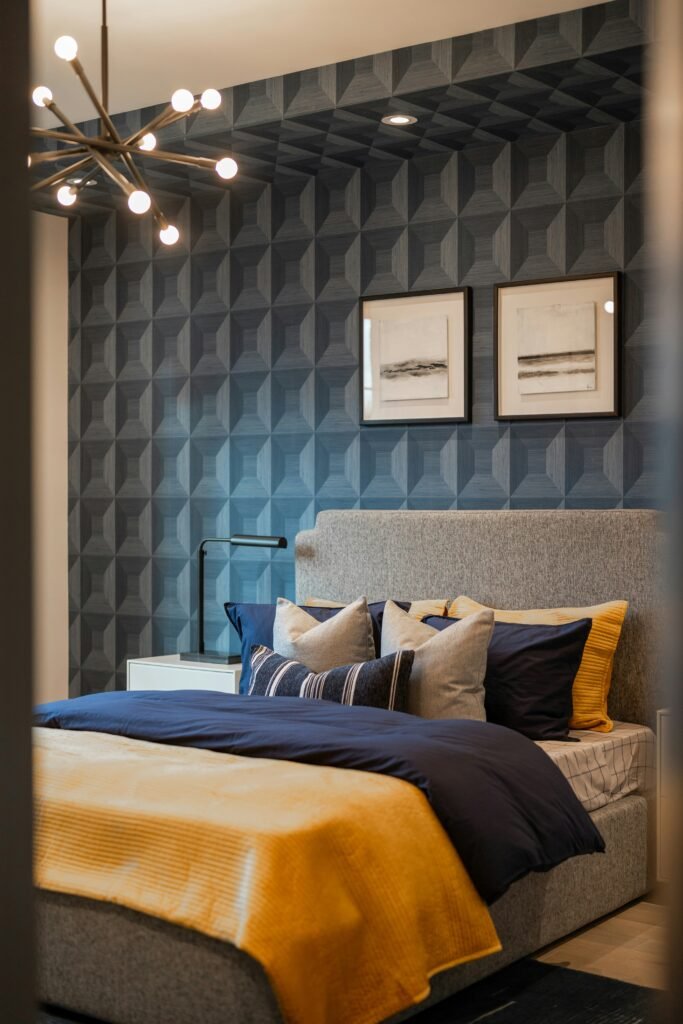
The wallpaper shown here works because the remaining elements are controlled. The upholstered bed is neutral, the artwork is minimal, and mustard bedding introduces one warm accent color.
6. Coordinate Wallpaper With Bedding
Wallpaper and bedding do not have to match exactly. In fact, a room often looks more natural when they share only one or two colors.
For example:
- Navy wallpaper pairs well with blue and mustard bedding.
- Botanical wallpaper works with green, cream, and terracotta textiles.
- Black-and-white wallpaper can be softened with beige or gray bedding.
- Warm floral wallpaper complements dusty pink, rust, or olive accents.
Choose the wallpaper first if it will be the room’s main feature. It is usually easier to find bedding that coordinates with wallpaper than to find wallpaper that perfectly matches an existing duvet.
7. Frame Wallpaper as Artwork
You do not need to cover an entire wall with wallpaper. A section of patterned wallpaper can be placed inside molding or a large frame to create inexpensive oversized artwork.
This approach is useful for renters because it requires less material and is easier to remove. It is also a practical way to use leftover wallpaper from another project.
For a more polished result, use three matching panels above the bed or one large panel centered over a dresser.
8. Choose Oversized Artwork
One large artwork can make a bedroom feel calmer than a wall filled with many small objects. Select a piece that measures approximately two-thirds the width of the furniture below it.
Above a bed, the artwork should feel connected to the headboard while leaving enough empty wall around it. Hang it securely and avoid placing heavy, poorly anchored objects directly over the sleeping area.
Abstract paintings, landscape photography, textile art, and minimalist line drawings all work well at a large scale.
9. Install a Pair of Coordinated Prints
Two matching or complementary prints create symmetry without looking overly formal. This arrangement is particularly effective above a double bed or between two bedside tables.
The prints can share:
- The same color palette
- A continuous landscape
- Similar shapes
- Matching frames
- A related botanical or architectural subject
Keep the spacing between them smaller than the space surrounding the full arrangement so they read as one composition.
10. Use Removable Wallpaper in a Rental
Peel-and-stick wallpaper allows renters to experiment with color and pattern without making a permanent change. It can be installed behind the bed, inside an alcove, on wardrobe doors, or behind open shelving.
Before installation, clean the wall and test a small piece in a hidden area. Removable wallpaper adheres best to smooth, fully cured paint. Textured walls may prevent it from sticking evenly.
11. Add Architectural Wall Molding
Wall molding adds dimension even when the bedroom uses only one paint color. Create rectangular panels behind the headboard and place wallpaper or artwork inside selected sections.
For a classic bedroom, paint the molding and wall in the same soft neutral shade. For a bolder appearance, use dark molding around lighter wallpaper.
This technique can make inexpensive prints look more intentional because each piece appears to have its own architectural frame.
12. Decorate With Textile Wall Art
Woven hangings, quilts, macramé, and framed fabric introduce softness that traditional prints cannot always provide. Textile artwork is especially effective in bedrooms because it visually connects with bedding, curtains, and rugs.
A vintage textile can also become the foundation for the room’s color palette. Pull two or three colors from the piece and repeat them through pillows and small accessories.
13. Bring Nature Indoors With Botanical Prints
Botanical wallpaper and plant-inspired artwork create a relaxing connection to nature. For a quiet bedroom, select muted leaves and delicate illustrations. For a more energetic room, try oversized tropical foliage or colorful floral patterns.
Botanical designs pair naturally with wood furniture, woven baskets, linen bedding, and warm white walls.
14. Highlight the Wall With Warm Lighting
Wallpaper and artwork look different depending on the light around them. Warm bedside lamps and indirect lighting emphasize texture and create a comfortable evening atmosphere.
Picture lights can highlight framed artwork, while wall sconces make a wallpapered headboard wall feel more structured. If the wallpaper is glossy or metallic, check it under both daylight and artificial light before covering the entire wall.
15. Leave Some Empty Space
An effective bedroom wall does not need to be completely filled. Empty space allows the main wallpaper pattern or artwork to stand out.
If the bed, lighting, and wall treatment are already visually strong, additional decorations may make the room feel cluttered. Step back and evaluate the whole wall before adding another frame or accessory.
How to Choose the Right Bedroom Wall Style
Begin with the mood you want the room to create:
- Relaxed: soft neutrals, natural textures, and botanical artwork
- Modern: geometric wallpaper, abstract prints, and black frames
- Luxurious: dark textured walls, metallic details, and oversized artwork
- Vintage: exposed brick, antique frames, and collected illustrations
- Creative: colorful gallery walls and mixed patterns
- Minimalist: one large artwork or a subtle tonal wallpaper
Also consider the room’s size and natural light. Dark wallpaper can make a large, bright bedroom feel intimate, while pale patterns can help a small room remain open and airy.
Final Thoughts
The best bedroom wallpaper and artwork should support the way you want the room to feel. A dramatic textured mural can create a luxurious retreat, a gallery wall can express personality, and geometric wallpaper can give a simple bedroom a strong contemporary identity.
Start with one focal wall, choose a controlled color palette, and repeat a few colors through the bedding and accessories. This creates a bedroom that feels coordinated without looking overly designed.