Mack O'reilly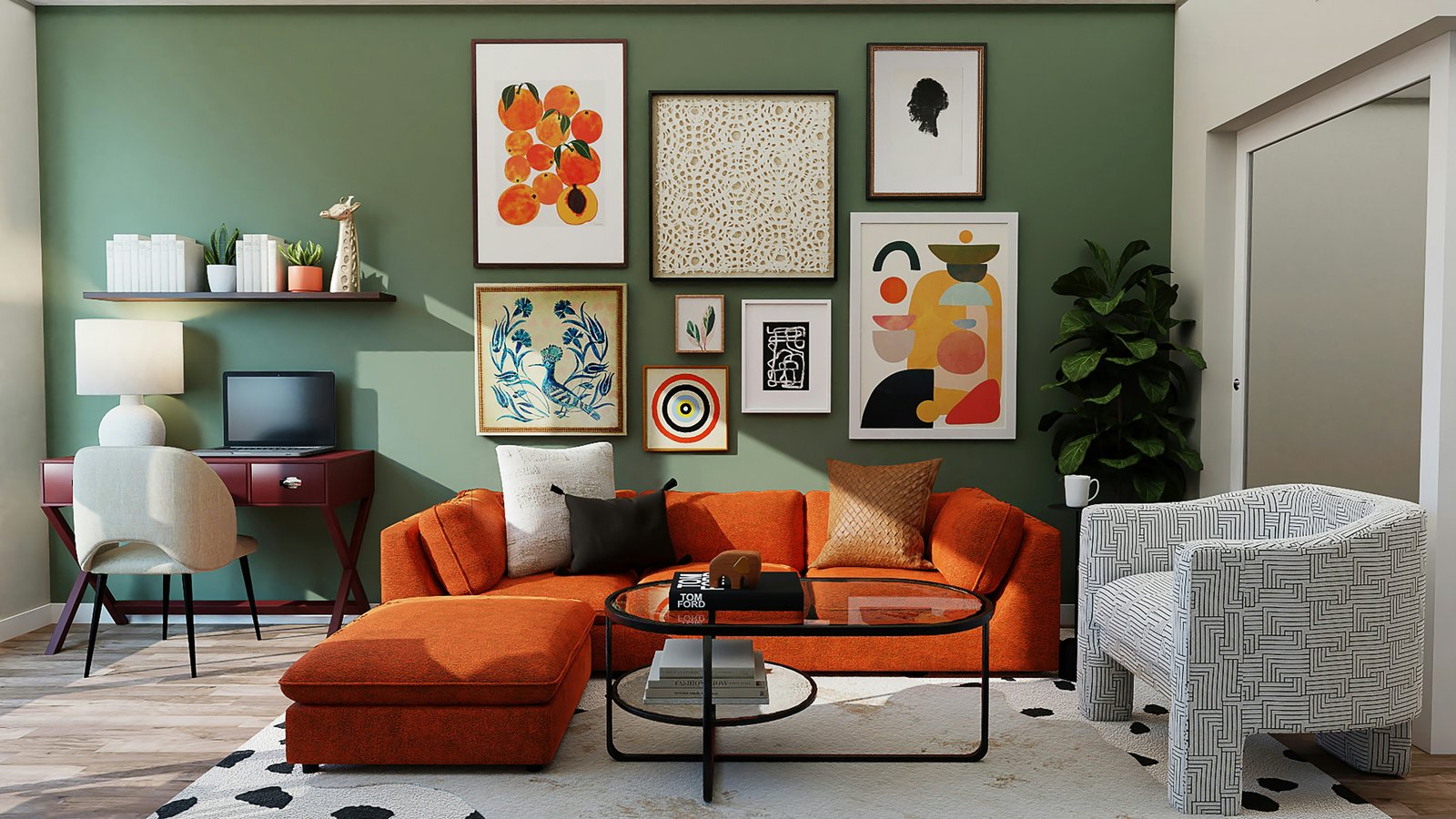
A colorful sofa can give a living room a clear identity before any artwork or accessories are added. Because it occupies so much visual space, its color naturally becomes part of the room’s foundation.
However, decorating around a colorful sofa requires balance. The walls, rug, artwork, chairs, and cushions should connect with the sofa without matching it exactly. Therefore, the goal is to repeat selected colors while leaving enough neutral space for the room to breathe.
The three living rooms below demonstrate different approaches. One combines orange with earthy green, another layers several saturated colors, and the third treats a coral sofa as sculptural furniture.
Orange Sofa With an Earthy Green Wall
Orange and green create a lively combination because both colors have a strong connection to nature. In this room, the burnt-orange sofa provides warmth, while the muted green wall makes the background feel calmer.
The gallery wall helps connect the two main colors. For example, several prints contain orange, green, yellow, black, and cream. As a result, the sofa and wall feel intentionally related rather than randomly combined.
The patterned armchair introduces another layer without competing with the sofa. Although its design is bold, its black-and-white palette remains neutral. Meanwhile, the glass coffee table preserves an open view of the rug and seating.
How to Recreate the Look
Begin with a warm orange sofa in rust, terracotta, paprika, or burnt orange. Then choose a muted green wall color, such as sage, olive, or eucalyptus.
Next, use artwork to repeat both shades. The prints do not need identical colors, but several should include small areas of orange or green. This repetition will visually connect the room.
Finally, use black, cream, and natural wood to ground the palette. These quieter finishes prevent the two main colors from becoming overwhelming.
Green Sofa With Blue and Pink Accents
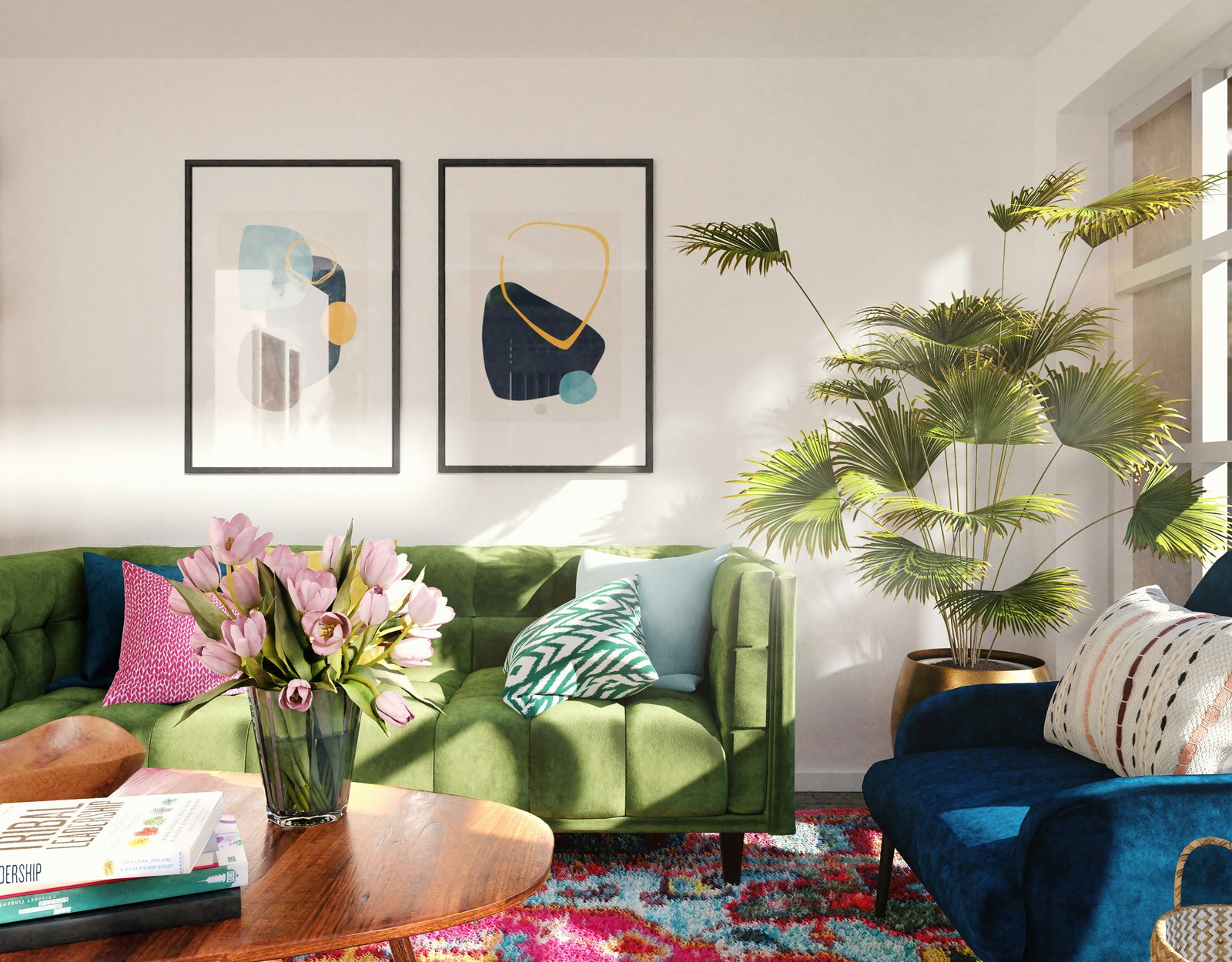
This room uses several strong colors, yet it remains balanced because each shade appears more than once. Green dominates the sofa and plants, while blue appears on the chair, cushions, and artwork.
Pink provides a smaller accent through the pillows, tulips, and rug. Therefore, it adds energy without competing with the larger furniture. The white walls also provide essential visual relief.
The wooden coffee table introduces warmth and prevents the colorful palette from feeling artificial. In addition, the natural material connects with the large plant and bright sunlight.
How to Recreate the Look
Choose one dominant colorful sofa first. Then add a contrasting chair in a second color and use a third shade only through smaller accessories.
For example, a green sofa can pair with:
- A navy or cobalt chair
- Pink or coral cushions
- A multicolored rug
- Pale abstract artwork
- Warm wooden furniture
- Brass or black lighting
Although the room may include several colors, each one should have a clear role. The sofa dominates, the chair supports, and the accessories provide smaller accents.
Sculptural Coral Sofa
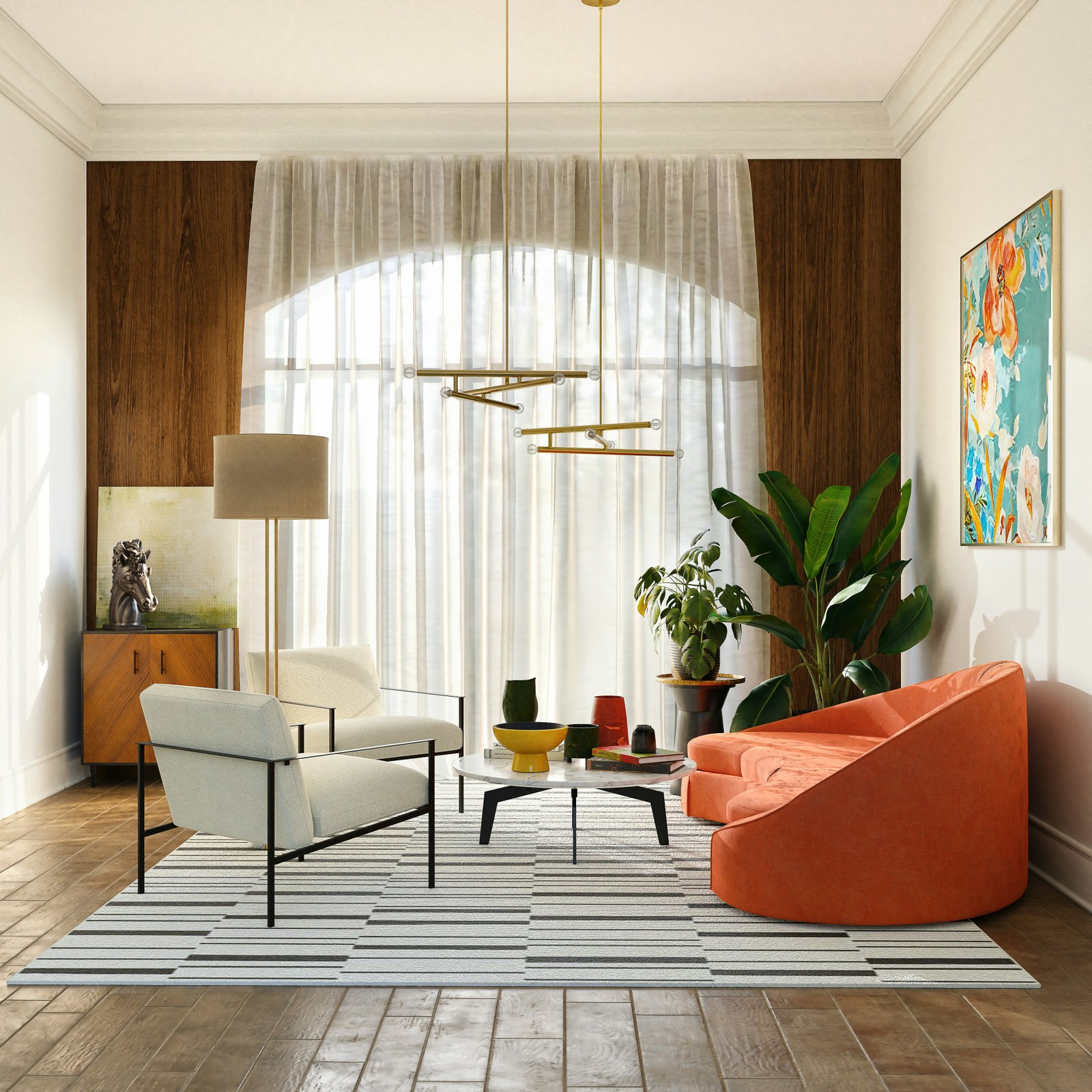
The coral sofa in this room acts as both seating and sculpture. Its curved shape immediately attracts attention, while the cream armchairs and pale rug create a quiet setting around it.
Because the sofa has such a strong silhouette, the rest of the furniture remains simple. The black chair frames add definition, while the wooden wall panels introduce warmth and architectural detail.
The artwork repeats the sofa’s coral tone in a smaller amount. Meanwhile, blue and turquoise provide cool contrast. Consequently, the painting connects the sofa to the room without appearing perfectly matched.
How to Recreate the Look
Choose a colorfull sofa with one memorable quality. This could be a curved silhouette, unusual upholstery, low profile, or saturated color.
Then simplify the surrounding furniture. Neutral armchairs, a pale rug, and a restrained coffee table will give the sofa enough visual space.
Finally, repeat the sofa color once or twice through artwork or a small accessory. Too much repetition may weaken its impact.
Choose a Color You Can Build Around
A colorful sofa is a long-term commitment, so the shade should work with more than one seasonal palette. Deep green, navy, rust, mustard, and muted coral usually provide more flexibility than extremely bright neon colors.
Before purchasing, bring a fabric sample into the living room. Then examine it during daylight and under evening lighting. Color can change significantly as the light shifts.
You should also compare the sample with the floor, walls, curtains, and existing furniture. Although these elements do not need to match, their undertones should feel compatible.
Let the Sofa Control the Color Hierarchy
A colorful room needs a visual hierarchy. Otherwise, every surface may compete for attention.
One useful starting framework gives most of the room to a background color, a smaller share to the sofa, and the final portion to accents. However, this should guide the design rather than control it strictly.
If the sofa is highly saturated, keep the largest surrounding surfaces quieter. For example, a bright orange sofa can sit against soft white, muted green, warm gray, or pale beige walls.
In contrast, a darker jewel-toned sofa can support stronger artwork and patterned textiles. Its deeper color provides enough visual weight to hold the arrangement together.
Connect the Sofa to the Rug
A rug can unite several colors that might otherwise feel unrelated. Therefore, it is especially valuable in a room with colorful seating.
Choose a rug that includes the sofa color in a small amount rather than making it the dominant shade. This creates a connection without making the floor and sofa blend together.
For example, a green sofa might sit over a rug containing small green, blue, pink, and cream details. Those additional colors can then guide the artwork and cushions.
The rug also needs to fit the seating area. Whenever possible, place at least the front legs of the sofa and chairs on it. As a result, the furniture will feel like one complete group.
Use Artwork as a Color Bridge
Artwork can explain the room’s palette. A single print may contain the sofa color, wall color, and several smaller accents.
For a clean result, choose one large artwork or a coordinated pair. Alternatively, create a gallery wall with repeated colors and varied subjects.
However, avoid selecting every artwork only because its colors match. The room should still reflect personal interests and taste.
The framing can provide balance. Black frames add structure to colorful artwork, while pale wood creates a softer effect.
Choose Cushions With Restraint
Cushions can introduce pattern and contrast, but they should not hide the sofa’s upholstery. Therefore, use a smaller selection than you would on a neutral sofa.
Begin with one cushion that contains the sofa color and at least one contrasting shade. Then add one or two solid cushions drawn from that pattern.
For example, an orange sofa might use a patterned cream-and-green cushion, a black cushion, and one textured beige design. This arrangement adds depth without covering the orange surface.
Texture can replace additional color. Velvet, boucle, woven cotton, and linen create variation even when the cushions share similar tones.
Balance Strong Color With Natural Materials
Natural materials make colorful rooms feel grounded. Wood, stone, linen, rattan, and plants provide warmth without adding another artificial color.
A wooden coffee table works especially well with orange, green, and blue seating. Likewise, woven baskets and neutral curtains soften stronger upholstery.
Plants can repeat green already present in the palette. However, they also work as a natural neutral when the sofa uses another color.
Metal finishes should support the style. Black metal creates clear outlines, while brass adds warmth and a more decorative appearance.
Consider the Fabric as Well as the Color
Color attracts attention first, but the upholstery determines how the sofa performs every day. Therefore, consider durability, texture, cleaning requirements, and sunlight exposure.
Velvet makes jewel tones appear rich because its surface reflects light differently from each direction. However, it may show pressure marks and require specific care.
Textured woven fabrics create a more relaxed appearance and can make bright colors feel softer. Meanwhile, smooth upholstery produces a cleaner, more contemporary result.
Always check the care instructions before purchasing. If the sofa will receive heavy use, a durable fabric with removable or washable covers may be more practical.
Use a Colorful Sofa in a Small Room
A small room can still support colorful seating. In fact, one confident sofa often looks more intentional than several small decorative accents.
Choose a sofa with visible legs or a raised base so more of the floor remains visible. Additionally, keep nearby tables visually light through glass, narrow frames, or compact dimensions.
Pale walls can provide contrast, but they are not the only option. A muted wall color may create a more cohesive room when it relates to the sofa.
Limit the number of competing patterns. One patterned rug or artwork display will usually provide enough movement.
Make an Existing Sofa More Colorful
Replacing the sofa is not always necessary. Instead, color can be introduced through a fitted slipcover, large throw, or coordinated cushion arrangement.
A neutral sofa can also sit against a colorful wall, which creates a similar focal effect. Then artwork and textiles can repeat the wall color across the room.
If using a throw, position it deliberately instead of covering the sofa unevenly. For example, fold it across one arm or along the back cushions. As a result, it will look styled rather than temporary.
Common Color Mistakes
One common mistake is introducing too many equally strong colors. Consequently, the eye has nowhere to rest. Choose one dominant shade and allow the other colors to support it.
Another mistake is matching every accessory to the sofa. Although repetition creates cohesion, exact matching can make the room feel overly staged.
Ignoring undertones can also create problems. A warm orange sofa may clash with a cool gray wall, while it may feel natural beside warm beige or olive.
Finally, do not choose color without considering comfort and scale. A beautiful sofa still needs to fit the room and support everyday use.
Final Thoughts
The strongest livingroom colorfull sofa ideas begin with one confident choice. An orange sofa can bring warmth, a green sofa can connect the room to nature, and a coral sofa can become a sculptural centerpiece.
After choosing the sofa, build the palette through the rug, artwork, and a limited number of accessories. Meanwhile, use neutral surfaces and natural materials to create balance.
Most importantly, allow the sofa to remain visible. When the surrounding colors support it rather than compete with it, the entire living room will feel expressive and intentional.