Mack O'reilly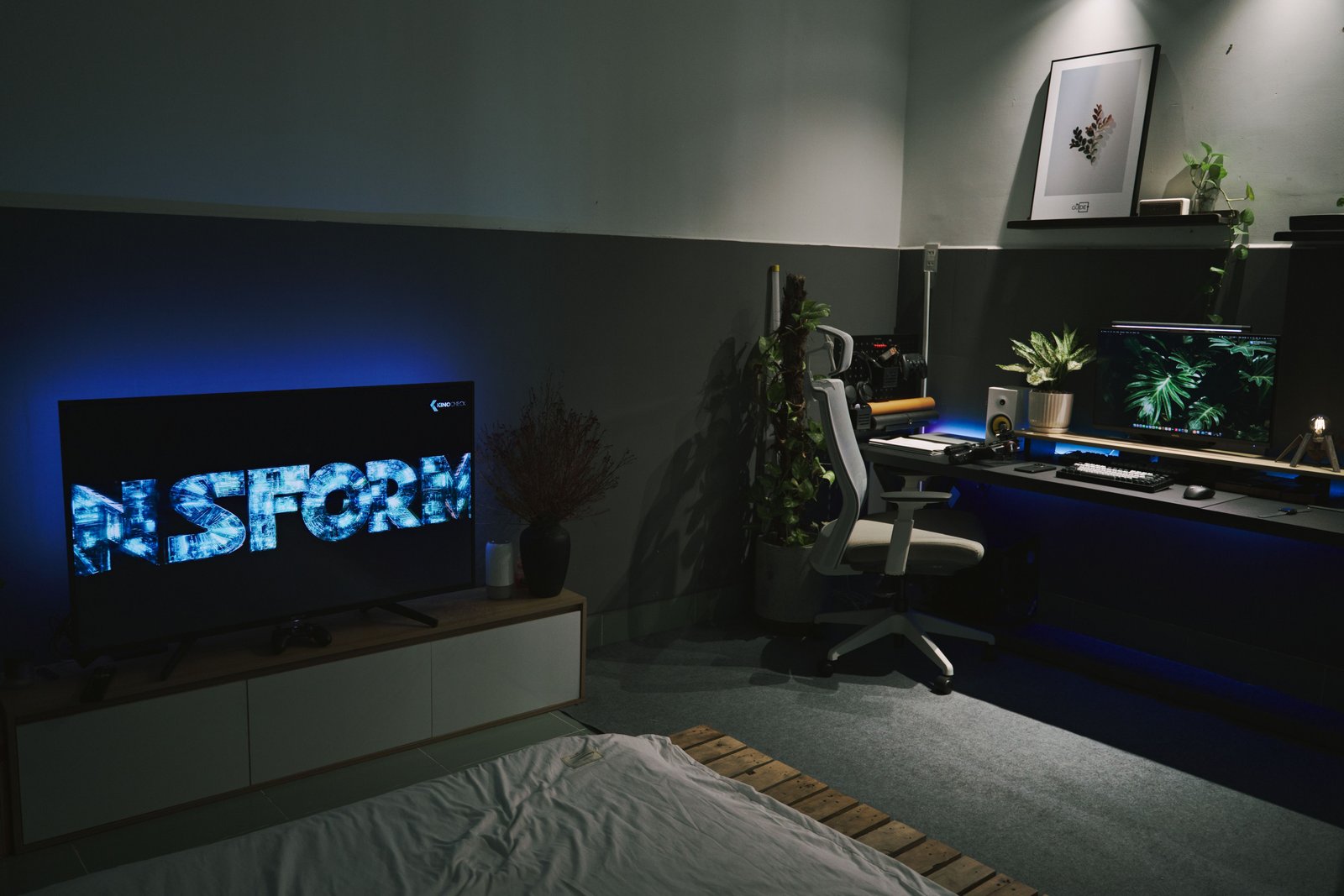
An industrial bedroom should feel atmospheric without becoming cold or unfinished. Although the style takes inspiration from warehouses, studios, and converted lofts, a bedroom still needs warmth, softness, and practical organization.
Raw wall textures, dark colors, metal details, exposed-looking materials, and warm wood provide the industrial foundation. However, furniture, plants, textiles, and layered lighting make the room comfortable enough for sleeping, gaming, working, or creating content.
The three featured setups interpret industrial design differently. One uses dark green walls and blue accent lighting, another creates a bold recording corner with textured panels and red light, while the third focuses on a clean desk built around wood, concrete, and carefully selected accessories.
1. Build a Dark Green Gaming and Work Zone
The first bedroom uses a two-tone wall treatment to create depth. Dark green covers the lower wall, while a lighter shade above it prevents the room from feeling completely enclosed. As a result, the space remains moody without losing its architectural definition.
The gaming and work area sits in one corner, while a separate television zone occupies the opposite wall. This layout gives each activity a dedicated place instead of forcing every screen onto one desk.
Blue LED lighting runs behind the television and desk, creating a cool glow against the green walls. Because the light remains indirect, it adds atmosphere without filling the room with visible LED strips.
Plants provide another important layer. Their organic shapes soften the monitors, desk, television, and other rectangular furniture. In addition, green foliage naturally complements the wall color, so the décor feels connected rather than randomly added.
To recreate this design, combine:
- Dark green or charcoal lower walls
- A lighter neutral shade above
- A black desk and media unit
- Warm wood accents
- Indirect blue or neutral-white lighting
- A light-colored ergonomic chair
- Floating shelves
- Several plants at different heights
The light chair is especially effective because it separates the workstation from the dark background. Meanwhile, the plants and wooden surfaces keep the technology-focused room from feeling overly mechanical.
2. Use Textured Wall Panels as a Feature
The second setup takes a bolder approach with rough wood-composite wall panels. Their visible chips and irregular texture create an unfinished workshop appearance, which fits naturally within industrial design.
Red lighting washes across the walls and emphasizes every ridge in the surface. Consequently, the wall becomes more than a background; it becomes the room’s main visual feature.
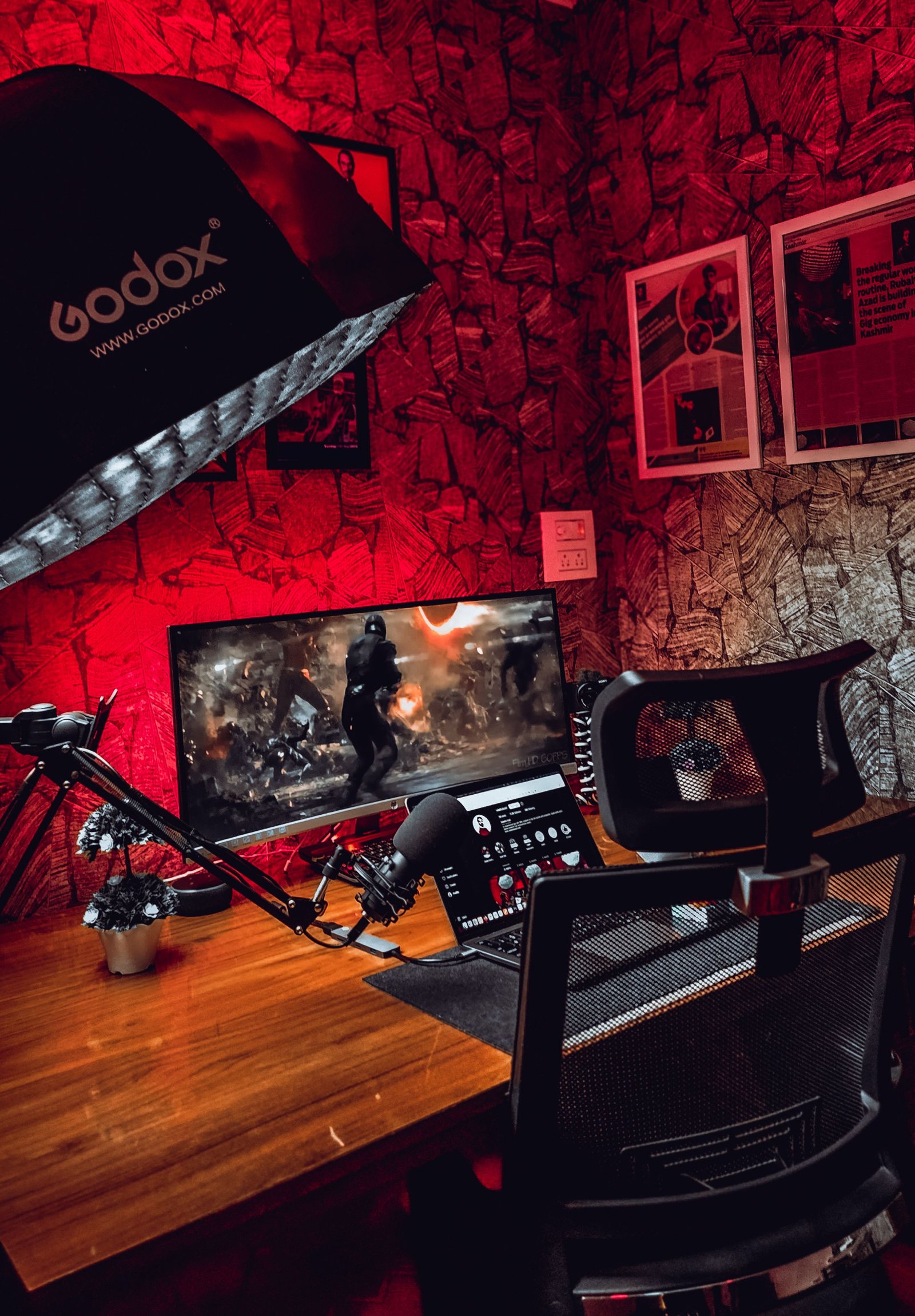
A wooden desk introduces warmth, while a black mesh chair, monitor, microphone arm, and lighting equipment provide the darker industrial details. Framed artwork adds structure to the textured wall and prevents the room from appearing like an incomplete construction project.
This setup works well for gaming, streaming, recording, or photography because the equipment becomes part of the décor. Nevertheless, the layout remains visually controlled. Most accessories use black finishes, while the desk and wall provide the dominant natural textures.
For a similar effect, consider:
- Oriented strand board or textured wood panels
- Reclaimed wood
- Concrete-effect wall panels
- Exposed brick or brick veneer
- Dark acoustic panels
- A warm wooden desktop
- Black metal furniture
- Adjustable colored lighting
However, a highly textured feature wall can dominate a small bedroom. Use it on one wall or inside one workstation zone, then keep the surrounding surfaces simpler.
3. Create a Refined Wood-and-Concrete Desk
The third setup represents the quieter side of industrial design. Instead of dramatic colored lighting, it combines a warm wooden desktop with a concrete-textured wall and black accessories.
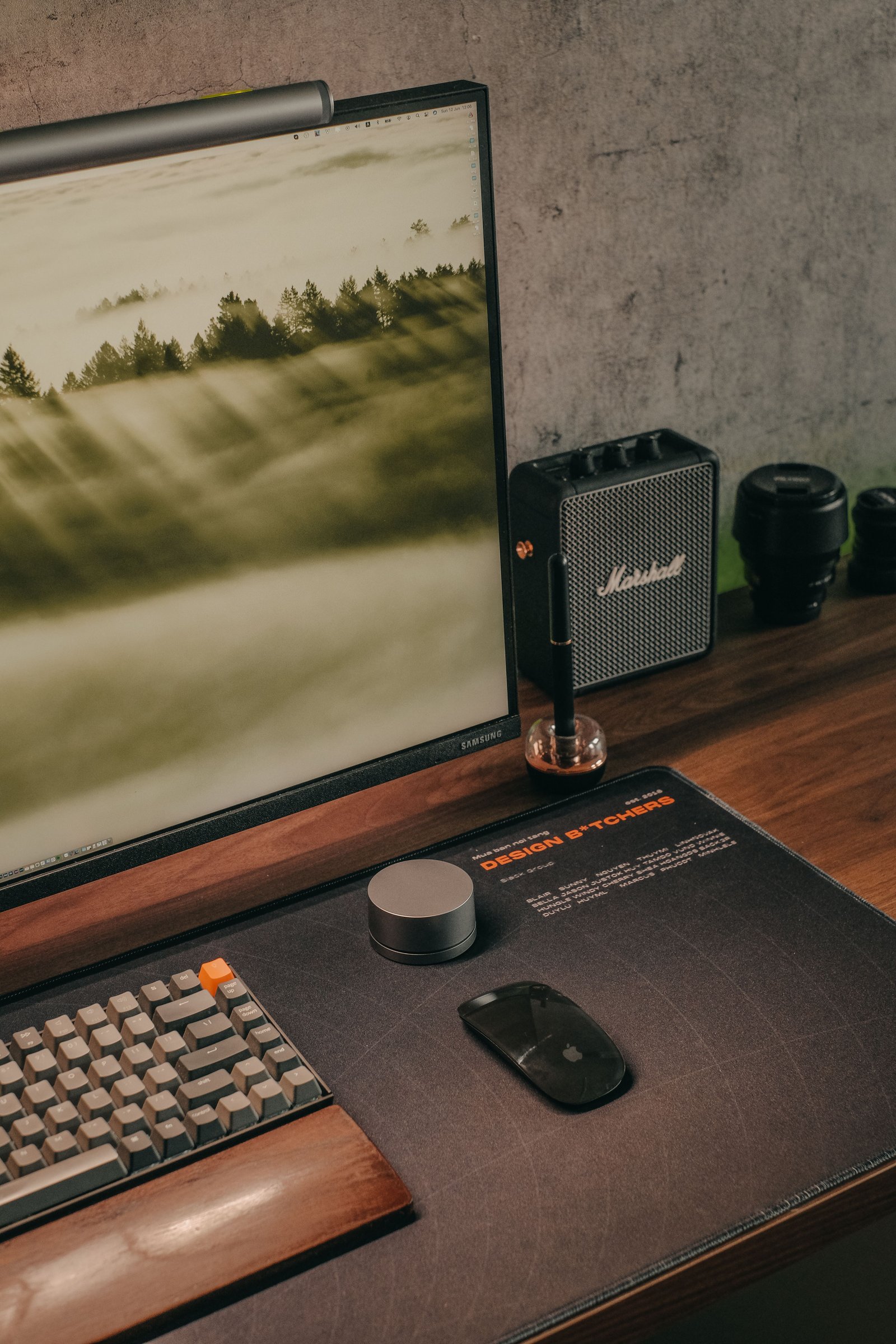
The desk contains a mechanical keyboard with a wooden wrist rest, a large black mat, a dark mouse, a compact speaker, and a monitor light bar. Because the accessories follow the same restrained palette, the area feels curated rather than crowded.
A concrete-effect wall gives the setup an industrial background without requiring exposed brick or dark paint. At the same time, the wood surface prevents the gray wall from making the workspace feel cold.
This balanced combination is easy to adapt:
- Concrete or microcement-effect wall
- Walnut or dark oak desktop
- Matte black monitor and accessories
- Warm neutral lighting
- Metal or black storage
- One or two personal objects
- Hidden cable management
The key is material contrast. Concrete provides a rough visual texture, wood introduces warmth, and black equipment creates definition.
Choose a Controlled Industrial Color Palette
Industrial bedrooms usually work best with a limited range of colors. Dark green, charcoal, black, rust, brown, and concrete gray establish the mood, while lighter neutrals keep the room from becoming too heavy.
A practical palette might include:
- One dark base color
- One warm material, such as wood
- One lighter balancing color
- One lighting accent
For example, dark green walls can be paired with walnut furniture, a gray carpet, and blue lighting. Alternatively, concrete walls can be combined with black metal, warm oak, and soft white light.
Repeating the same finishes across several areas creates consistency. Therefore, if the desk uses black metal legs, similar black details can appear on shelves, frames, lamps, or cabinet handles.
Separate the Sleeping and Working Areas
A bedroom that includes gaming or work equipment must support several different routines. If possible, arrange the desk so it does not dominate the view from the bed.
In the first featured room, the television and workstation occupy separate walls. This creates two clear zones and prevents the desk from becoming the only focal point.
Furniture placement can establish separation without adding a physical wall. For instance, an area rug can define the desk, while a low media cabinet identifies the entertainment zone. A tall plant or open shelf can also create a subtle boundary without blocking light.
Moreover, each zone should have its own storage. Office supplies belong near the desk, gaming controllers belong near the television, and bedroom essentials should remain closer to the bed.
Layer the Lighting
Lighting determines whether an industrial bedroom feels comfortable or harsh. One bright ceiling fixture usually flattens the room and removes the atmosphere created by textured walls.
Instead, use several light sources:
- General ceiling lighting
- A desk lamp or monitor light
- Indirect light behind screens
- Warm bedside lighting
- Shelf lighting
- Optional colored accent lighting
The first setup uses blue lighting to create a cool gaming atmosphere. In contrast, the second uses red light to reveal the wall texture. The third remains more neutral, relying on a monitor light bar and warm surrounding tones.
Although colored lighting can transform the mood, it should not be the only source available. Neutral task lighting remains useful for reading, studying, cleaning, and other activities that require accurate visibility.
Mix Hard and Soft Materials
Industrial interiors rely on hard materials such as metal, concrete, brick, and rough wood. Nevertheless, a bedroom needs softer surfaces to remain comfortable and control echo.
Balance hard finishes with:
- Carpet or a large area rug
- Curtains
- Upholstered seating
- Bedding with visible texture
- Fabric storage boxes
- Acoustic panels
- Cushions and throws
The first featured bedroom uses wall-to-wall carpet and a fabric office chair. The second includes a mesh chair and soft furnishings outside the main workstation. These materials reduce the visual severity of the industrial elements.
Choose textiles in charcoal, olive, gray, tan, or deep blue to support the style. However, subtle woven patterns can also add interest without making the room feel busy.
Organize Technology as Part of the Design
An industrial bedroom often contains several devices, including monitors, consoles, speakers, cameras, microphones, and chargers. Therefore, organization has a major effect on the final appearance.
Begin by grouping equipment according to purpose. Keep recording equipment near the microphone, camera accessories on one shelf, and gaming devices close to the relevant screen.
Then, use:
- Under-desk cable trays
- Reusable cable ties
- Headphone hooks
- Monitor arms
- Wall-mounted shelves
- Drawer organizers
- Charging stations
- Small labeled containers
Visible equipment can fit the industrial style when it follows a consistent color palette. On the other hand, tangled wires and scattered chargers will make the room look unfinished rather than intentionally raw.
Add Storage Without Softening the Style Too Much
Industrial storage should feel simple and structural. Black metal shelves, wooden wall units, open bookcases, and low media cabinets work especially well.
Floating shelves create storage without using floor space. Additionally, their brackets and frames can repeat the metal details found on the desk or chair.
Use closed storage for unattractive items such as cables, documents, and device packaging. Meanwhile, reserve open shelves for books, plants, cameras, artwork, or a small collection of meaningful objects.
This combination allows the bedroom to feel personal without becoming cluttered.
Introduce Plants Carefully
Plants appear in all three featured setups because they balance the industrial materials effectively. Their leaves break up the straight lines of screens, shelves, and wall panels.
Choose plant locations according to the room’s natural light. Trailing plants work well on high shelves, while larger floor plants can fill an empty corner beside a desk. Small plants can sit near a monitor as long as they do not crowd the working area.
If natural light is limited, realistic artificial plants can provide the same visual softness. Keep containers simple and coordinate them with the room’s existing palette.
Make the Setup Comfortable for Daily Use
A striking bedroom setup still needs to function well. The monitor should sit directly in front of the user, while the keyboard and mouse should remain close enough to keep the shoulders relaxed. In addition, the chair should support comfortable adjustment.
The desk also needs enough depth for the screen, accessories, and safe viewing distance. If recording equipment is included, microphone and camera arms should move without striking shelves or lights.
Finally, preserve clear walking space between the bed, desk, door, and storage. Industrial design looks strongest when the room feels open and deliberate, rather than filled with furniture.
Final Thoughts
Industrial bedroom setup ideas can range from dark and dramatic to warm and refined. Green walls and blue lighting create an immersive gaming environment, while textured panels and red illumination produce a bold creative studio. Meanwhile, wood and concrete offer a calmer interpretation that suits both work and relaxation.
Regardless of the approach, the most successful rooms balance raw materials with comfortable furniture, layered lighting, organized technology, and soft textiles. By controlling the palette and giving every activity a defined zone, an industrial bedroom can feel distinctive without sacrificing everyday comfort.