Mack O'reilly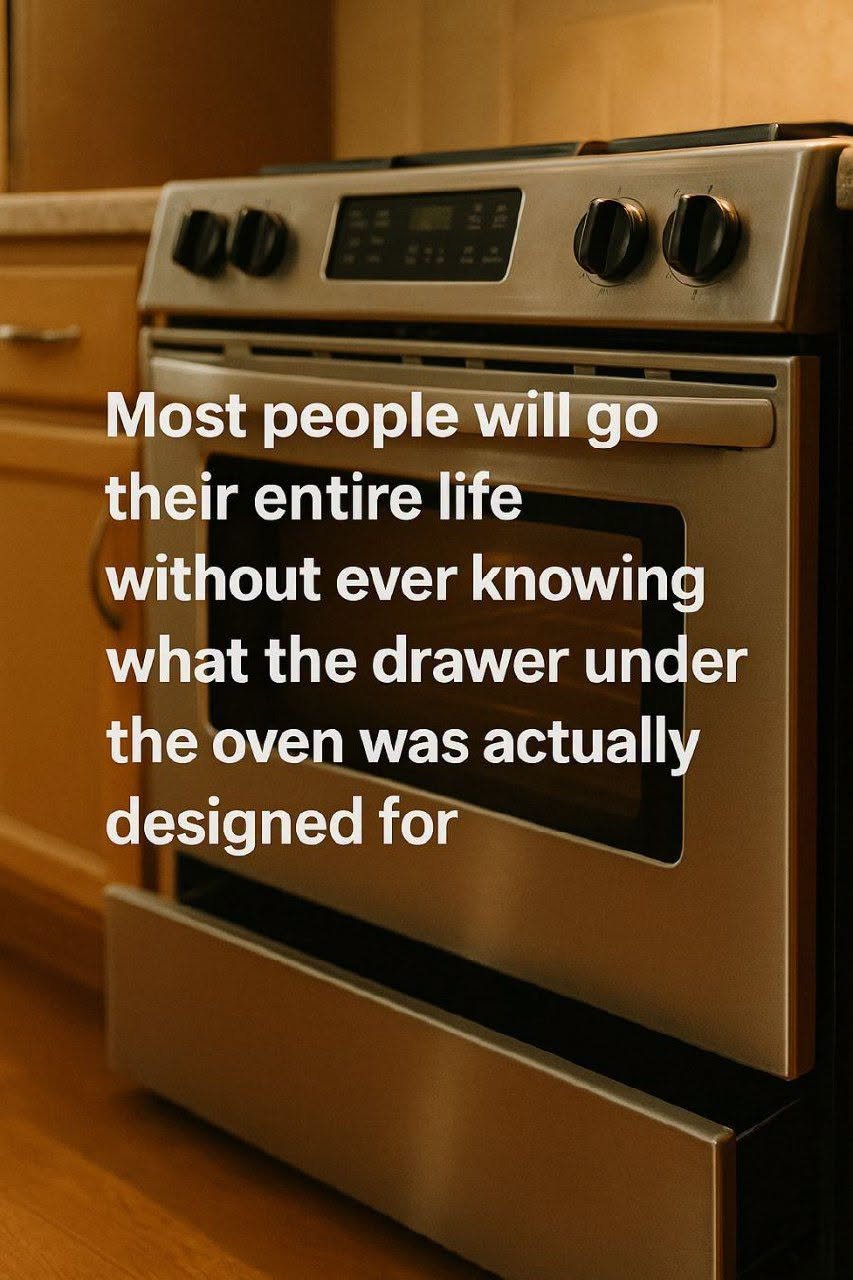
Almost every kitchen has one.
It sits below the oven door, close to the floor, usually quiet, slightly dusty, and packed with whatever did not fit anywhere else. Baking trays. Muffin tins. Old roasting pans. Maybe a pizza stone. Maybe a lid that no longer belongs to anything.
Most people never question it.
The drawer under the oven feels so obvious that it becomes part of the background. It looks like storage, so people use it for storage. Case closed.
Except that is not always what it was designed for.
Depending on the oven, that bottom drawer may be a storage drawer, a warming drawer, or even a broiler. And using it the wrong way can mean damaged cookware, dried-out food, wasted heat, or in some cases, a real safety risk.
The confusing part is that all three versions can look almost the same from the outside.
The Most Common Mistake: Assuming Every Bottom Drawer Is Storage
For many households, the bottom oven drawer has become a kitchen junk drawer for metal cookware.
That habit makes sense. The space is low, wide, and often just the right size for baking sheets. Since kitchen cabinets are usually crowded, people naturally use any extra space they can find.
And in many ovens, that is perfectly fine.
Some models really do include a basic storage drawer. These are meant for items such as metal pans, baking trays, muffin tins, and other heat-safe cookware. But even when the drawer is intended for storage, it can still become warm when the oven is running, so it should not be treated like a normal cabinet. Plastic containers, paper products, dish towels, cookbooks, and anything flammable should not be kept there. Appliance and cooking guides commonly warn that only heat-safe items belong in a storage drawer under an oven.
That is the first rule: even if it is storage, it is storage inside a hot appliance zone.
It is not the place for random kitchen clutter.
The Second Possibility: It May Be a Warming Drawer
Some oven drawers are built to keep cooked food warm.
This is especially useful when a meal has several parts. Maybe the roast is finished, but the vegetables need ten more minutes. Maybe the pancakes are done in batches. Maybe guests are late, and dinner is ready too early.
A warming drawer helps hold food at a serving temperature without continuing to cook it aggressively.
These drawers may have a control on the main oven panel, a setting marked “warm,” or controls inside or near the drawer itself. Some warming drawers may also be used for tasks like proofing dough, depending on the model, but they are not meant to cook raw food from start to finish.
That is where people get caught off guard.
If a drawer is designed for warming, filling it with pans and lids may block heat flow or damage items that were never meant to sit inside a heated space. It also means the homeowner may be missing out on one of the appliance’s useful features.
A warming drawer is not glamorous, but once you understand it, it can make cooking for family dinners, holidays, and guests much easier.
The Third Possibility: It Could Be a Broiler
In some ovens, especially certain gas ranges, the lower drawer may function as a broiler.
A broiler uses intense heat to brown, crisp, toast, or finish food quickly. It is useful for melting cheese, browning casseroles, charring vegetables, crisping chicken skin, or giving a final color to certain dishes.
A broiler drawer is not the same as a storage drawer. It may include a rack, a shallow pan, or signs that it is meant for high-heat cooking. Some appliance guides note that gas ovens with heat coming from the bottom may use the lower space as a broiling area.
This is the version that can surprise people the most.
If someone unknowingly stores plastic lids, paper, or delicate cookware inside a broiler drawer, the results can be dangerous. Items can warp, scorch, smoke, or even catch fire.
So if your oven has a “broil” setting and the bottom drawer seems designed to hold a shallow rack or pan, do not assume it is just extra storage.
It may be part of the cooking system.
How to Tell Which Drawer You Have
The safest answer is simple: check the oven manual.
If the paper manual is gone, search online using the brand and model number. The model number is often found around the oven door frame, behind the drawer, on the side of the range, or on a label near the appliance opening. Many manufacturers provide free PDF manuals online.
The manual should tell you whether the drawer is for storage, warming, or broiling. Many kitchen guides give the same advice because there is no universal answer across all ovens.
You can also look for clues.
If the drawer has temperature controls, a warming button, or a setting labeled “warm,” it is likely a warming drawer. If it has a rack, broiler pan, or is connected to a broil function, it may be a broiler drawer. If it has no controls, no heating feature, and no special rack, it may simply be storage.
But guessing is not ideal.
The drawer’s design is not always obvious, and the wrong assumption can cause damage.
What Not to Store There
Even when the drawer is confirmed as storage, some items do not belong there.
Avoid plastic containers, plastic lids, cling film, paper bags, cookbooks, cardboard packaging, wooden utensils, dish towels, oven mitts, cleaning sprays, and anything that could melt, smoke, burn, or absorb heat badly.
The heat from the oven above can transfer downward. It may not feel extreme every time, but repeated exposure can weaken materials, warp plastic, dry out wood, and create odors.
Safer storage items include metal baking sheets, muffin tins, cast-iron pans, pizza stones, and oven-safe glass or ceramic cookware, assuming they fit properly and the manufacturer allows storage in that drawer.
The drawer should also be cleaned occasionally. Crumbs, grease, dust, and forgotten food bits can collect there, especially because it is low to the floor and often ignored. Cleaning experts often recommend treating it as part of the appliance, not as a normal cabinet, because debris can lead to odors, pests, smoke, or hygiene problems over time.
Why So Many People Get It Wrong
The confusion exists because manufacturers do not all use the drawer the same way.
One oven may have a plain storage drawer. Another may have a warming drawer. Another may use that lower space as a broiler. From the outside, the difference is not always clear.
At the same time, kitchens are short on storage. So people naturally turn the drawer into a place for pans, because that is what they need most.
Over time, the habit becomes “common knowledge.”
Parents use it that way. Grandparents use it that way. New homeowners inherit the same assumption. Nobody reads the manual because the drawer seems too simple to require instructions.
But appliances are not always intuitive.
Sometimes the feature you have been ignoring was designed to solve a real cooking problem.
The Practical Takeaway
The drawer under your oven is not a mystery, but it does need to be identified.
It may be storage. It may be a warming drawer. It may be a broiler. The only reliable answer comes from the specific model of oven in your kitchen.
Once you know what it is, use it correctly.
If it is storage, keep only heat-safe cookware inside. If it is a warming drawer, use it to keep finished dishes ready for serving. If it is a broiler, treat it as a high-heat cooking zone and keep random items out of it completely.
That small drawer may look unimportant, but it is still part of a powerful appliance.
And in the kitchen, understanding the small things often prevents the biggest mistakes.