Mack O'reilly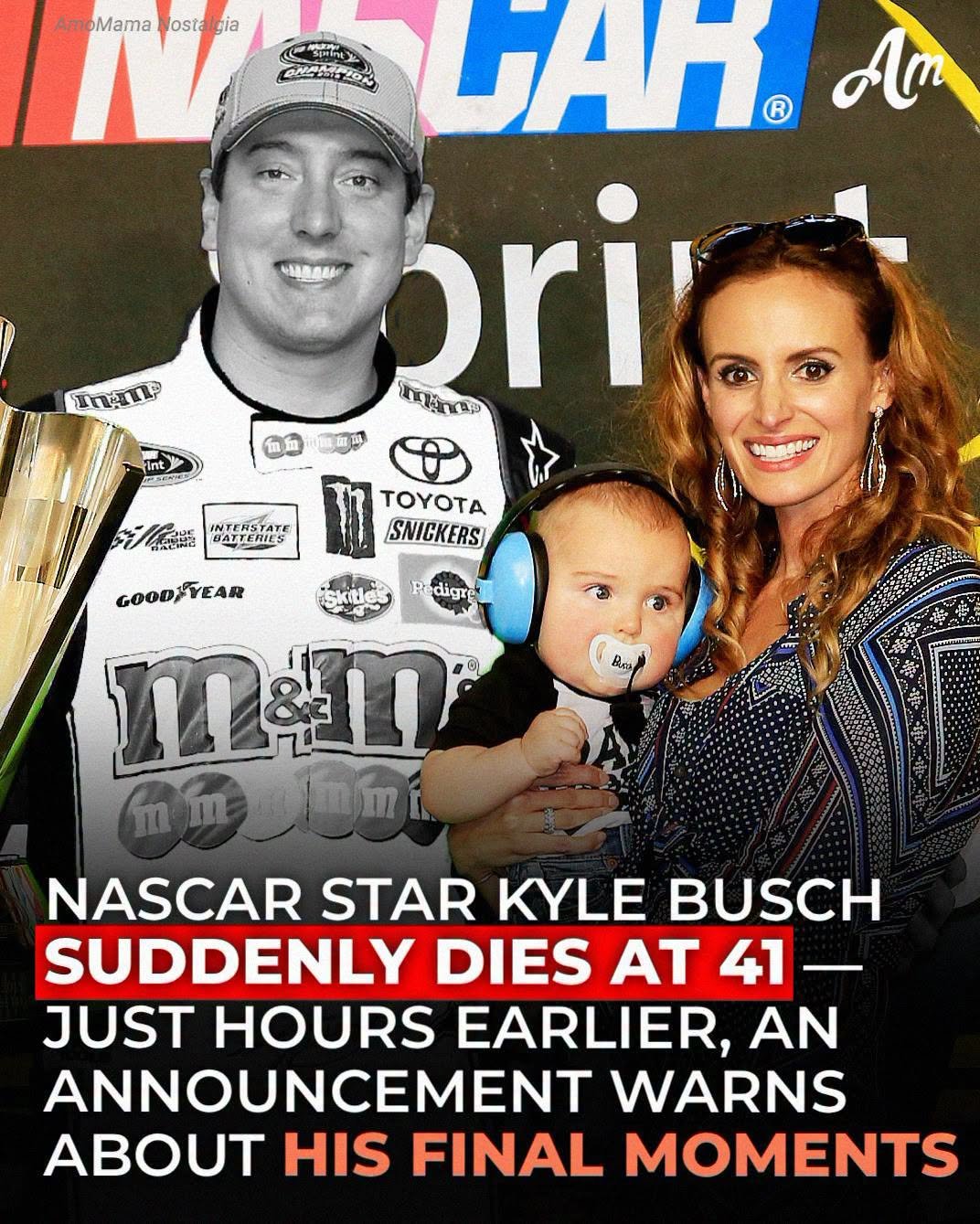
For years, Kyle Busch was the driver fans could not ignore.
Some cheered him. Some booed him. Some respected him even when they rooted against him. He was aggressive, gifted, stubborn, emotional, and impossible to separate from the modern history of NASCAR.
Then, suddenly, the sport was speaking about him in the past tense.
On May 21, 2026, NASCAR announced that Busch had died at age 41. The words landed heavily because they felt unreal. A two-time Cup Series champion. A driver still connected to the garage, still part of the weekly rhythm of racing, still young enough that most people expected many more chapters ahead.
Instead, the sport had to stop and mourn.
The shock was not only about losing a champion. It was about losing someone who had been part of NASCAR’s identity for two decades.
A Driver Who Never Blended In
Kyle Busch was never a background figure.
From early in his career, he carried the rare mix of talent and volatility that makes a driver unforgettable. He won often, argued fiercely, raced hard, and rarely softened himself to become easier for others to accept.
That made him polarizing.
But it also made him compelling.
Fans knew that when Kyle Busch was in the field, something could happen. He could dominate a race. He could make an impossible move. He could say something sharp afterward. He could turn a normal Sunday into a headline.
NASCAR’s own tribute described him as a “generational talent” and a two-time Cup Series champion, reflecting the scale of his place in the sport.
That phrase matters because Busch was not only successful. He was era-defining.
Why the News Hit So Hard
In racing, danger is always understood, but death away from the track carries a different kind of shock.
Fans are used to worrying about crashes, hard impacts, fires, and split-second mistakes at high speed. They are not prepared for a driver’s life to end suddenly in a way that feels disconnected from the spectacle of competition.
Reports around Busch’s death described a severe illness, with several outlets later reporting pneumonia and sepsis as the cause. Reuters reported that the motorsports community honored Busch after he died at age 41 from severe pneumonia and sepsis.
That kind of loss feels cruel because it is not dramatic in the way fans associate with racing.
It is medical. Sudden. Human.
A person who seemed larger than the moment becomes vulnerable like anyone else.
The Tributes Showed His Real Impact
The clearest measure of a sports figure is often what happens after they are gone.
In Busch’s case, the tributes were immediate and emotional. NASCAR posted an “In loving memory of Kyle Busch” video honoring his life and legacy. Reuters reported that he was remembered at both the Indianapolis 500 and the Coca-Cola 600, with tributes including moments of silence and visual honors tied to his racing numbers and legacy.
That cross-event recognition showed something important.
Busch was not only a NASCAR name. He was a motorsports name.
His career had reached beyond one team, one sponsor, one fanbase, or one chapter. Even people who did not love his style understood what he represented: elite competitiveness, longevity, and a refusal to race passively.
The sport felt different because he had been in it.
And then it felt different because he was gone.
A Career Built on Winning
Kyle Busch’s résumé was never ordinary.
He won two NASCAR Cup Series championships, in 2015 and 2019. He became one of the most accomplished drivers of his generation and was recognized among NASCAR’s 75 greatest drivers in 2023, according to People’s summary of his career and the tributes that followed his death.
But numbers alone do not fully explain him.
Plenty of drivers win races. Fewer create atmosphere.
Busch brought tension into every event because people expected something from him. If he was near the front, rivals had to account for him. If he was frustrated, cameras found him. If he won, the reaction was rarely neutral.
That is part of why his death felt so large.
NASCAR did not lose only a statistic sheet.
It lost a personality that shaped how fans experienced the sport.
The Complicated Love of a Polarizing Champion
Busch’s relationship with fans was never simple.
Some saw him as arrogant. Others saw him as honest. Some thought he raced too aggressively. Others believed that aggression was exactly what made him great. Some loved that he refused to play the polished media game. Others wished he would soften his edges.
But polarizing athletes often leave the deepest imprint.
They force emotion. They make people pick a side. They become part of the sport’s weekly conversation, even when they are not winning.
Over time, even critics learn to respect the presence.
That is why the grief after Busch’s death was not limited to longtime supporters. In moments like this, rivalry fades. Old complaints shrink. What remains is the recognition that the sport has lost someone who mattered.
The Empty Seat in the Garage
Racing is full of routines.
Drivers arrive. Teams unload. Engines fire. Crews move with practiced urgency. Fans fill the stands. Cameras search for familiar faces.
Busch had been one of those familiar faces for so long that his absence became its own presence.
At events after his death, the tributes gave shape to what people were feeling. A moment of silence. A number displayed. A name spoken carefully. A family remembered. A garage community trying to continue because racing always continues, even when the people inside it are grieving.
That is one of the hardest things about sports mourning.
The schedule does not stop for long.
The next race still comes. The green flag still waves. The championship still moves forward. But something in the atmosphere changes.
The noise returns, but not quite the same way.
What His Death Means for NASCAR’s Memory
Every sport has figures who become permanent reference points.
For NASCAR, Kyle Busch will be one of them.
Future drivers will be compared to his competitiveness. Young racers will study his wins. Fans will argue about his personality. Broadcasters will bring up his records. Old clips will circulate whenever someone wants to remember what made him so difficult to beat and impossible to ignore.
That is how legacy works.
It is not only praise. It is presence.
A person remains part of the sport because people keep measuring the present against what they once did.
Busch’s legacy will include championships, wins, conflicts, brilliance, frustration, and unforgettable moments. It will also include the shock of how quickly a living competitor became a memorial.
The Human Loss Behind the Racing Name
The racing world knew Kyle Busch as a champion.
His family knew him differently.
Behind the driver, the helmet, the interviews, the statistics, and the arguments was a husband and father. Reports after his death noted that he is survived by his wife Samantha and their children, Brexton and Lennix.
That part of the story should not get lost.
Fans mourn a driver. A family mourns a person.
The public remembers victories. Loved ones remember ordinary moments that never made television. The sport can honor a number, a car, and a career, but the deepest grief belongs to the people who knew him away from the track.
That is the private side of a public loss.
The Takeaway
Kyle Busch’s death stunned NASCAR because he was not a fading memory. He was still part of the sport’s living fabric.
He was a two-time Cup Series champion, a generational talent, a driver fans argued about for years, and one of the defining figures of modern stock-car racing. His death at 41 forced NASCAR to pause and recognize not only what he won, but what he meant.
The tributes at Charlotte and across motorsports showed the scale of that meaning.
Some athletes are remembered because everyone loved them.
Others are remembered because no one could ignore them.
Kyle Busch belonged to the second kind — and perhaps, in time, to the first as well.
Because once the noise fades, the arguments soften, and the record remains, what is left is clear:
He changed the sport by being completely, unmistakably himself.