Mack O'reilly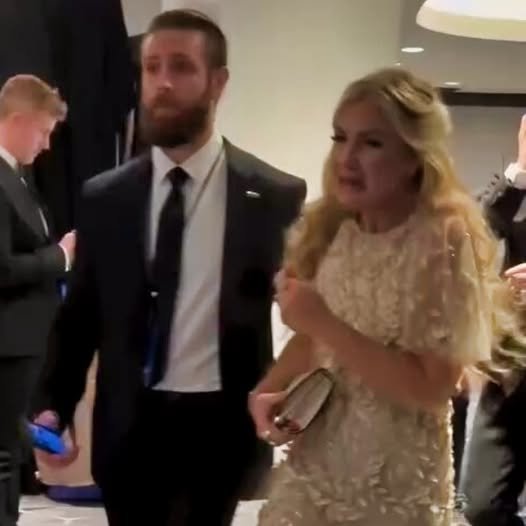
A formal political dinner is supposed to feel controlled.
The room is planned. The guest list is managed. Security is layered. Cameras are everywhere. Public figures arrive knowing they will be watched, photographed, quoted, and judged.
But even in a carefully managed setting, fear can move faster than protocol.
That is why reports from the White House Correspondents’ Dinner drew so much attention. A high-profile event in Washington, D.C. was disrupted by a shooting-related security incident on April 25, 2026, and attendees were forced into a moment of panic that contrasted sharply with the polished image of the night. The Associated Press reported that a suspect, Cole Tomas Allen, was accused in connection with an attempted attack at the dinner, and prosecutors later said ballistic evidence showed a buckshot pellet from his weapon struck a Secret Service agent’s bullet-resistant vest.
Among the names pulled into the story was Erika Kirk.
According to People, Kirk was among those who sought cover during the chaos and was later seen visibly distressed, reportedly being comforted after the incident.
That image — a public figure shaken in a room built for power — became the emotional center of the story.
Why the Moment Spread So Quickly
Incidents involving political figures do not stay local anymore.
They become clips. Captions. Posts. Arguments. Rumors. Reactions. Within hours, a security scare can turn into dozens of competing versions of the same moment.
Some people focus on the facts. Others focus on the emotion. Others use the incident to make a broader political point. And some websites exaggerate the drama with words like “secret,” “terror,” “shocking,” or “caught on camera” because fear attracts clicks.
That is why this kind of story has to be handled carefully.
There was a serious security incident. There were reports of panic. There were law-enforcement actions and criminal charges. But that does not mean every dramatic social media claim about what happened is automatically verified.
The reliable version is the one built from confirmed reporting: an armed incident disrupted the event, law enforcement responded, a Secret Service agent was struck in the vest by buckshot according to prosecutors, and attendees experienced fear inside the venue.
That is already serious enough.
It does not need extra rumor to matter.
Erika Kirk’s Presence Added Another Layer
Erika Kirk’s reaction drew attention partly because of who she is.
As CEO of Turning Point USA and widow of Charlie Kirk, she is already connected to a broader national conversation about political violence, public safety, and the risks faced by visible political figures. Reports noted that she had recently spoken about threats and safety concerns before the dinner incident.
That context matters.
For someone already living with the memory of political violence, a sudden security scare inside a major political event is not just another alarming headline. It can feel personal, immediate, and deeply destabilizing.
This is why images of fear can travel so powerfully.
People do not only react to what happened. They react to what the moment seems to symbolize: a public life where political conflict no longer feels contained to speeches, interviews, campaigns, or online arguments.
It can enter rooms that are supposed to be secure.
Security Events Are Often Confusing in Real Time
One important thing to understand about incidents like this is that early information is often incomplete.
Inside a crowded venue, people may hear a sound without knowing where it came from. Security may move suddenly. Guests may be told to get down, leave, stay quiet, or move toward exits. Rumors can spread across the room before officials have confirmed anything.
That confusion does not mean people are exaggerating.
It means fear arrives before facts.
A person under a table or being rushed out by security does not have a full briefing. They have noise, movement, instinct, and uncertainty.
That is why eyewitness reactions can be emotionally true while still not explaining the entire event. Someone may accurately describe panic, but not know who fired, where the threat came from, whether someone was hurt, or what officers saw in the moment.
The full picture usually comes later, through investigators, charging documents, official statements, and verified reporting.
The Role of the Secret Service
The presence of Secret Service agents changes the scale of any incident.
At events involving current or former presidents, top officials, candidates, or other protected individuals, security teams plan for threats that most attendees never see. They monitor entrances, screen guests, coordinate movements, and prepare emergency responses.
When something breaks through that controlled environment, the response can look dramatic because it is designed to be fast.
People may see agents draw weapons, move protectees, lock down areas, or force attendees to shelter before anyone fully understands the danger. That can be frightening, but speed is the point.
In this case, prosecutors later said evidence showed a Secret Service agent was struck in the vest by buckshot from the suspect’s firearm. The agent survived, according to AP’s reporting.
That detail is important because it shows the incident was not only a vague scare. Law enforcement described a real weapon, a real shot, and a real impact on a protective vest.
Why Sensational Headlines Can Distort Serious Events
The problem with viral political stories is that they often compete for shock.
A headline may make the incident sound like a hidden conspiracy. Another may frame it entirely around one emotional reaction. Another may suggest secret information was revealed when the real facts are already public.
This can distort the story in two ways.
First, it can turn a serious security incident into entertainment.
Second, it can make people doubt legitimate reporting because exaggerated versions circulate alongside real facts.
That is why responsible coverage should separate confirmed details from dramatic framing.
Confirmed: the dinner was disrupted by a shooting-related incident. Confirmed: a suspect was charged. Confirmed: prosecutors described ballistic evidence involving a Secret Service agent’s vest. Confirmed through reporting: Erika Kirk was among attendees who reacted emotionally during the chaos.
Unconfirmed claims, hidden motives, and exaggerated “secret” language should be treated carefully unless supported by reliable reporting.
What the Incident Says About Political Anxiety
The emotional impact of the story goes beyond one dinner.
America’s political environment has become more tense, more personal, and more security-conscious. Public figures now move through a world where online anger can spill into real-world threats. Supporters and opponents alike often interpret frightening events through partisan filters almost immediately.
That makes incidents like this feel larger than their facts.
For some, the story becomes proof that political violence is escalating. For others, it becomes another example of security failure. For others, it becomes a social media argument about who deserves sympathy.
But at the human level, the scene is simpler.
People went to a public event. A threat disrupted it. Security responded. Some attendees were terrified. One of them, Erika Kirk, became a visible symbol of that fear because cameras and social media turned her reaction into the face of the moment.
The Human Side Behind the Politics
It is easy to forget that public figures still experience fear like everyone else.
Whether someone agrees with Erika Kirk politically or not, being caught in a security scare is not an abstract partisan event for the people inside the room. It is loud, confusing, and frightening.
The same is true for staff, journalists, servers, security teams, and guests who may never become part of the headline.
When political violence enters a public event, the impact spreads through everyone present. Some people may recover quickly. Others may carry the fear longer.
That is why the focus should not only be on viral clips or emotional photos.
It should also be on the reality that public spaces are becoming harder to protect from people willing to use violence for attention, ideology, or personal grievance.
The Takeaway
The Erika Kirk White House Correspondents’ Dinner story is not just about one emotional reaction.
It is about what happens when a formal political event is interrupted by real danger, then immediately transformed into viral content.
The confirmed reporting already paints a serious picture: a shooting-related incident disrupted the dinner, a suspect was accused in connection with the attack, prosecutors said ballistic evidence linked a weapon to a Secret Service agent being struck in the vest, and attendees were forced into fear and confusion.
Erika Kirk’s visible distress became part of the story because it gave the moment a human face.
But the larger lesson is about the climate around public life.
Security can be strong and still be tested. Public figures can appear composed and still be shaken. And in the age of viral politics, a terrifying few minutes can become a national argument before the facts have even settled.
That is why the careful version matters most.
Not the loudest version.
Not the most dramatic version.
The version that respects both the facts and the fear in the room.