Mack O'reilly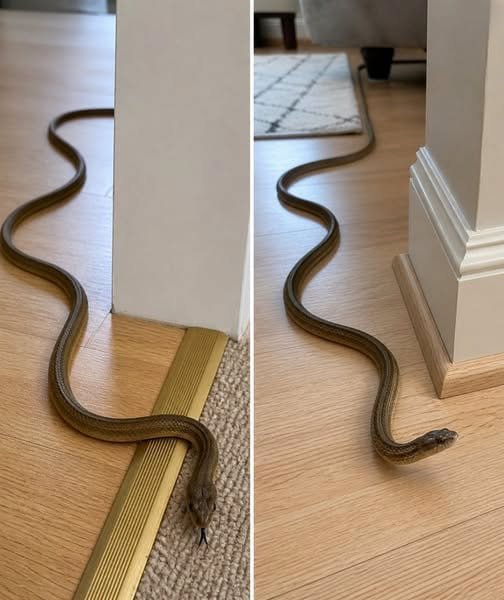
Finding a snake inside your house can turn a normal day into panic in seconds.
One moment, you are walking through the hallway, opening the garage, checking the laundry room, or moving something in storage. The next, you see movement where there should not be movement. A long shape near the wall. A coil under a cabinet. A head lifting from a corner.
Most people react instantly.
They freeze. They shout. They reach for a broom. They call someone. Some try to kill it. Others run and close the door, not sure what to do next.
But the first few moments matter.
A snake inside the home does not automatically mean disaster. Many snakes are non-venomous, and most do not want contact with people. But guessing, grabbing, or attacking the snake can make the situation more dangerous.
The safest response is calm distance, not panic.
Step One: Do Not Try to Grab It
The biggest mistake is trying to handle the snake.
Even people who think they can identify snakes may be wrong under stress. Lighting may be poor. The snake may be moving quickly. Regional species can look similar. Young venomous snakes can be mistaken for harmless ones, and harmless snakes can look frightening when defensive.
Wildlife guidance generally recommends staying calm, avoiding sudden movements, keeping distance, and giving the snake space. WIRES, an Australian wildlife rescue organization, advises people who come across a snake to remain calm, avoid approaching it, bring pets and children indoors, and give it room to move away.
That advice applies well in most home situations.
Do not pick it up.
Do not try to trap it with your hands.
Do not corner it.
Do not poke it.
Do not assume a small snake cannot bite.
A scared snake may defend itself if it feels trapped. Your goal is to reduce pressure, not increase it.
Step Two: Move Children and Pets Away
Children and pets should be moved first.
Dogs may bark, sniff, chase, or bite. Cats may swat at the snake. Children may get too close out of curiosity. All of this increases the chance of a bite.
If the snake is in one room, calmly move everyone else away from that area. Close doors if you can do so without getting near the snake. Block gaps under doors with towels only if it is safe and you can do it from a distance.
Do not make the situation chaotic.
Running, screaming, stomping, or throwing things may make the snake harder to track and more likely to hide deeper inside the house.
Step Three: Call a Professional if You Are Unsure
If you cannot confidently identify the snake, or if venomous snakes live in your region, call local animal control, wildlife rescue, pest control, or emergency services depending on your area.
Humane World for Animals advises that if a snake is discovered inside the house, people should remain calm, avoid disturbing it, and act promptly for both the snake’s and the homeowner’s peace of mind.
That “do not disturb” part matters.
A professional has tools, experience, and local species knowledge. They can remove the snake more safely than a panicked homeowner using random objects.
If the snake is clearly non-venomous and small, some extension services describe sweeping it gently into a sealable box and releasing it away from houses. Mississippi State University Extension notes that one removal method is to sweep a snake into a box that can be sealed, then release it away from homes, while also noting that killing the snake usually serves little practical purpose because many snakes help control rodents.
But this is only for situations where it can be done safely.
When in doubt, do not attempt removal yourself.
Why Snakes Come Inside
Snakes do not enter homes because they are hunting people.
They usually come inside for practical reasons: shelter, warmth, coolness, water, or prey.
A garage may attract them because it is dark and quiet. A basement may provide moisture and hiding places. A laundry room or utility area may have gaps near pipes. A cluttered storage space may feel safe. If mice, insects, frogs, or other prey are nearby, snakes may follow.
GreenCross Vets notes that snakes sometimes venture indoors for warmth and shelter.
That is why prevention is not only about snakes.
It is also about the environment around the house.
If your yard has tall grass, wood piles, open compost, rodent problems, uncovered gaps, or clutter close to the foundation, the home becomes more attractive to wildlife.
A snake inside may be the visible sign of a larger access problem.
How to Reduce the Chance of Another Snake
Start outside.
Keep grass trimmed. Remove piles of wood, scrap material, bricks, old boards, and garden debris near the house. Store firewood off the ground and away from exterior walls. Seal cracks, gaps, holes, and openings around doors, vents, pipes, crawl spaces, and garage entries.
Reduce rodent activity by keeping food sealed, cleaning up pet food, securing garbage, and closing entry points.
Snakes often go where food goes.
If mice are living near the garage, under decking, or in storage areas, snakes may follow them. Fixing the prey problem can reduce snake encounters more effectively than trying to scare snakes away after they appear.
Inside the home, keep storage areas tidy. Avoid leaving shoes, boxes, and bags open on garage floors or near entry points. Check dark corners carefully, especially during warm seasons or after heavy rain.
What Not to Do
Do not try to kill the snake.
This is one of the most dangerous reactions because it usually requires getting close. Many bites happen when people try to catch, handle, or kill snakes. The U.S. Army’s snake safety guidance says not to attempt to kill a snake and to move out of its way; it also warns never to pick up a snake, even if it is dead, because reflexes can still cause a strike after death.
Do not pour chemicals on it.
Do not use glue traps casually.
Do not burn it, spray it, hit it, or trap it under heavy objects where it may be injured and harder to remove.
Do not rely on myths like mothballs, gasoline, sulfur, or loud vibrations as guaranteed snake repellents. Many “snake repellent” ideas are unreliable and can create safety or environmental problems.
The safer plan is removal, exclusion, and prevention.
What If Someone Is Bitten?
A snakebite should be taken seriously.
If the snake may be venomous, call emergency services immediately. Mayo Clinic advises calling the local emergency number right away if a venomous snake bites, especially if the bite area changes color, swells, or becomes painful.
The CDC also advises seeking emergency medical attention as soon as possible after a venomous snakebite, staying calm, and taking a photograph of the snake from a safe distance if possible to help with identification. It also warns not to drive yourself because a snakebite can cause dizziness or passing out.
Do not cut the wound.
Do not suck out venom.
Do not apply ice.
Do not drink alcohol.
Do not use a tourniquet unless instructed by emergency professionals in a region-specific protocol.
Keep the bitten person as still and calm as possible while getting medical help.
The Calmest Response Is Usually the Safest
A snake in the house is frightening because it feels like the outside world has crossed a boundary.
Your home is supposed to feel controlled. Safe. Familiar. A snake breaks that feeling immediately.
But fear can make people do the wrong thing.
The safest response is simple: back away, keep people and pets clear, watch from a safe distance if possible, close off the area if you can do it safely, and call someone qualified if there is any doubt.
Most snakes are not looking for a fight. They are looking for shelter, prey, or a way back out.
Your job is not to prove bravery.
Your job is to stay safe.
The Takeaway
If you find a snake in your home, do not grab it, chase it, or try to kill it.
Move children and pets away. Keep distance. Close off the room if it is safe. Call local wildlife removal, animal control, or emergency help if you are unsure what kind of snake it is.
After it is gone, look for the reason it got inside.
Seal gaps. Reduce clutter. Control rodents. Keep the yard clean. Fix entry points around doors, vents, pipes, garages, and crawl spaces.
A snake encounter is scary, but it can also be useful.
It tells you your home has an opening, an attractant, or a hiding place that needs attention.
Handle the moment calmly, then fix the conditions that allowed it to happen.