Mack O'reilly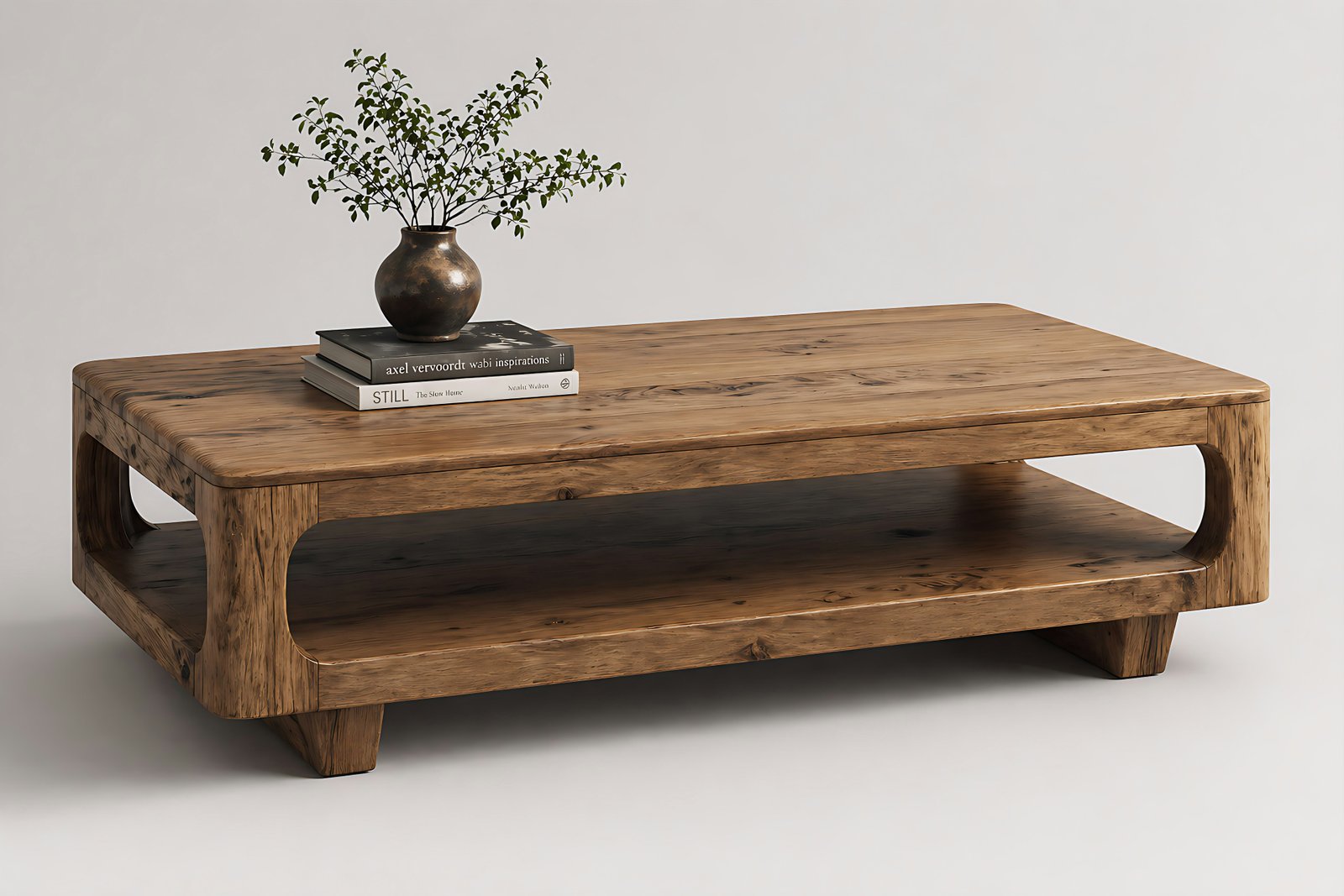
An elegant wood table can add warmth, character, and visual structure to a living room. Unlike heavily decorated furniture, a well-designed wooden table often makes its impact through proportion, craftsmanship, and the natural pattern of the grain.
However, appearance is only part of the decision. The table must also fit the seating arrangement, leave comfortable walking space, and provide a practical surface for everyday life. Therefore, the strongest choice balances beauty with function.
A Sculptural Wood Coffee Table
The table in the image feels elegant because its design is substantial without becoming overly complicated. Rounded corners soften the thick wooden frame, while the open lower shelf makes the piece appear lighter and provides useful storage.
In addition, the natural variation in the wood gives the table depth. Instead of hiding the knots and grain beneath an opaque finish, the design treats those details as part of its character.
The styling is deliberately restrained. Two books and a dark vase introduce height and contrast, yet most of the tabletop remains open. As a result, the furniture stays practical while its material remains the main attraction.
Choose the Correct Size
A coffee wood table should relate closely to the sofa. If it is too small, it may look disconnected from the seating. However, an oversized table can restrict movement and make the room feel crowded.
As a useful starting point, choose a table that is approximately two-thirds the length of the main sofa. The exact proportion can change, especially when the room includes a sectional or several chairs.
The height also matters. A coffee table generally feels most comfortable when its top sits close to the height of the sofa cushions. Although a slightly lower table can create a modern look, a very low surface may be inconvenient for everyday use.
Before buying, mark the table’s complete dimensions on the floor with painter’s tape. Then walk around the outline and sit on the sofa. This test will reveal whether the table feels accessible without interfering with the room’s main pathway.
Select a Shape for the Layout
The room’s furniture should guide the table shape. Therefore, choose the silhouette after planning the seating arrangement.
A rectangular table works naturally with a long sofa and provides generous surface space. Meanwhile, a square table can balance a large sectional with seating on two sides.
Round and oval tables soften rooms that contain many straight lines. They are also useful in compact spaces because they remove sharp projecting corners.
An irregular or live-edge table creates a stronger organic focal point. However, the remaining furniture should stay relatively simple so that the table has enough visual space.
Let the Wood Grain Lead the Design
Wood introduces natural color and pattern without requiring additional decoration. Consequently, heavily grained tables often look best with a quieter surrounding palette.
Oak offers visible texture and works across modern, rustic, and traditional interiors. Walnut provides a deeper brown tone and often creates a more refined appearance. Ash and maple feel lighter, while reclaimed wood introduces variation and age.
The wood species does not need to match every other wooden surface in the room. Instead, pay attention to undertones. Warm woods usually coordinate well with cream, beige, rust, olive, and warm gray, while cooler finishes pair naturally with charcoal, blue, and crisp white.
Coordinate Different Wood Table Tones
A living room can include more than one wood table finish without appearing mismatched. However, the finishes should have a visible relationship.
Start with one dominant wood tone, which may come from the flooring, coffee table, or media cabinet. Then introduce one supporting tone through smaller furniture or decorative objects.
Repeating each finish at least twice creates balance. For example, a medium-brown coffee table can relate to picture frames, while a darker cabinet can connect to lamp bases or chair legs.
Avoid placing several nearly identical wood colors beside one another. Because the finishes are close but not equal, the difference may look accidental. A clearer contrast often appears more intentional.
Consider the Table’s Visual Weight
Two tables with the same dimensions can affect a room differently. A solid block-style design feels heavier, while narrow legs and open space make furniture appear lighter.
The featured table balances both qualities. Its thick top and legs create presence, yet the open sides and shelf prevent it from becoming a closed wooden box.
In a large living room, a substantial table can anchor generous seating. In contrast, a small apartment may benefit from raised legs, a slimmer top, or an oval shape.
Dark wood generally appears heavier than pale wood. Therefore, dark tables often need a lighter rug or surrounding upholstery to maintain balance.
Choose a Practical Finish
The finish affects both appearance and maintenance. A matte or low-sheen surface usually emphasizes the grain and creates a natural, sophisticated look.
However, very raw-looking wood may require more care than a sealed surface. Drinks, heat, and moisture can mark some finishes quickly. Therefore, check the manufacturer’s care instructions before purchasing.
A heavily glossy finish reflects more light and may suit a formal interior. Nevertheless, fingerprints, dust, and small scratches can become more visible.
For a busy household, choose a durable sealed finish and use coasters, trays, and protective pads. This allows the table to remain useful without treating it like an untouchable display piece.
Pair the Table With the Right Rug
A rug connects the coffee table to the seating area. Ideally, it should extend beyond the table and beneath at least the front legs of the surrounding furniture.
A neutral rug allows richly grained wood to stand out. Meanwhile, a patterned rug can add depth beneath a simple table with a quieter finish.
Contrast is helpful. A dark walnut table becomes more visible against a pale cream or gray rug, while a light oak table gains definition over a deeper or more colorful design.
Texture also matters. Flat-woven and low-pile rugs provide a stable surface, whereas very thick rugs may cause narrow table legs to sit unevenly.
Create a Simple Styling Formula
An elegant coffee table does not need many accessories. Instead, use a few objects with different heights, shapes, and textures.
Begin with a small stack of books to create a horizontal base. Next, add one taller object, such as a vase or sculptural piece. Finally, include a practical item, such as a tray or decorative box.
This arrangement creates visual variety while preserving open space. Moreover, the tray can collect remote controls and other small objects that might otherwise create clutter.
The featured image uses this method effectively. The books provide structure, while the dark vase contrasts with the warm wood. Because the rest of the surface remains clear, the grain stays visible.
Add Greenery Without Overcrowding
A small branch arrangement can soften the table’s straight lines and introduce natural movement. However, the vase should not block sightlines between people seated across the room.
Choose greenery that suits the scale of the table. A large arrangement can work on a wide surface, while one or two branches may be enough for a compact design.
Fresh flowers add color, but high-quality dried branches can provide a longer-lasting alternative. In either case, use a stable vessel and protect the wood from moisture.
Use the Lower Shelf Properly
A lower shelf adds storage without covering the main surface. Nevertheless, it should remain organized because everything stays visible.
Books, a shallow basket, or one decorative box can fill part of the shelf. In contrast, loose cables, miscellaneous papers, and unrelated accessories will make the table appear cluttered.
Leave some empty space around the stored items. Consequently, the shelf will feel like part of the design rather than an overfilled storage area.
If the shelf sits close to the floor, choose objects that are easy to clean around and unlikely to collect excessive dust.
Style the Table for a Small Living Room
In a compact room, every piece needs to justify the space it occupies. Therefore, choose a table that offers either storage, flexibility, or an especially efficient shape.
A design with an open lower shelf can replace a separate basket or small cabinet. Meanwhile, nesting tables can separate when extra surface space is needed and combine afterward.
Round and oval shapes improve movement around tight seating areas. Additionally, visible legs preserve more open floor, which can make the room feel less crowded.
Keep the tabletop styling minimal. One tray and a small plant may provide enough character without reducing the usable surface.
Make an Affordable Table Look More Elegant
The room surrounding the table influences how expensive it appears. Therefore, improving the overall arrangement may have more impact than replacing the furniture.
First, center the table correctly within the seating area. Then place a properly sized rug beneath it and remove unrelated clutter from the surrounding floor.
Use a controlled group of accessories rather than several small decorations. In addition, repeat the table’s wood tone through picture frames, shelves, or a lamp base.
Warm, layered lighting will also emphasize the grain after dark. As a result, even a modest wooden table can become a strong focal point.
Protect and Maintain the Surface
Wood develops character over time, but preventable damage can shorten the table’s life. Use coasters beneath drinks and protective pads under rough or heavy decorative objects.
Clean spills promptly with a soft cloth. However, avoid applying strong household cleaners unless the manufacturer recommends them for that finish.
Direct sunlight can gradually affect some wood tones. Therefore, consider curtains or shades if the table receives intense sunlight for long periods.
Finally, lift objects instead of dragging them across the surface. This simple habit helps prevent scratches and preserves the finish.
Common Design Mistakes
One common mistake is choosing a table that is too small for the sofa. As a result, the seating arrangement may feel scattered. Measuring the full furniture group prevents this problem.
Another mistake is covering most of the tabletop with decorations. Although styled photographs often show several accessories, a real living room still needs space for everyday use.
Mixing too many unrelated wood finishes can also weaken the design. Instead, repeat a limited number of tones and connect them through smaller details.
Finally, do not ignore stability. A table should sit evenly on the floor, while heavy accessories should remain secure and away from the edge.
Final Thoughts
A livingroom elegant wood table should provide more than an attractive surface. It should anchor the seating, support everyday routines, and add natural warmth to the room.
Begin with the correct size and shape. Then choose a wood tone that connects with the existing palette and a finish that suits the way the room is used.
Finally, keep the styling simple enough for the grain to remain visible. When proportion, material, and function work together, the table can become one of the room’s most elegant features.