Mack O'reilly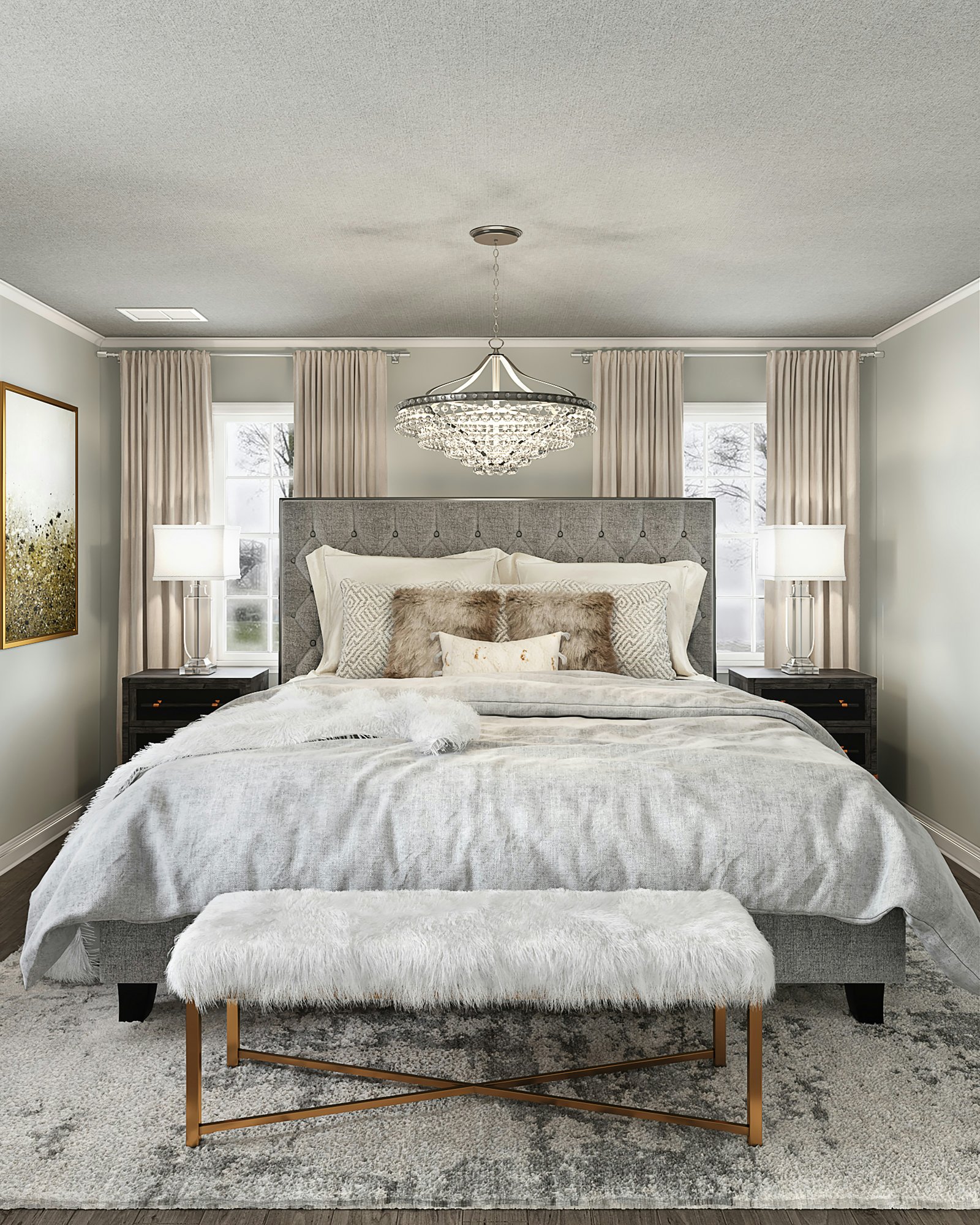
A luxurious bed is not defined by price alone. The most impressive bedrooms use proportion, texture, lighting, and careful styling to make the bed feel like the natural centerpiece of the room.
An oversized upholstered headboard creates presence. Layered bedding adds softness and depth. Symmetrical furniture gives the room order, while a statement light fixture establishes a polished focal point. When these elements work together, even a relatively simple bed can look custom-designed.
The three bedrooms below demonstrate different ways to create that effect—from bright and classic to dark and contemporary.
Soft Gray Luxury
This bedroom builds luxury through softness and symmetry. The tall upholstered headboard establishes the bed as the main feature, while matching nightstands, lamps, windows, and curtains frame it evenly.
The neutral palette prevents the room from becoming visually busy. Instead of relying on strong color, the design combines several textures:
- Smooth white sheets
- Gray woven upholstery
- Faux-fur pillows and bench
- Soft curtains
- A patterned area rug
- Reflective crystal lighting
This is an effective approach for anyone who wants a luxury bedroom that remains light and comfortable. The key is using multiple shades of white, gray, cream, and taupe so the room has depth without losing its calm appearance.
Recreate the Look
Begin with a tall upholstered headboard in gray, beige, or oatmeal. Add crisp light-colored bedding, then introduce two or three decorative textures through cushions and a throw.
Place matching lamps on both sides of the bed and use full-length curtains to make the windows appear taller. A bench at the foot of the bed completes the hotel-inspired arrangement, but it should be slightly narrower than the mattress.
Dark Monochrome Luxury
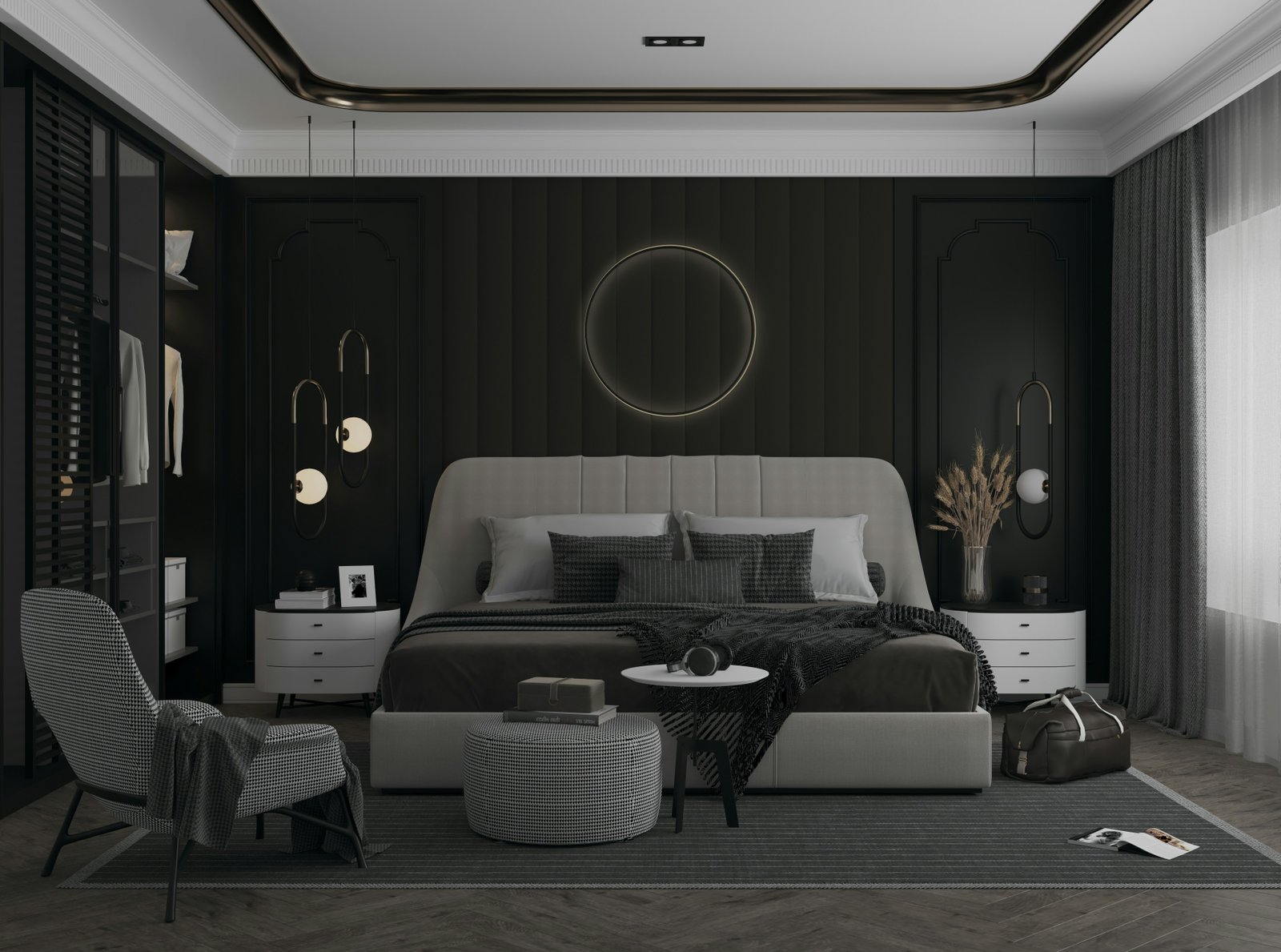
Dark bedrooms can feel exceptionally luxurious when the surfaces and lighting are planned carefully. In this room, black wall panels, dark curtains, integrated wardrobes, and a charcoal rug create a continuous background around the lighter bed.
The pale upholstered frame prevents the room from becoming flat or overly heavy. Its curved shape also softens the strong vertical lines used across the wall and cabinetry.
The circular illuminated feature above the bed acts like artwork without introducing another color. Slim wall lights repeat the room’s curved shapes and create a controlled evening glow.
Recreate the Look
Choose one dominant dark shade—such as charcoal, black, espresso, or deep olive—and use it across several large surfaces. Then introduce a lighter bed to create separation.
Dark luxury interiors depend heavily on lighting. Include more than one light source:
- Wall lights beside the bed
- Concealed lighting behind a mirror or panel
- Interior wardrobe lighting
- A dimmable ceiling fixture
- Soft lamps for evening use
Matte finishes usually create a more sophisticated result than covering every surface in high gloss. Reflective accents should be used selectively to catch the light.
Warm Modern Glamour
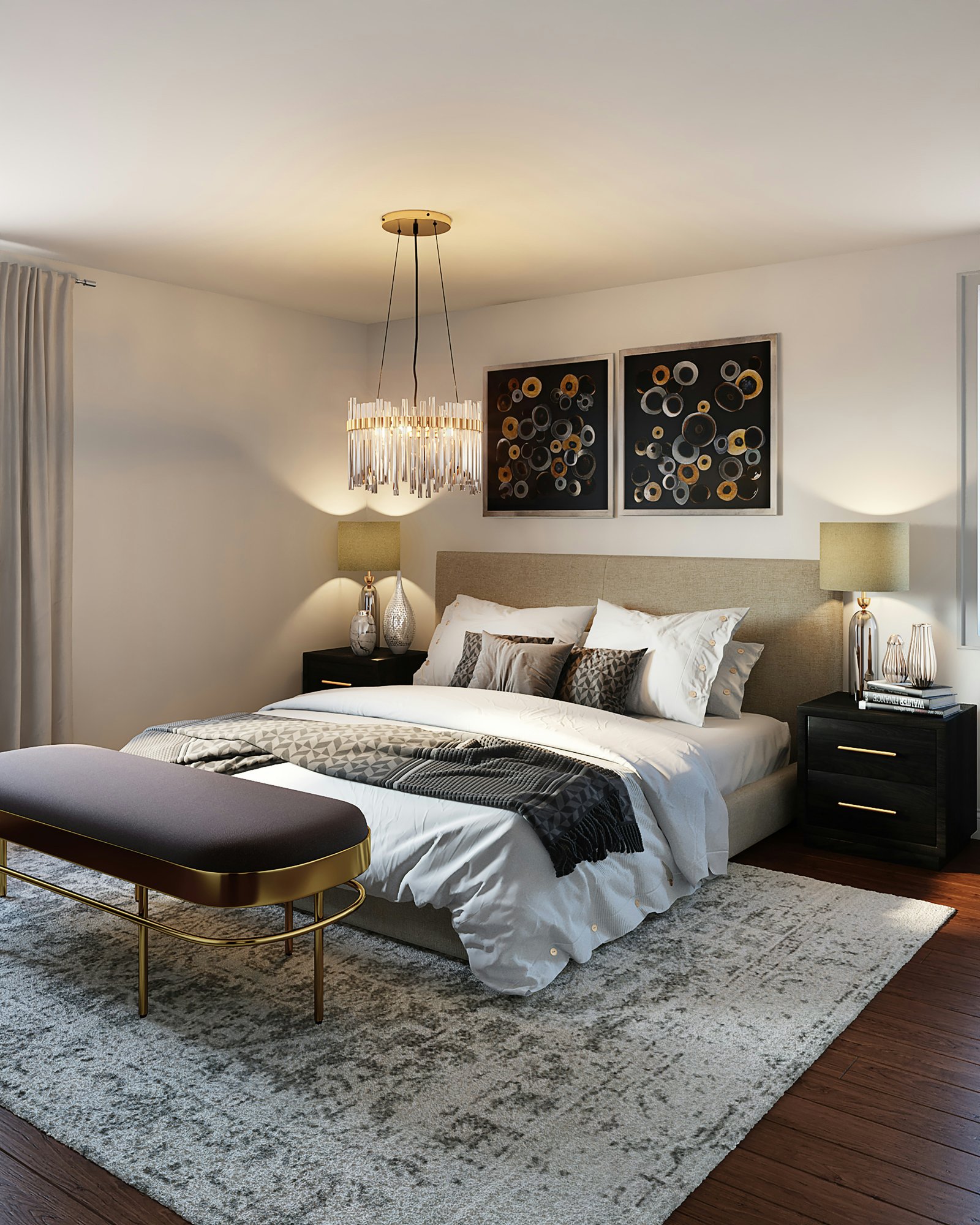
The third bedroom combines warm neutrals with black furniture and gold details. It feels glamorous without relying on elaborate furniture because the metallic elements are distributed carefully around the room.
Gold appears on the chandelier, bench, drawer handles, lamps, artwork, and decorative accessories. Repeating the finish makes the design look coordinated, while the beige bed and white bedding keep it comfortable.
The pair of artworks above the headboard adds visual height and helps connect the bed to the chandelier. Their black backgrounds also relate to the dark bedside tables, creating balance from one side of the room to the other.
Recreate the Look
Select one warm metallic finish and repeat it in four or five places. Avoid mixing several unrelated gold, silver, and bronze tones unless the room has a deliberately collected style.
Combine the metallic details with neutral upholstery and darker furniture. This produces contrast and prevents the room from appearing overly decorative.
Choose a Bed With Presence
The bed should be substantial enough for the size of the room. In a large bedroom, a small frame with a short headboard may look lost, even when the furniture itself is expensive.
A luxury bed can create presence through:
- A tall upholstered headboard
- A wide frame that extends beyond the mattress
- Channel-tufted or paneled upholstery
- A canopy or four-poster structure
- Integrated bedside panels
- A sculptural curved silhouette
The headboard does not need excessive ornamentation. Scale, material, and proportion often have more impact than decorative carving.
Before purchasing, mark the bed’s full dimensions on the floor and wall with painter’s tape. Remember to include the frame—not only the mattress—because some upholstered beds extend several inches beyond it.
Build the Bedding in Layers
Luxury bedding should appear full and comfortable without becoming overcrowded. Begin with practical sleeping pillows and then add decorative layers in decreasing sizes.
A balanced arrangement might include:
- Sleeping pillows against the headboard
- Two large square cushions
- Two medium decorative pillows
- One smaller lumbar cushion
- A folded throw across the lower third of the bed
The arrangement can be simplified for everyday use. The purpose is to create visible depth, not to cover the entire mattress with pillows.
Mix textures rather than using many patterns. Crisp cotton, linen, velvet, quilted fabric, and a soft knit can all work within the same color family.
Frame the Bed With Lighting
Lighting determines whether a bedroom feels luxurious at night. One bright ceiling light will illuminate the room, but it rarely creates an inviting atmosphere by itself.
Use a layered plan:
- Ambient lighting for the entire room
- Bedside lighting for reading and convenience
- Accent lighting to highlight walls, artwork, or cabinetry
Statement chandeliers work best when they are appropriately scaled and positioned. They can be centered over the bed or within the room, depending on the ceiling layout.
Wall-mounted lights and pendants preserve space on bedside tables. Table lamps, however, are easier to change and can add symmetry without permanent installation.
Use Symmetry Without Making the Room Rigid
Symmetry is one of the simplest ways to make a bedroom feel composed. A centered bed with matching nightstands and lights creates an immediate sense of order.
The room does not need to be perfectly mirrored. Small differences—such as a vase on one nightstand and a stack of books on the other—keep the arrangement from feeling staged.
Prioritize symmetry in the largest elements:
- Bed position
- Nightstand height
- Lighting placement
- Curtain length
- Artwork alignment
Smaller accessories can remain more relaxed.
Extend the Design Beyond the Headboard
The wall behind the bed should support the bed rather than compete with it. Suitable luxury treatments include:
- Upholstered wall panels
- Wood slats
- Decorative molding
- Textured wallpaper
- Limewash paint
- Stone-effect panels
- Oversized artwork
- A softly illuminated mirror
A wide treatment can make the bed appear larger and more integrated. In a compact room, continuing the headboard or paneling behind the nightstands can create the appearance of custom construction.
Add a Bench Carefully
A bedroom bench can make the bed arrangement look complete while providing a useful place to sit or place a folded blanket.
Select a bench that is narrower than the bed and visually lighter than the main frame. Upholstered benches add softness, while metal legs introduce a tailored, contemporary finish.
Maintain enough space between the bench and the opposite wall or dresser. If it interrupts the main walkway, the room will feel less luxurious rather than more.
Use an Area Rug to Ground the Bed
A correctly sized rug connects the bed and surrounding furniture. It should extend far enough beyond the sides and foot of the bed to remain visible and provide a comfortable surface underfoot.
A rug that is too small can make the furniture appear disconnected. If a large rug is outside the budget, place a runner on each side of the bed rather than forcing one small rug beneath the center.
Low-contrast patterns are particularly useful in luxury bedrooms because they add detail without competing with the bedding.
Create Luxury Without Replacing the Bed
An existing bed can often be upgraded without purchasing a completely new frame.
High-impact improvements include:
- Installing a taller separate headboard
- Adding an oversized wall panel behind the bed
- Replacing mismatched bedside lamps
- Using longer curtains hung closer to the ceiling
- Upgrading the duvet cover and pillowcases
- Adding a properly sized rug
- Replacing visible plastic storage
- Limiting the color palette
- Concealing loose cables and chargers
- Installing dimmable warm lighting
These changes improve the entire composition surrounding the bed, which is often more important than the frame itself.
Common Design Mistakes
Using Too Many Luxury Features
A chandelier, metallic wallpaper, mirrored furniture, tufted upholstery, and several reflective accessories can compete for attention. Select one main statement and allow the other elements to support it.
Buying an Undersized Rug
The rug should visually anchor the bed. A small rug floating at the foot of the frame can make the arrangement appear unfinished.
Hanging Artwork Too High
Artwork should feel connected to the headboard. Positioning it too close to the ceiling creates an awkward gap above the bed.
Ignoring Everyday Function
A luxury bedroom still needs accessible lighting, useful storage, clear walking space, and comfortable bedding. Beauty should improve the room rather than make it inconvenient.
Mixing Unrelated Finishes
Furniture does not need to match exactly, but its undertones and hardware should relate. Repeat a limited selection of wood, metal, and fabric finishes throughout the room.
Final Thoughts
The strongest bedroom luxury bed ideas begin with one clear focal point. That might be a tall upholstered frame, a dramatic dark wall, layered neutral bedding, or statement lighting.
Build the design around that feature using balanced furniture, controlled colors, and varied textures. When every element has enough space and a clear relationship to the bed, the room will feel luxurious without becoming excessive.