Mack O'reilly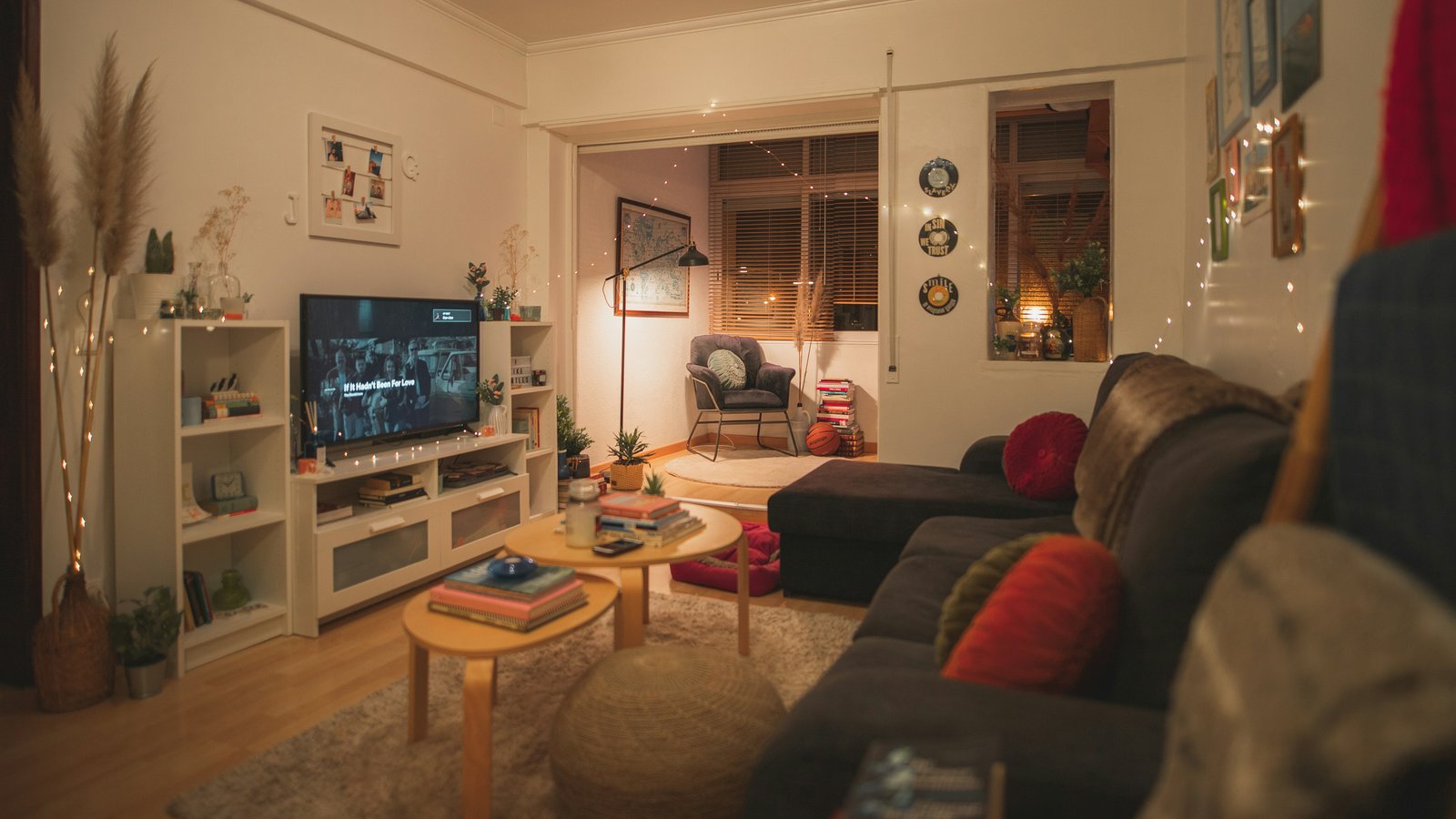
A cozy living room should make people want to sit down and stay. That feeling does not come from filling the room with decorations. It comes from warm lighting, comfortable seating, tactile materials, thoughtful furniture placement, and personal details that make the space feel lived in.
The two living rooms below approach coziness differently. One uses fairy lights, books, and compact furniture to create an intimate apartment atmosphere. The other combines large windows, deep colors, vintage-inspired pieces, and industrial architecture for a more mature, moody result.
Soft Apartment Comfort
This room feels comfortable because the lighting is spread across several areas instead of coming from one bright ceiling fixture. String lights create a soft glow around the walls and window, while lamps establish smaller pools of light near the seating.
The dark sectional provides a comfortable visual anchor. Warm wood, cream shelving, books, plants, photographs, and round cushions prevent it from feeling too heavy.
The room is not perfectly minimal, but every visible object contributes to its personality. This collected quality makes the space feel more authentic than a room decorated with an entire matching set.
Recreate the Cozy Look
Start with the seating area and create a warm boundary around it. Position a lamp near the sofa, place a rug beneath the front furniture legs, and bring the coffee table close enough to use comfortably.
Add personal items gradually:
- Favorite books
- Framed photographs
- Small plants
- Candles or safe flameless alternatives
- A soft blanket
- Meaningful artwork
- Decorative objects collected over time
Keep everyday clutter inside drawers, baskets, or cabinets. A cozy room can look collected without becoming disorganized.
Moody Industrial Comfort
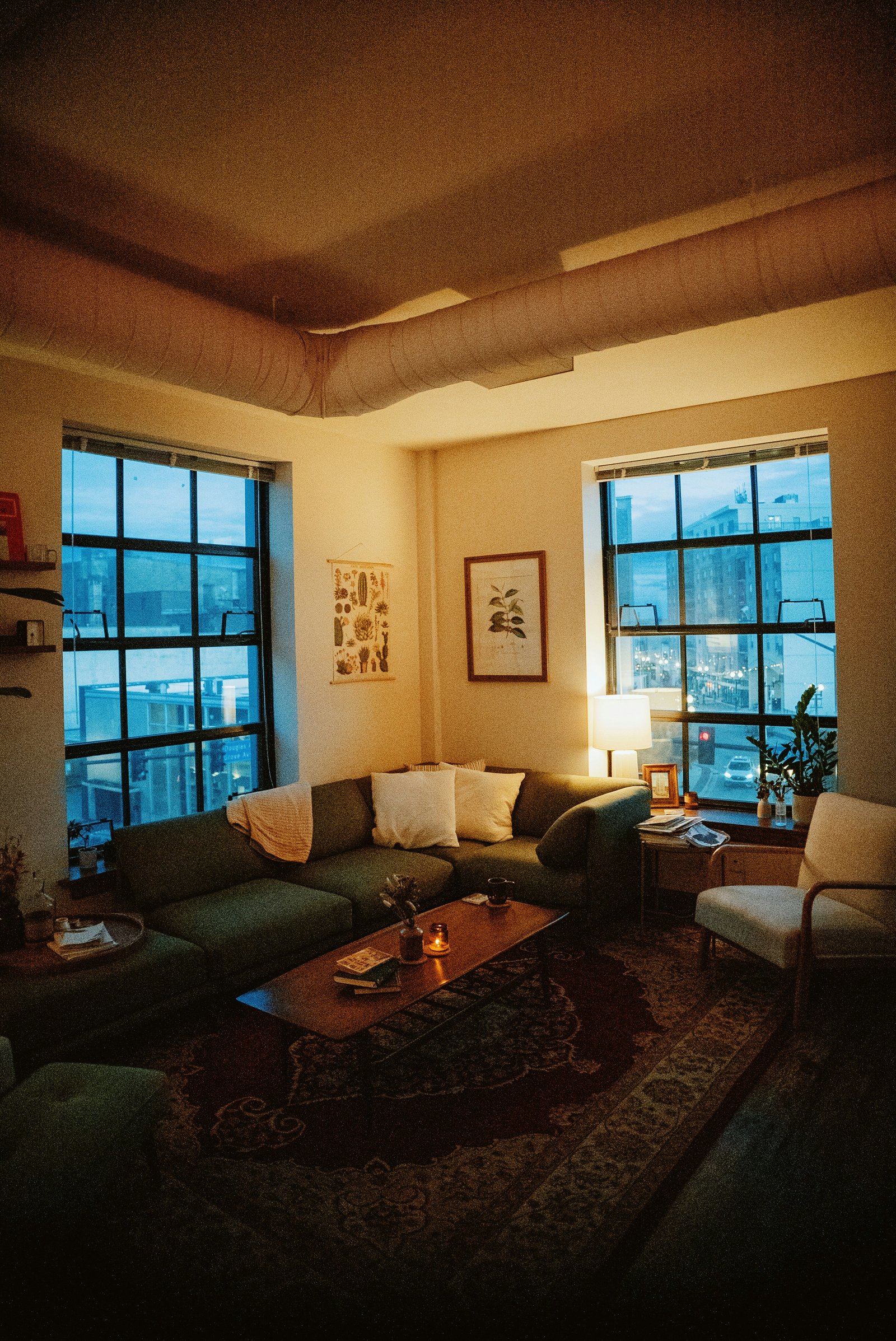
The second living room uses contrast to create atmosphere. Cool blue evening light enters through the large windows, while warm lamps illuminate the seating area. This difference between the indoor and outdoor light makes the room feel protected and inviting.
Exposed ducts and tall windows give the room an industrial character, but the space remains comfortable because of the green sectional, patterned rug, wooden coffee table, cream pillows, and soft throws.
The furniture is arranged inward around the rug and table. Even though the architecture is open and spacious, the seating creates a smaller room within the room.
Recreate the Look
Choose one deep grounding color such as forest green, charcoal, navy, chocolate brown, or rust. Use it on the sofa or another large piece, then soften it with warm wood and light-colored textiles.
Vintage-inspired rugs work particularly well because their patterns introduce several muted colors at once. They also make modern furniture feel more established and less showroom-like.
Build the Room Around Comfortable Seating
The sofa has the greatest influence on how comfortable a living room feels. It should fit the room without dominating every walkway.
Deep sectionals suit movie nights and relaxed lounging, while upright sofas are better for conversation and smaller spaces. If the existing sofa feels visually cold, it can be softened with a textured throw and a limited group of pillows.
Avoid covering every part of the sofa with decorative cushions. Leave enough open seating for the furniture to remain practical.
When combining chairs and a sofa, angle the pieces toward one another. A conversation-focused arrangement feels more welcoming than placing every seat in a straight line facing the television.
Layer the Lighting
Cozy living rooms rarely depend on a single light source. Layering creates depth and allows the atmosphere to change after sunset.
A useful lighting plan includes:
- A ceiling fixture for full-room illumination
- A floor lamp beside the sofa
- A table lamp on a console or side table
- Focused light near a reading chair
- Soft accent lighting on shelves or walls
Use warm-white bulbs in the main relaxation areas. Fixtures should produce a gentle glow without leaving the room too dark for practical use.
String lights can add charm when installed neatly. Rather than stretching them randomly across every wall, use them to outline one window, shelf, or architectural feature.
Use Texture Before Adding More Color
Texture creates warmth without requiring a busy palette. Combine surfaces that respond differently to light and touch.
Effective combinations include:
- Velvet with natural wood
- Linen with woven baskets
- Wool with smooth leather
- Knitted throws with simple upholstery
- Matte ceramics with glass
- Soft rugs with metal furniture
A neutral room can still feel rich when it includes several textures. Conversely, a colorful room may feel flat if every surface is smooth and similar.
Anchor the Seating With a Rug
A rug defines the main living area and makes furniture feel connected. It also introduces softness underfoot and absorbs some of the visual hardness of flooring.
Whenever space allows, choose a rug large enough for at least the front legs of the sofa and chairs to rest on it. A small rug isolated beneath the coffee table can make the seating appear disconnected.
For a calm room, choose a low-contrast neutral rug. For a collected or vintage aesthetic, use a faded pattern with several muted colors that can be repeated through the pillows and artwork.
Bring the Coffee Table Closer
The coffee table should connect the seating rather than float in the middle of the room. It needs to be close enough to reach while leaving comfortable space to walk around it.
Round tables soften rooms with many straight lines and reduce sharp corners in compact areas. Rectangular tables work naturally with long sofas, while nesting tables provide flexibility when extra surface space is occasionally needed.
Keep the styling useful. A tray, small vase, book, and one decorative object are usually enough. Preserve open space for drinks, snacks, and everyday use.
Create a Reading Corner
An unused corner can become one of the most inviting parts of the room with three elements:
- A comfortable chair
- A focused lamp
- A small surface for a book or drink
Place the chair near a window if possible, but make sure it also has suitable evening lighting. Add a small rug or footstool to visually separate the corner from the rest of the living room.
A stack of books can look charming, but a nearby shelf or basket will keep the corner usable over time.
Introduce Natural Materials
Natural materials add warmth because their surfaces contain subtle variation. Wood grain, woven fibers, linen, clay, stone, and greenery prevent a room from feeling overly manufactured.
The materials do not need to match perfectly. A medium-toned wooden coffee table can work with darker shelves when both finishes have warm undertones.
Plants are especially useful because they add height and organic shapes. Choose plants suited to the room’s available light rather than selecting them only for appearance.
Decorate With Personal Layers
A cozy interior should reveal something about the people who live there. Personal objects make the difference between an attractive room and a room that feels genuinely settled.
Display items in small groups rather than spreading them evenly across every surface. Combine objects of different heights, such as a framed photograph, a plant, and a stack of books.
Leave some open space around each group. This allows the personal details to stand out and makes cleaning easier.
Make the Television Area Feel Integrated
A television can become visually dominant, especially in a compact living room. Integrate it by surrounding it with furniture and décor that have enough visual weight.
Possible approaches include:
- Positioning it inside a shelving unit
- Placing it above a low media cabinet
- Painting the wall behind it a darker color
- Adding shelves beside it
- Using nearby lamps to soften the screen’s contrast
- Hiding visible cables inside appropriate channels
Avoid surrounding the television with many small objects. A simpler arrangement makes the wall feel calmer when the screen is off.
Keep the Color Palette Connected
A cozy living room can be neutral or colorful, but the palette should feel connected.
Begin with one grounding color, one supporting neutral, and one or two accents. Repeat those colors in several areas rather than concentrating each one in a single object.
For example:
- Forest green sofa
- Cream pillows
- Warm wood furniture
- Rust and burgundy details in the rug
- Black metal lighting
The room will feel coordinated even if the furniture comes from different collections.
Cozy Ideas for a Small Living Room
Small living rooms can feel especially inviting when their layout remains open.
Choose furniture with visible legs to preserve a sense of floor space. Use one comfortable sofa instead of several undersized seats, and select tables that match the room’s scale.
Vertical storage can provide space for books and personal objects without using the entire floor. Wall-mounted lighting also frees the limited surfaces beside the sofa.
Do not push every piece against a different wall automatically. Bringing the seating slightly inward can create a more intentional conversation area, provided the main walking route stays clear.
Create the Look on a Budget
A full furniture replacement is rarely necessary. Concentrate on the elements that change the room’s atmosphere most quickly:
- Replace cool, harsh bulbs with warm lighting
- Move furniture closer to form a conversation area
- Add a correctly sized rug
- Use one soft throw and coordinated pillows
- Hide visible cables and everyday clutter
- Introduce a wooden or woven element
- Display books and personal photographs
- Add curtains that reach close to the floor
- Style one reading corner
- Repeat two or three colors throughout the room
Rearranging existing furniture and improving the lighting can have more impact than buying additional decorative objects.
Common Cozy-Living-Room Mistakes
Making the Room Too Dark
Low lighting can create atmosphere, but the room still needs enough light for reading, cleaning, and moving safely.
Adding Too Many Pillows
Pillows should improve comfort rather than occupy most of the sofa.
Using an Undersized Rug
A small rug makes the furniture feel separated. Use a larger design or leave the floor uncovered until the right size is available.
Filling Every Surface
Coziness comes from texture and personal meaning, not uncontrolled clutter. Keep some surfaces open.
Ignoring Furniture Placement
A beautiful sofa will not make the room inviting if it blocks a walkway or sits too far from the other seating.
Copying an Aesthetic Without Personality
A room styled entirely from matching decorative products can feel impersonal. Include items that connect to real interests, memories, and everyday routines.
Final Thoughts
Cozy livingroom asthetics are created through atmosphere rather than one specific decorating style. Soft apartment interiors, moody industrial spaces, colorful rooms, and minimalist homes can all feel cozy when they include warm lighting, comfortable seating, natural texture, and a thoughtful layout.
Build the room around how it will actually be used. Then add textiles, personal objects, and layered lighting until the space feels inviting without becoming crowded.