Mack O'reilly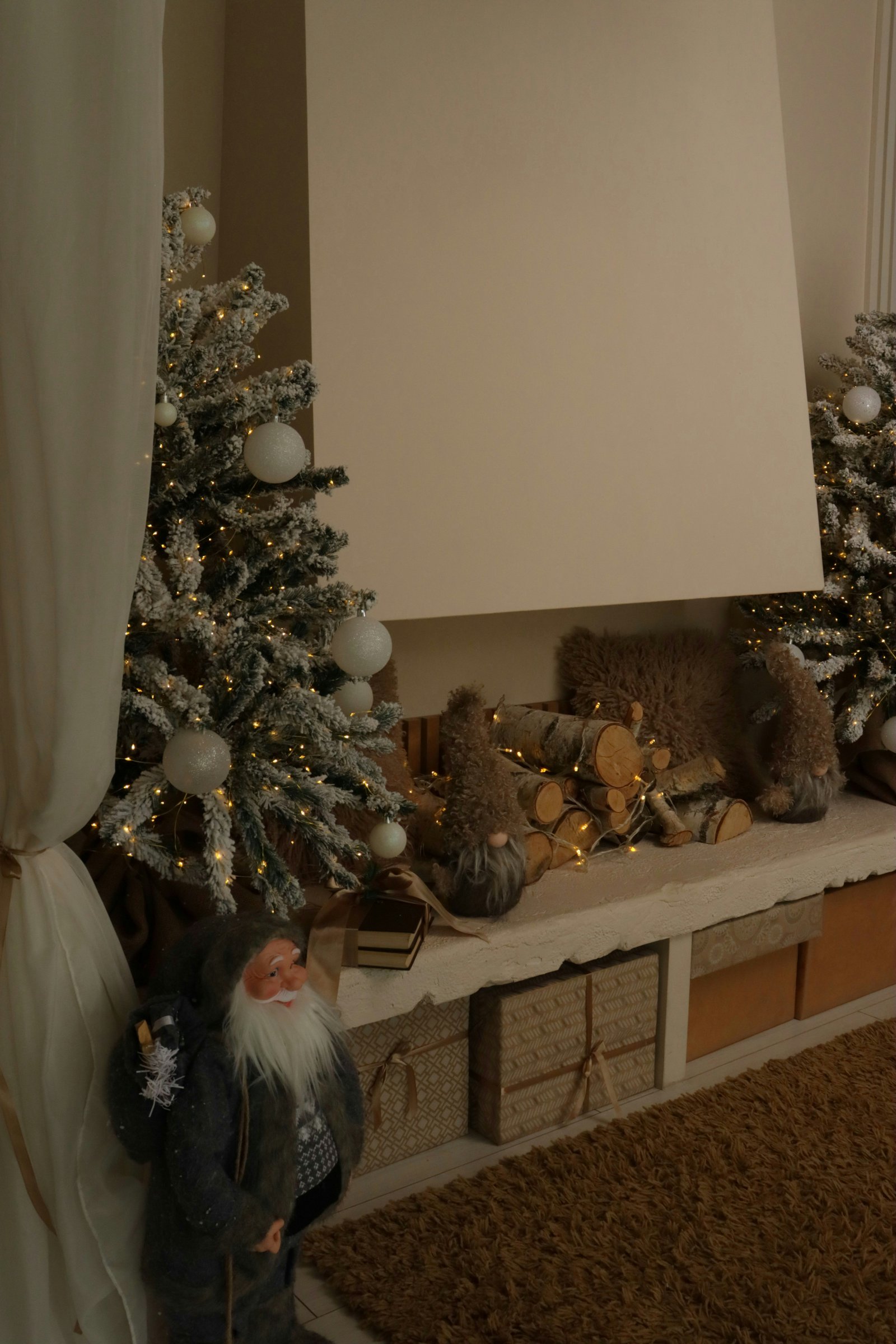
A fireplace can completely change the structure of a living room. It creates a natural focal point, gives furniture a central reference, and provides a dedicated place for artwork and seasonal decorations.
However, installing a working fireplace can be expensive and may require major construction. A decorative faux fireplace offers a much easier alternative. Although it produces no heat, it can still bring warmth and architectural character into the room.
The strongest budget designs focus on three elements: a well-proportioned surround, a convincing opening, and simple styling. Therefore, you do not need expensive stone or custom cabinetry to create a polished result.
A Cozy Decorative Fireplace
The fireplace in this image feels inviting because the entire area works as one composition. Two flocked trees frame the surround, while stacked logs and warm lights add texture inside the opening. In addition, the wrapped gifts and soft rug continue the warm neutral palette across the lower part of the room.
Although the photograph has a Christmas theme, the fireplace structure can remain useful throughout the year. For example, the trees and presents could be replaced with plants, baskets, artwork, or simple ceramic accessories.
Most importantly, the design does not depend on a real flame. The logs and lights create the visual suggestion of warmth while keeping the feature decorative.
Choose the Right Wall
Before choosing materials, decide where the fireplace will have the greatest visual impact. Ideally, it should face the main seating area without blocking windows, doors, or natural walking paths.
First, measure the available wall and mark the proposed fireplace with painter’s tape. Then view the outline from the sofa and from the room’s entrance. This simple test will reveal whether the planned feature looks too narrow, too tall, or disconnected from the furniture.
The fireplace should feel substantial enough to anchor the room. However, it should not project so far into the space that it makes movement difficult. In a smaller living room, a shallow mantel and painted opening may work better than a deep freestanding structure.
Decide What the Fireplace Needs to Do
A decorative fireplace can serve several purposes. Therefore, deciding how it will function will make the design process easier.
If the room already has enough storage, a simple mantel and decorative opening may be sufficient. However, a compact apartment could benefit from cabinets or shelves built around the feature.
You can also use the fireplace to organize the television wall. In that case, the television, mantel, storage, and visible cables should be planned as one composition. Otherwise, the wall may appear crowded rather than intentional.
The safest budget option is a flame-free decorative fireplace. If a manufactured electric insert is added, its instructions and clearance requirements must guide the entire design.
Start With an Affordable Mantel
The mantel creates the strongest architectural line, so it deserves careful attention. Fortunately, it does not need to be custom-made.
A prefabricated mantel shelf can provide a clean and traditional appearance. Alternatively, a narrow console table can create a freestanding version with little structural work. Secondhand mantels and reclaimed furniture may also provide character at a lower price.
Regardless of the source, the piece should be stable and correctly sized for the wall. Moreover, wall-mounted shelves and tall surrounds must use suitable fixings. If the correct installation method is unclear, an experienced adult or qualified installer should secure the structure.
Create a Convincing Opening
The dark opening is what makes a faux fireplace immediately recognizable. Without it, the mantel may look like an ordinary wall shelf.
One affordable approach is to paint a large rectangle in matte charcoal or black. Because dark colors visually recede, the flat wall will appear deeper than it is. You can then add narrow molding around the shape to create a more finished border.
Removable brick or tile-effect wallpaper can introduce additional texture. However, the pattern should suit the room rather than imitate a material badly. A simple painted opening often looks more convincing than an overly glossy artificial brick design.
For additional depth, place a decorative screen, basket, or arrangement of logs in front of the opening. As a result, the eye sees several layers instead of one flat surface.
Unify the Surround With Paint
Paint can make inexpensive or mismatched components appear intentionally connected. For instance, a secondhand mantel, basic storage units, and simple molding can look built in when they share one finish.
Warm white creates a classic appearance, while charcoal produces a more contemporary focal point. Meanwhile, muted green, soft gray, or deep blue can connect the fireplace to an existing color palette.
Contrast also matters. A light surround with a dark opening creates clear definition. On the other hand, painting the wall and surround in one color produces a softer architectural effect.
Before painting, confirm that the product is suitable for the actual surface. Additionally, remember that ordinary decorative paint should never be assumed safe around heat or flame.
Style the Opening Without Real Fire
A decorative opening needs enough detail to feel finished. Nevertheless, it should not become a storage area for unrelated objects.
Stacked logs provide natural color and texture. Even though they will not be burned, they immediately communicate the idea of a fireplace. Warm LED lights can then be woven around the arrangement to create a soft evening glow.
Flameless candles offer another option. Their different heights can create depth, especially against a dark background. Alternatively, the opening can hold books, a woven basket, or a large plant during warmer months.
Whatever you choose, keep the arrangement controlled. One clear display will look more polished than several small decorations competing for attention.
Add Useful Storage
Storage can make the fireplace more than a decorative feature. For example, low cabinets on either side can hold games, blankets, electronics, or seasonal accessories.
Closed cabinets create a calm appearance because everyday objects remain hidden. In contrast, open shelves work best for books and items that can stay neatly arranged.
If separate storage units are used, repeat the fireplace color across their doors or frames. Consequently, the individual pieces will read as one larger installation.
Balanced storage can also widen the feature visually. This is especially useful on a large wall where a small central mantel might otherwise feel lost.
Style the Mantel With a Focal Point
A mantel looks strongest when it has one main visual anchor. This could be a mirror, framed artwork, clock, wreath, or large vase.
After selecting the focal point, add a few supporting objects with different heights. For example, a framed print could be paired with a small plant and two stacked books. The difference in scale creates movement without producing clutter.
However, avoid spreading small decorations evenly across the entire shelf. Instead, group related pieces and leave some open space around them. As a result, the arrangement will feel relaxed rather than crowded.
Heavy mirrors and large frames should be secured properly. Likewise, fragile objects should remain away from the edge.
Make the Fireplace Work All Year
Seasonal styling can keep the feature fresh without changing its basic structure. During spring, use leafy branches, pale ceramics, and botanical artwork. In summer, lighter colors and simple glass accessories can make the area feel less heavy.
During fall, introduce warm leaves, amber glass, and woven textures. Finally, winter decorations can include greenery, ornaments, logs, and warm LED lighting.
Because the mantel provides a permanent foundation, only a few objects need to change each season. Therefore, the room can feel updated without requiring new furniture or a large decorating budget.
Design It for a Small Living Room
A small room needs a fireplace with a shallow profile. Consequently, a painted opening and narrow shelf may be more appropriate than a full freestanding surround.
Keep the mantel close to the wall and avoid large decorations that project into the room. In addition, use vertical artwork or a mirror to draw the eye upward.
Storage should also remain proportional. One narrow cabinet or a pair of floating shelves may provide enough function without overwhelming the wall.
If the television shares the same area, keep the rest of the styling simple. Otherwise, the screen, mantel, shelves, and decorations may create too many competing focal points.
Spend the Budget Where It Matters
The structure and proportions will influence the final result more than small accessories. Therefore, prioritize a correctly sized mantel, a convincing opening, and a cohesive finish.
Secondhand accessories can then complete the design. Books, baskets, vases, branches, and artwork already in the home may be enough. In fact, familiar objects often make the fireplace feel more personal than newly purchased decorations.
Lighting is another worthwhile priority. A small amount of warm LED light can transform the opening after dark and make simple materials feel richer.
Keep the Project Decorative and Safe
A faux fireplace should remain completely flame-free unless it was professionally designed for an approved appliance. Decorative logs, ordinary wood, wallpaper, paint, and storage furniture are not automatically suitable near heat.
Therefore, do not place real candles, burners, or other open flames inside the opening. Flameless LED candles provide a much safer decorative alternative.
If you want an electric insert, select the exact model before designing the surround. Its manufacturer will specify the required materials, ventilation, and clearances. Moreover, any new permanent wiring should be completed by a qualified electrician.
Finally, keep cables secured and away from walking areas. Battery packs should remain accessible, and all decorative lights should be used according to their instructions.
Common Design Mistakes
One common mistake is making the fireplace too small for the wall. As a result, it looks like a floating shelf instead of an architectural feature. Testing the outline with painter’s tape prevents this problem.
Another mistake is using too many artificial finishes at once. For example, glossy brick wallpaper, stone-effect panels, decorative molding, and patterned tile may compete with one another. Instead, choose one main texture and support it with simple paint.
Poor mantel styling can also weaken the result. Although seasonal decorations are appealing, covering every inch of the shelf removes its visual structure. A focal point and a few supporting objects will create a cleaner finish.
Finally, stability should never be treated as a decorative detail. Shelves, surrounds, mirrors, and storage furniture must remain secure before styling begins.
Final Thoughts
A livingroom diy budget fireplace can turn an unused wall into the room’s main feature. More importantly, it can do so without the expense and construction involved in adding a working fireplace.
Begin with the wall proportions, then create a strong mantel and a defined opening. Afterward, use paint, decorative logs, warm LED lighting, and personal accessories to complete the design.
When the structure is convincing, only minimal decoration is required. Therefore, the finished fireplace can feel warm, practical, and intentional while remaining affordable and flame-free.